
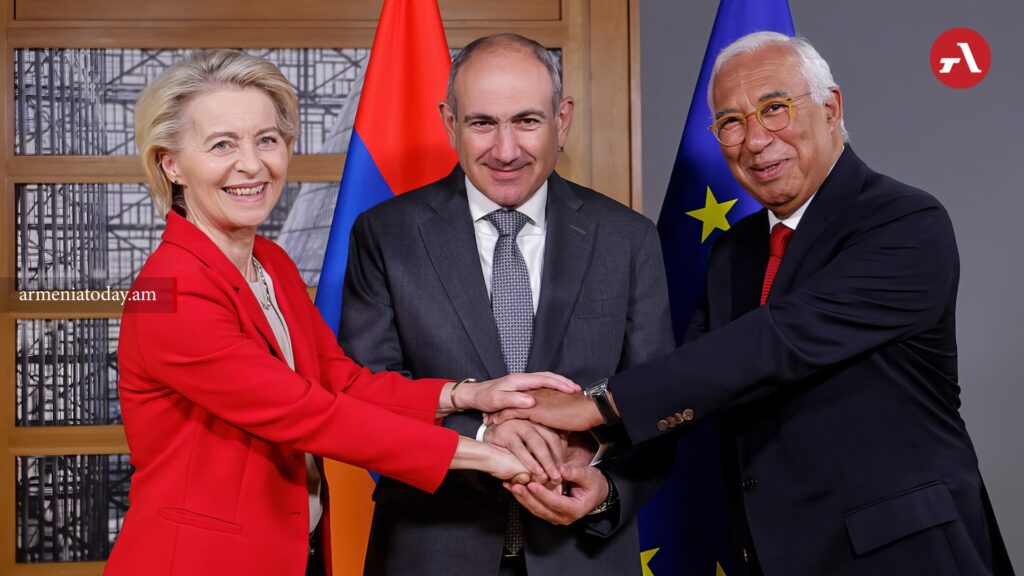
Prime Minister Nikol Pashinyan operates according to populist principles — telling everyone exactly what they want to hear. And this applies not only to the public but also to different geopolitical centers. This view was expressed by Ara Papyan, head of the Modus Vivendi analytical center and former ambassador.
Populism instead of real strategy
Pashinyan’s Western turn is mostly an illusion, says analyst Ara Papyan. According to him, Armenia’s prime minister follows a populist formula: he tells every audience — domestic or international — exactly what they want to hear. This helps maintain the appearance of a Western-oriented agenda even when the reality contradicts it.
Despite public claims of geopolitical reorientation, Armenia’s economic dependence on Russia continues to deepen. Yet the narrative of a “Western turn” is successfully sold to the EU.
Why the West buys the illusion
Papyan identifies two reasons:
- Personal incentives of diplomats and analysts to show “positive results”.
- Low awareness about Armenia’s internal situation.
He notes that many experts handle multiple countries at once, spending 80% of their time on Ukraine and hearing one Armenian update per week. In such a context, it is easy to push a narrative that does not match the facts.
Managing perceptions — and the US reaction
Western structures often overlook Armenia’s internal problems, which encourages Pashinyan to continue on the same path. The United States, according to Papyan, reacts more critically — especially to Pashinyan’s confrontations with the Church — but even there, the government manages to smooth the situation.
He cites state-funded prayer breakfasts as an example: originally meant to be hosted by religious leaders, they are now organized by state officials, used for political image-building.
Illusions of “success” and the hidden price
If society expects peace, open borders, or higher pensions and salaries, the government creates the impression that these goals are being achieved. But the real picture is different:
- peace is temporary at best,
- security is fragile,
- inflation outpaces income growth,
- no meaningful indexation exists.
Example: bread that cost 250 drams in 2018 costs 370 today — and the loaf is smaller. Salary increases affect only narrow circles such as law enforcement and political elites, while the majority sees decreasing purchasing power.
The illusion of the Pashinyan Western turn
According to Papyan, Pashinyan achieves his goals — but these goals serve him and his small inner circle, not the country.
“He is ‘successful’ — but this success comes at a very heavy cost for the Armenian people.”