
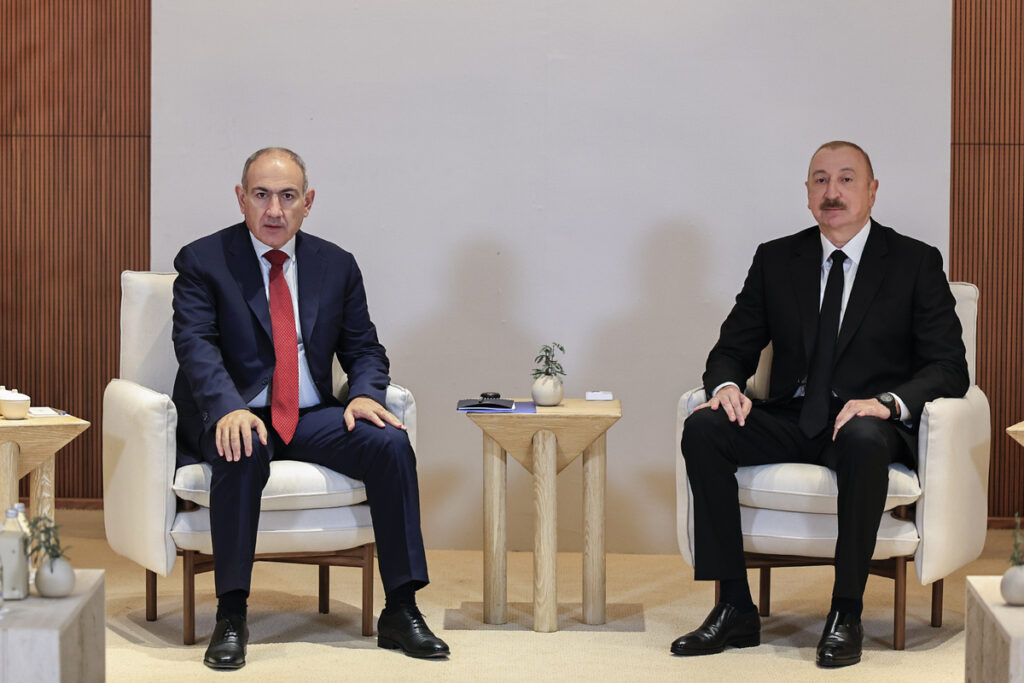
Azerbaijan is attempting to impose conditions on Armenia across multiple fronts, extending beyond bilateral relations. Political analyst Hakob Badalyan argues that Baku views this as part of a broader geopolitical transformation in the South Caucasus.
According to him, Azerbaijan is not only strengthening its position vis-à-vis Armenia but also trying to convert that advantage into a long-term mechanism of regional influence.
Establishing dominance as a strategic goal
Badalyan notes that the region is undergoing a gradual geopolitical reconfiguration. While the process is not yet highly intense, it is ongoing and likely to become more dynamic over time.
In this context, Azerbaijan seeks to consolidate its dominant position and leverage it in relations with external actors.
The core idea is to present itself as the primary interlocutor through which issues related to Armenia should be addressed.
Expanding influence beyond Armenia
The analyst does not rule out that this strategy could extend to other regional directions, particularly Georgia.
This may involve attempts to create friction in Armenia–Georgia relations, including through information campaigns and narrative shaping.
There are already claims circulating that Georgia has benefited the most from the Armenia–Azerbaijan conflict and may not be interested in normalization, as reopened transport routes could weaken its role.
At the same time, Badalyan emphasizes that Armenia has historically managed this sensitive dynamic and retains certain leverage over Tbilisi.
The role of narratives
He also highlights the risk posed by internal discourse in Armenia, which may inadvertently align with narratives beneficial to Azerbaijan.
When such narratives overlap with external strategies, they can reinforce and legitimize them.
Reframing regional diplomacy
In the long term, this approach could shift the center of regional dialogue toward Baku.
This would position Azerbaijan as the main platform through which external actors engage with regional issues, effectively redefining the diplomatic landscape.