
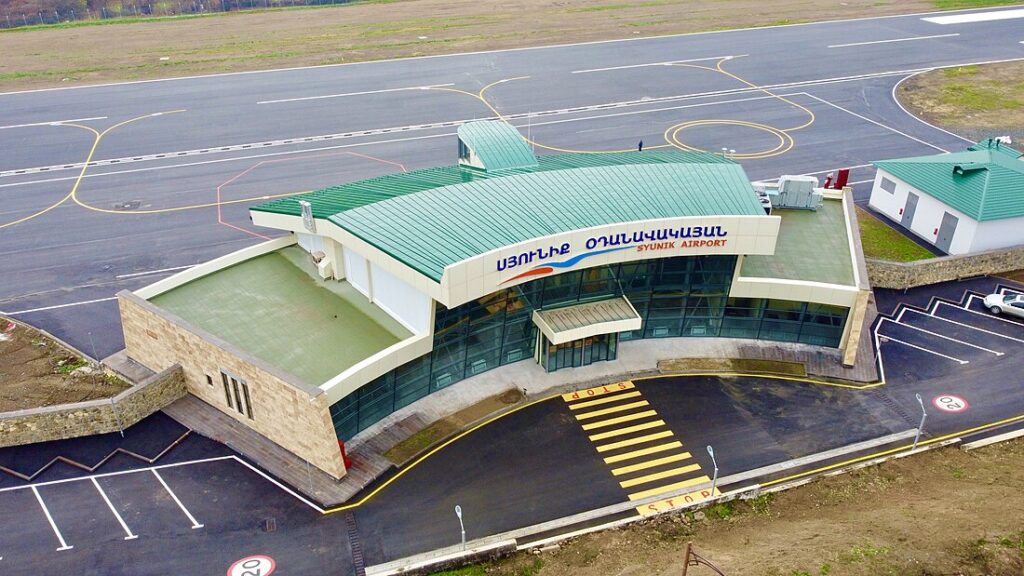
The issue of unblocking regional communications through Armenia’s Syunik region remains one of the most sensitive and contentious topics on the Armenian political agenda. Various approaches to the potential role of external actors in managing and ensuring the security of transport routes are being discussed in the public sphere.
On one hand, there are claims about U.S. plans to establish full control over the road to further actions against Iran. On the other, government representatives reject the possibility of transferring sovereign functions and assert that any decisions will prioritize maintaining state control and reciprocity.
The American Scenario for Unblocking: Delayed but Not Canceled

The implementation of the American scenario for unblocking regional communications was planned for June 2023 but was not realized on schedule for various reasons, according to Armenia’s Ambassador Extraordinary and Plenipotentiary, Dziunik Aghajanyan.
She claims that in 2023, Armenian authorities signed a confidential customs agreement with the U.S., under which Armenia effectively agreed to delegate control over the road through Syunik to the American side. “Today, we are seeing the first elements of this agreement being revealed,” Aghajanyan emphasized.
According to her, the plan extends beyond just the road section through Meghri—it is far broader. She noted that it was no coincidence that the U.S. Ambassador to Turkey mentioned a 32-kilometer section without specifying the exact route. “Let’s recall the actions of the Azerbaijani side toward Jermuk. That was an attempt to forcibly establish a corridor that would split Syunik in two. However, thanks to resistance at the border and public protests within the country, that plan was not realized at the time,” Aghajanyan stated.
She believes that in the next 2–3 weeks, a new escalation is expected—both in the Middle East and on the Ukrainian front. In this context, she claims, the West is eager to establish a transport corridor through Syunik as quickly as possible, which could serve as a staging ground for a potential attack on Iran.
However, Aghajanyan notes that such a scenario raises serious concerns in Turkey and Azerbaijan. These countries realize that if this scenario is implemented, they could be drawn into an armed conflict with an unpredictable outcome. For this reason, she says, Baku and Ankara are making every effort to delay the decision-making process regarding the unblocking of the Syunik route.
Armenia Rejects U.S. Proposal for Long-Term Lease of Syunik Territories
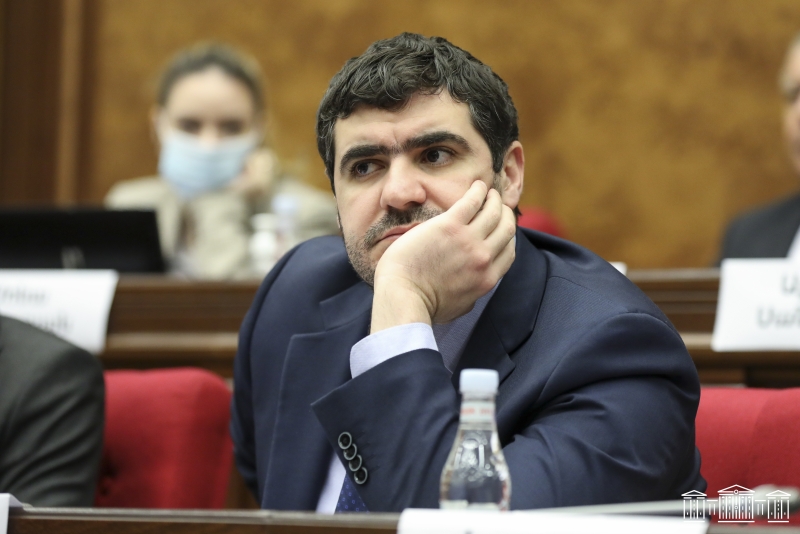
Arman Yeghoyan, head of the parliamentary committee on European integration and a member of the ruling “Civil Contract” party, assures that Armenia rejected a U.S. proposal for a long-term lease of territories in Syunik where communications infrastructure would be built.
“This idea was proposed by the American side at one point, but it was rejected because we saw it as a risk to our sovereignty. Leased land could be restricted for public use—for example, for 20 years, during which the lessee could build facilities and block access to them. Only after the lease term would the facilities transfer to Armenia’s ownership. However, we are talking about strategically vital territory and communications that are fundamental to Armenia, so this option was unacceptable for us,” Yeghoyan stated on Factor TV.
He emphasized that Armenia will not compromise on issues concerning sovereignty. “This includes, for example, customs control, border control, and control mechanisms in general. We are talking about unblocking communications, and there cannot be a selective approach: why should the border and roads with Georgia operate under one framework, while those with Azerbaijan operate under another?” the deputy stressed.
Yeghoyan underscored that all actions will be based on the principle of reciprocity. However, he could not clearly answer who would ensure the safety of Armenian citizens traveling through Azerbaijan’s territory.
“The principle of reciprocity will apply to aspects related to sovereignty,” he stated. When directly asked whether Armenian citizens would receive the same safety guarantees as Azerbaijanis traveling through Armenia, Yeghoyan responded, “Absolutely, that’s what we are striving for.” However, when pressed on whether the same American company would provide security, he said, “I cannot confirm that.”