
The international arbitration body in Stockholm has sided with businessman Samvel Karapetyan, temporarily prohibiting the Armenian government from taking steps toward the nationalization of Electric Networks of Armenia (ENA). This decision not only casts doubt on the legitimacy of the authorities’ actions in the eyes of the international community but also risks serious consequences for the country’s investment image.
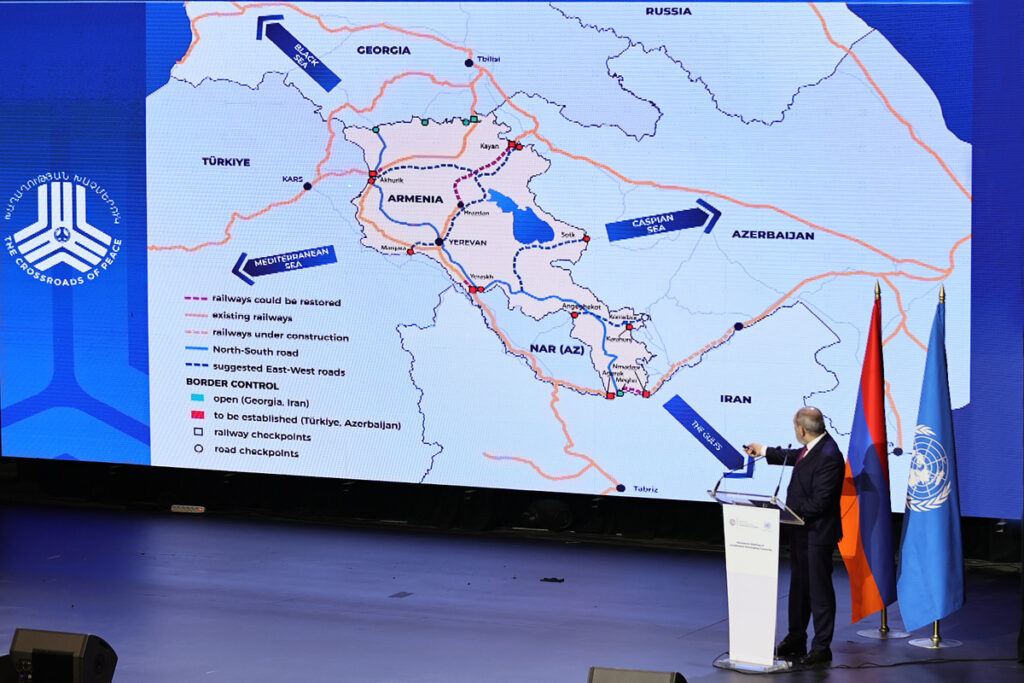
Failure to comply with or ignoring this decision could lead to a profound loss of trust from potential foreign investors—especially at a time when the government is actively promoting the “Crossroads of Peace” project and emphasizing the need for large-scale investments in infrastructure and communications. Prime Minister Nikol Pashinyan has repeatedly highlighted the importance of attracting private and international capital in his recent speeches, including in the context of the U.S. proposal.
Thus, the Armenian government faces a choice: either comply with the arbitration decision and reaffirm its commitment to international law or attempt to circumvent it, risking turning a localized legal conflict into a systemic investment crisis.
However, this choice has broader implications, particularly in the context of the discussed U.S. proposal to transfer the management of Armenian-Azerbaijani communications to a private foreign company. The ENA case serves as a signal that should prompt the authorities to soberly assess the risks of such agreements, where a dispute between the state and a private operator could escalate beyond national jurisdiction.
If the Armenian government, despite having the political will and conviction in the need for reforms, was unable to secure a revision of the situation with ENA—a company linked to a de facto Russian businessman of Armenian origin—then a legitimate question arises: what are the chances of success in a potential conflict with an American or other foreign operator entrusted with managing communications on part of Armenian territory?
In the ENA case, the authorities argue that the company does not operate according to modern standards, is inefficient, and requires systemic reforms. Nevertheless, the international arbitration ruled in favor of the investor, not the state. This indicates that, in the realm of international arbitration, even domestic regulatory initiatives can be deemed a violation of investor rights.
Consequently, in the context of the proposed American outsourcing, where the issue will involve not only property but also elements of sovereignty—such as infrastructure—the potential legal consequences for Armenia could be even more severe and irreversible. If the state attempts to amend or revise the terms of the agreement with such a company in the future (for instance, if the parties interpret the document’s provisions differently), the risk of losing in international arbitration will be even higher, given the political and legal weight of the United States.
Thus, the Karapetyan case is not merely a dispute about the past. It is a warning about the future.