
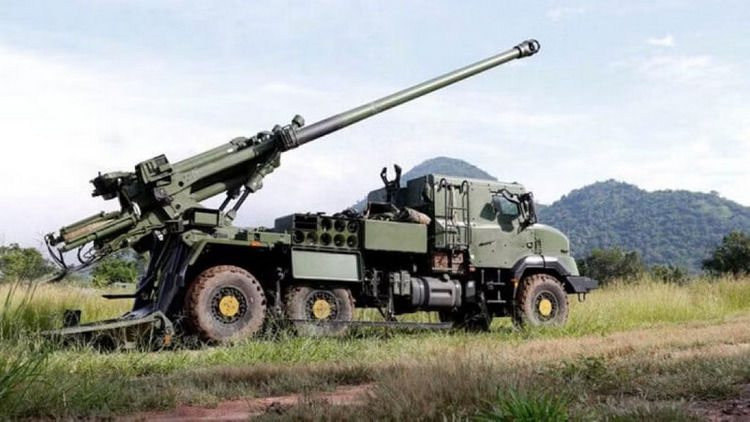
Armenian Prime Minister Nikol Pashinyan has announced a new stage in the country’s defense industry, declaring that 2025 will be “the year of the military industry.” In recent years, various state and high-ranking officials have repeatedly stated that Armenia’s defense sector is in a phase of rapid development and that significant financial and technological resources are being directed toward it. But do these statements reflect reality? What is the true state of Armenia’s defense industry today?
These questions were addressed by Avetik Kerobyan, former chairman of the Military-Industrial Committee and member of the Council of the National Civil Union “Hayakvi.”
According to Kerobyan, the official statements do not reflect the actual situation in the sector. He noted that most government announcements refer to production contracts, some of which have not been fulfilled due to technical and logistical obstacles. Companies face difficulties importing components and obtaining materials or spare parts subject to sanctions, which leaves a significant portion of projects unimplemented.
Over the past six years, the funds allocated from the state budget for the development of the defense industry have been consistently underutilized, Kerobyan said. According to data from the government’s interactive budget, in the first ten months of this year, only 600 million drams were spent out of the planned 5.7 billion. In previous years, the execution rate reached only 30–35% at best, with the remaining funds redirected to other purposes.
“For example, last year part of the defense industry development budget was used to pay bonuses to the police patrol service — an absurd move, given the strategic importance of the sector,” he said.
Kerobyan emphasized that the problem is systemic: the state lacks a real strategy for developing its defense industry.
“Our defense-industrial complex is capable of implementing advanced projects, but they require state commitment and consistent financing. On the one hand, money is allocated; on the other, it remains unspent. This is nothing more than a display of activity — informational noise meant to create the illusion of progress, while in reality such a goal may not even exist,” he explained.
He added that the development of the defense industry cannot be left solely to private initiative — it must fall under clear state management and oversight. The authorized body is obliged to ensure full use of allocated funds and, if necessary, request additional financing. However, current figures indicate that the execution rate for 2025 will not exceed 20%, the expert concluded.