
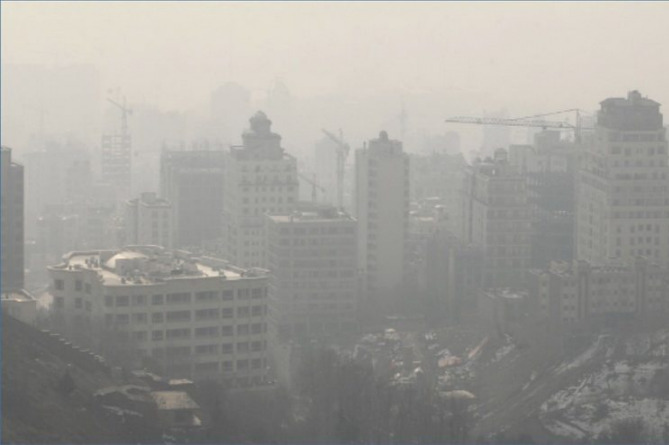
Residents of Yerevan and the entire Ararat Valley are reporting dangerous air pollution again. The city is covered with haze, and many districts experience heavy and unpleasant odors. Authorities provide explanations, but public concern remains high.
PM2.5 Levels at Dangerous Highs
Environmental expert Knarik Grigoryan notes that the international norm for PM2.5 particles is up to 15 μg/m³. In several parts of Yerevan, the numbers reach 200–220, which is considered hazardous. The most polluted areas are Arinj, Norq and Sayat-Nova. At some hours, PM2.5 levels in Arinj climb to 280–300. Even after a decrease, they stay above the safe threshold.
Why the Air Quality Is Getting Worse
Several factors contribute to the rise in pollution.
The first is heavy traffic. Most trucks entering the city run on diesel fuel, releasing particles that contain heavy metals. Tall buildings make air circulation harder. As a result, polluted air stays inside the city.
The second factor is construction. Demolition, soil movement and open construction sites create large amounts of dust.
The third is industrial facilities and quarries. They are few, but their impact is still visible.
Weather and Fires Intensify Pollution
Recent weather conditions have made the situation worse. With no wind or rainfall, dust does not disperse. Forest fires and agricultural burning have added a long-lasting layer of smoke. The expert also warns that burning leaves near homes is more dangerous today. Chemicals left in the soil can turn into toxic compounds when burned.
Who Is at the Highest Risk
People with respiratory and cardiovascular issues suffer the most. Fine particles penetrate deep into the lungs, block oxygen absorption and cause fatigue, dizziness, pressure changes and rapid heartbeat.
The expert recommends using N95 or KN95 respirators instead of standard medical masks.