
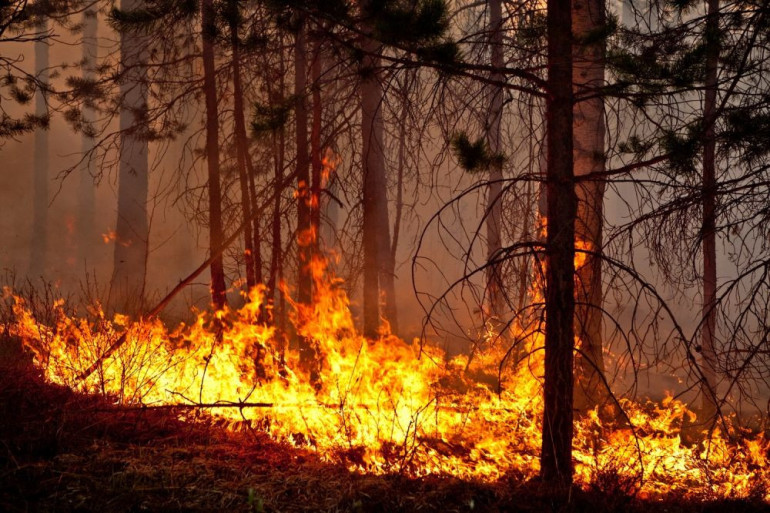
The wildfire risk in Armenia has increased sharply. Recent fires in Kajaran, Berd and Dilijan raised new concerns about safety and crisis management. Several theories are discussed publicly — from negligence to sabotage — but experts warn that the focus must stay on systemic risks and prevention.
Climate change and drying forests are the main drivers
Environmental expert Inga Zarafyan says Armenia’s forest ecosystem has changed dramatically.
Forest soil no longer retains moisture. Years of illegal and unmanaged logging have damaged the ecosystem. Water reserves in the forests have decreased, making many areas extremely dry and highly flammable.
Today, even a small spark is enough for the fire to spread in seconds.
Grassland zones accelerate fire spread
Dry grass slopes around forests act as “highways” for fire. Sun-burned grass ignites quickly and spreads rapidly in unpredictable directions.
Human activity amplifies the risk. Abandoned glass bottles and shards create micro-ignition points. Similar patterns appear in Australia, Canada and Russia.
Sabotage or climate? Expert commentary
Zarafyan argues that sabotage should not be the primary assumption.
Global statistics show that most wildfires result from climate conditions or human negligence.
Delayed use of firefighting helicopters
Some criticized the response time.
But without a daily monitoring system, a fire becomes visible only when it is already large.
Armenia needs a full early-detection network: cameras, thermal sensors, and forest observation posts.
Wildfires are becoming Armenia’s new reality
Due to climate change, such fires will become more frequent.
Without a prevention system, the damage in coming years may become irreversible.