
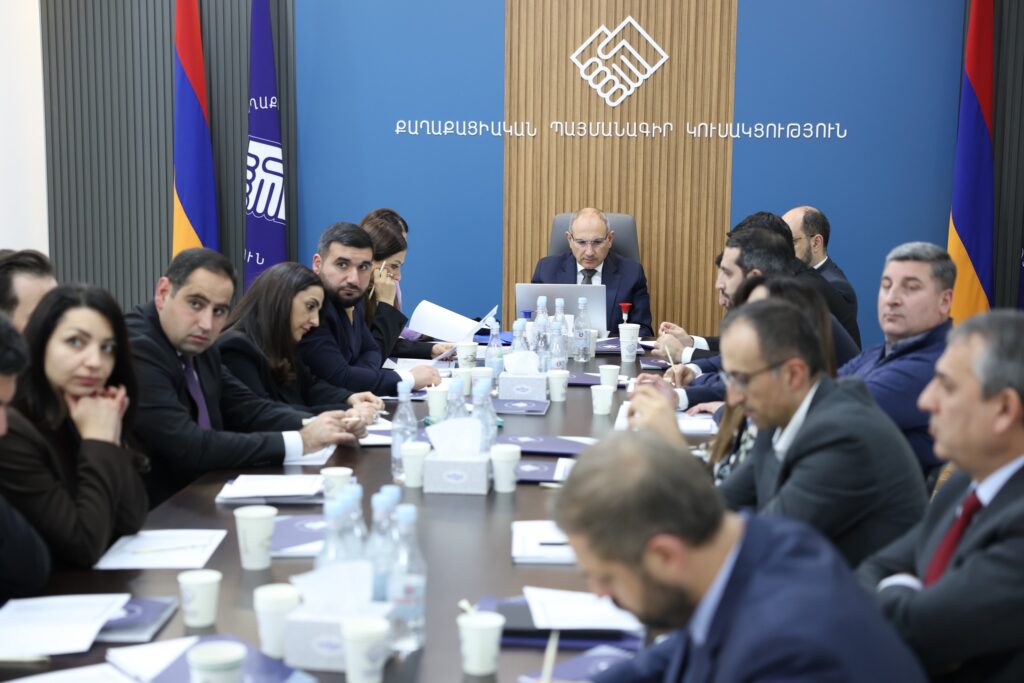
Developments within Armenia’s ruling Civil Contract party are becoming increasingly visible in the domestic political agenda. Ahead of the 2026 parliamentary elections, several key figures are no longer expected to appear on the party’s list. This includes individuals regarded as among the party’s founders.
According to political analyst Vigen Hakobyan, these developments do not have a single explanation. Each case requires separate analysis. Nevertheless, broader trends can already be identified.
Big business and political calculations
Among those leaving the ruling team are representatives of major business circles, including Khachatur Sukiasyan and Gurgen Arsenyan. Until recently, both were members of parliament. One was appointed ambassador. The other announced his intention to leave politics and return to business.
Hakobyan argues that the main reason lies in uncertainty over the ruling party’s political prospects. At least for some business figures, the future of the current government no longer appears predictable.
He notes that big business usually seeks to align itself with the “winning side.” It becomes actively involved in politics when the prospects of a political force seem clear and promising.
Internal factional struggle within Civil Contract
Special attention is also drawn to the case of Hayk Sargsyan. In his situation, the issue is not voluntary withdrawal. Instead, it reflects serious internal contradictions within the party. Sargsyan himself has spoken publicly about his political isolation. He linked it to disagreements with Alen Simonyan and his circle.
According to the MP, legislative initiatives against the betting business harmed the interests of influential groups. As a result, he came under political pressure. Hakobyan views this as a clear manifestation of internal factional struggle. Different groups are competing for influence and resources.
Although party representatives often claim that Civil Contract has no internal wings and consists solely of Nikol Pashinyan’s team, the analyst believes this narrative no longer fully reflects reality.
Shifting authority of Nikol Pashinyan
Hakobyan maintains that Nikol Pashinyan’s authority is no longer as unquestioned as it once was. This is evident in his reduced ability to intervene in internal disputes. He is increasingly unable to act as the party’s final arbiter.
There is also an understanding within the ruling party that it will not retain its current number of parliamentary seats in the next elections. At best, it may preserve half of its existing mandates, or slightly more.
For this reason, the party is already forced to exclude certain figures from the legislature. This process reflects expectations of a reduced parliamentary presence.
Attempt to form a “renewed” team
Hakobyan notes that these developments are also an attempt to present a “renewed” and partially younger team in the elections. New faces are expected to emerge. These may include individuals with backgrounds in educational and civic programs.
Overall, the analyst concludes that these changes signal more than internal reshuffling. They indicate that Civil Contract is entering a more complex and competitive political phase. In this environment, previous mechanisms and personnel no longer guarantee the same level of control or public confidence.