
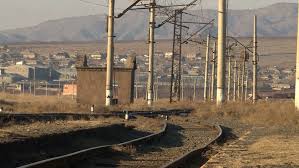
The tensions between Armenia and Russia over the concession management of Armenia’s railways are linked not only to technical issues but also to broader regional processes. This was stated by political analyst Tigran Grigoryan, who emphasized that the issue is increasingly acquiring political and geopolitical significance.
Why Is Russian Control Being Discussed?
According to the analyst, the Prime Minister’s statement that Russian control could become an obstacle should be viewed in the context of possible involvement of third parties, particularly the European Union.
He recalled that in September last year, the EU Special Representative for the South Caucasus, Magdalena Grono, visited the region, including Nakhchivan, and examined issues related to railway restoration. Since that stage, Grigoryan noted, negotiations have been underway between Azerbaijan and the European Union regarding the restoration of the Nakhchivan section with EU support.
However, according to him, the EU has put forward a clear precondition: if it supports the restoration of the Nakhchivan section, it must also be connected to Armenia’s territory through Yeraskh. In other words, the unblocking process should be comprehensive, and Armenia should not be excluded from infrastructure projects.
Grigoryan observes that Azerbaijan has expressed reservations about such preconditions and has attempted to conduct discussions without political conditions. In this context, there is a high likelihood that Baku may point out to European partners that, if these conditions are met, the infrastructure restored with EU investment would become connected to a system under Russian control — something that could be perceived by the EU as problematic.
He noted that this rhetoric is not new. During discussions about the so-called Zangezur corridor, the Azerbaijani side also emphasized that Russian border guards are stationed along the Armenian-Iranian border and questioned why that section should remain under Russian control.
The Idea of Third-Party Management and Speculation
In this situation, Grigoryan said, discussions have begun in Yerevan about a possible alternative model — namely, a management option not under Russian control. There is still no clear official information regarding what specific proposal has been put forward.
Various hypotheses are circulating in expert circles about the possible involvement of Arab countries, Kazakhstan, or other partners. However, the political analyst stressed that these remain at the level of assumptions and are based on logical analysis rather than official data.