
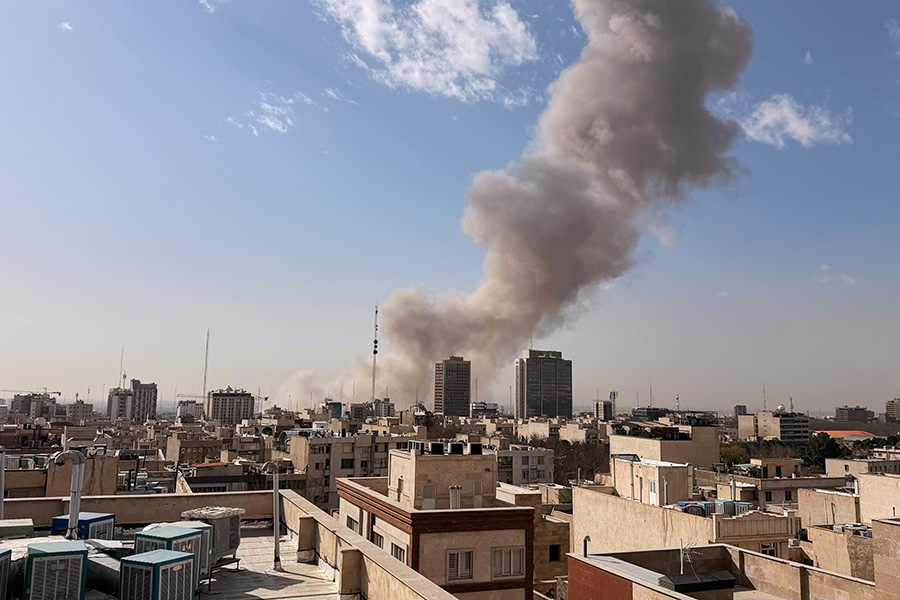
The military confrontation around Iran is not over yet. Current developments — both the course of military operations and the political situation and rhetoric — indicate that the conflict will continue, although its intensity may decrease at certain stages. This view was expressed by regional affairs expert and orientalist Armen Petrosyan.
According to Petrosyan, the possible reduction in the intensity of hostilities at a certain stage will be driven both by resource limitations and by the logic of achieving operational objectives. During the conflict, the primary targets of Israel and the United States have been Iran’s military infrastructure and key officials. In recent days, Israeli and U.S. armed forces have managed to inflict significant damage on Iran’s missile systems, which may provide grounds for a partial reduction in military activity.
At the same time, Iran has mainly directed its strikes at U.S. military bases in regional countries as well as at Israeli territory. The expert notes that Iran’s main strike capabilities were based on missile systems and unmanned aerial vehicles. However, according to available information, drone reserves are also gradually declining. Under these circumstances, Iran may decide to reduce or temporarily suspend strikes against various targets.
Shift in operational objectives
On the other hand, the logic behind the actions of Israel and the United States has already changed to some extent. According to Petrosyan, most of the key targets identified by intelligence and considered critical for military operations have already been struck.
Recently, he observes, attacks have increasingly targeted not only military facilities but also historical, cultural, and civilian sites. These include civilian infrastructure and airports.
According to the expert, this shift may be linked to the fact that Israel and the United States have not been able to achieve their main strategic objective — a regime change in Iran.
In this situation, Petrosyan believes, they are attempting to inflict as much damage as possible on the country’s infrastructure, including civilian systems, so that regardless of which authorities come to power in Iran in the future, the country will have to deal with serious internal problems for a long time.