
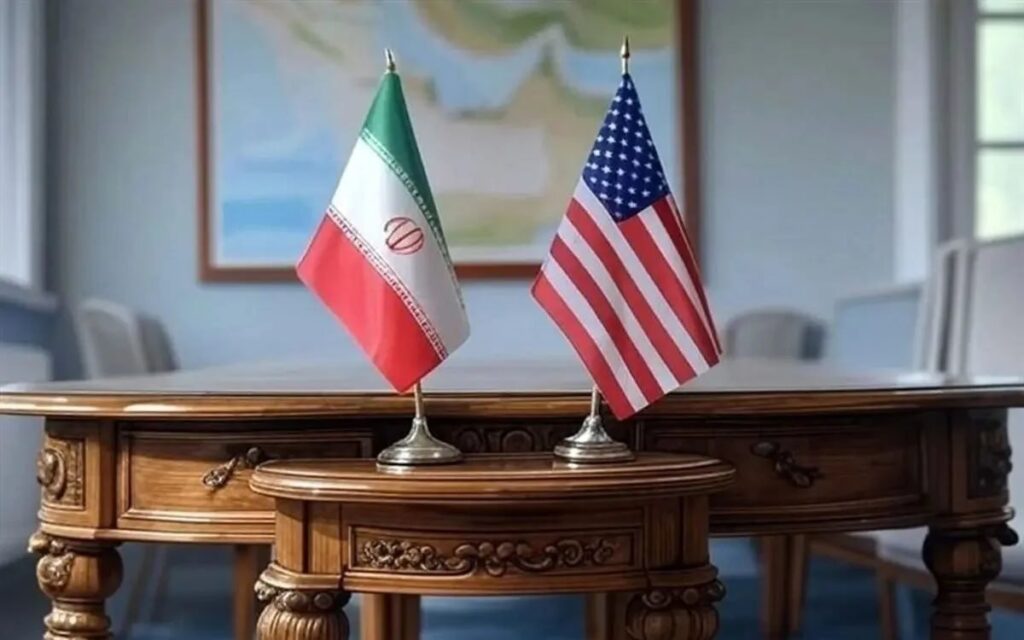
The Iran–US negotiations in Islamabad have ended in failure. The sides accuse each other, military threats are being voiced, and the Strait of Hormuz has once again become a focal point. Whether a new confrontation will follow or whether a diplomatic solution is still possible is addressed by political analyst and Iran expert David Karapetyan.
Escalation shifts to the sea
In his assessment, the current situation is pushing the region into a new phase of tension, where the conflict may move beyond the diplomatic framework.
“If previously the main emphasis was on negotiations, now we see that developments may shift into the military sphere, particularly in the maritime direction,” the analyst notes.
According to him, the talks in Islamabad effectively collapsed, and diplomatic efforts at this stage are “almost absent.”
“It can be said that the entire diplomatic process has effectively dissipated,” he adds, emphasizing that no consensus was reached between the sides.
Washington’s demands
Karapetyan explains that the US demands were strict and multi-layered. In particular, for Washington, both the potential closure of the Strait of Hormuz and Iran’s continued uranium enrichment were considered “red lines.”
According to the analyst, the United States demanded that Iran remove more than 400 kilograms of enriched uranium from its territory, as well as halt and even completely dismantle its nuclear facilities.
“The discussion was not only about limitations but also about full elimination,” he stresses.
However, none of these key demands were met, which became the central reason for the collapse of the negotiations.
Iran’s response
The Iranian side also had its own preconditions. As Karapetyan notes, referring to statements by Iran’s parliamentary leadership, Tehran expected that no military operations would be conducted against its regional allies.
“One of the conditions was that such scenarios, for example in the Lebanese direction, would not be repeated,” he says.
In addition, Iran demanded the unfreezing of its blocked assets, which, according to the analyst, was also not fulfilled.
“The US proposed around $6 billion in limited support through intermediaries, but this looked more like a ‘bait’ than a real solution,” Karapetyan notes.
The analyst emphasizes that the core problem of the negotiations was mutual distrust and the incompatibility of the sides’ demands.