
The main guarantor of Armenia’s security should not be external power centers, but a multi-vector and diversified foreign policy. This view is shared by expert Armine Margaryan. According to her, the concept of “physical guarantors” is gradually losing relevance in the modern world.
“Physical guarantors” no longer exist
Margaryan notes that today it is difficult to find a state capable of fully guaranteeing another country’s security, especially in an increasingly militarized international environment. Even within NATO, she says, problems arise, indicating that traditional security models no longer function as they once did.
In this context, reliance on a “big brother” or a group of allies is not only outdated but also ineffective in the long term.
Diversification as a tool of influence
Margaryan believes that diversifying foreign policy is the most effective approach for Armenia, as it allows the country to engage multiple actors in the region and strengthen its position. This approach enables Armenia to negotiate the same issues with different partners and choose the most beneficial offers.
She recalls that this process became particularly visible from 2023, when the European Union Mission in Armenia was deployed in the country, marking an important step toward balancing foreign policy.
From CSTO to bilateral relations
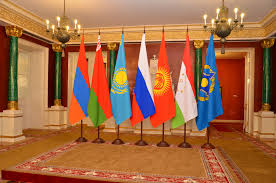
Addressing security structures, Margaryan emphasizes the need to distinguish between Armenia’s participation in the Collective Security Treaty Organization and its bilateral relations with Russia. In her view, if Yerevan freezes its membership or even withdraws from the organization, this should be accompanied not by a rupture but by a revision of relations with Russia within the framework of a “constructive transformation.”
At the same time, she stresses that Russia remains an important partner, and ignoring it would be strategically short-sighted. If Russia can offer military equipment aligned with Armenia’s defense reform goals, such cooperation should continue in a bilateral format.
A balanced partnership model
The political scientist also proposes a diversified model of military-technical cooperation, whereby the share of any single supplier should not exceed a set threshold (for example, 5%). This, she argues, would help maintain balance and reduce dependency on a single source.
In conclusion, Margaryan reiterates that Armenia’s security should be based not on the search for external “guarantors,” but on a flexible foreign policy that enables the country to act more independently and effectively in a complex geopolitical environment.