
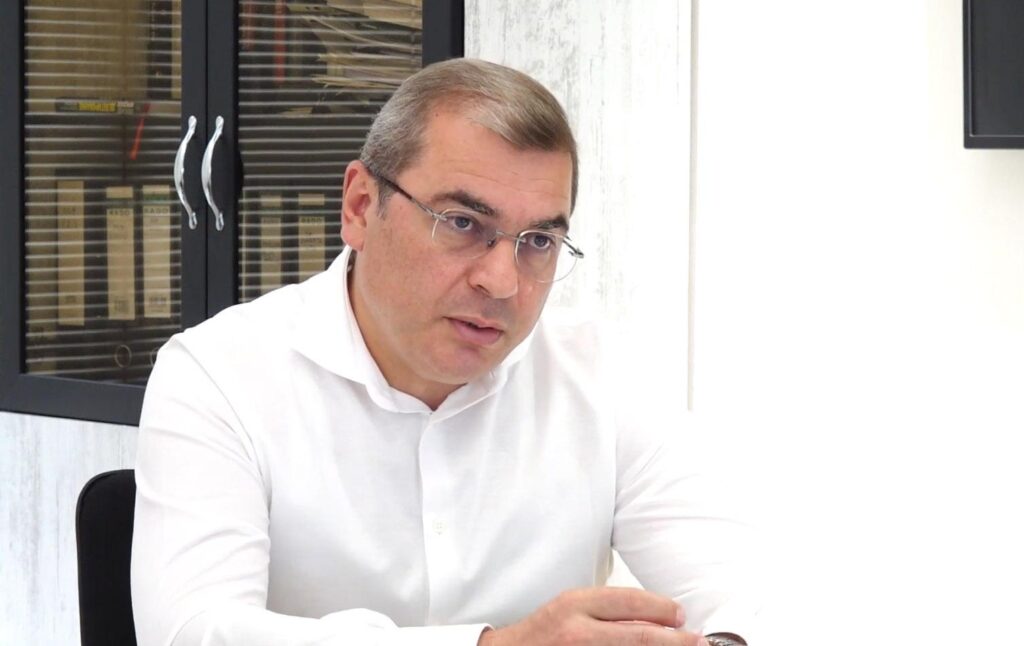
A thorough analysis of the issue of opening the border with Turkey shows that the situation is far from as simple and promising as it may seem at first glance. This opinion was expressed by the former Chairman of the State Revenue Committee, Davit Ananyan.
Transport Infrastructure
According to him, after crossing the border from the Armenian side into Turkey, the roads and railway connections leading to Turkey’s main logistics hubs either do not exist or are in poor condition. Ananyan adds that Turkey will require significant investments to bring this infrastructure in line with international freight traffic standards. Even with political will, this process will not proceed quickly, he notes.
Distance
Furthermore, Ananyan continues, even if the Margara or Akhurik border checkpoints are opened and Armenia gains access to Turkey’s road network through a well-developed transport subsystem, allowing access to major Mediterranean ports such as Mersin and Dercey, the considerable distance to these ports (approximately 850 and 950 km, respectively) means that the cost of transported goods and cargo will not decrease but will instead increase due to the long routes and additional intermediate expenses.
Economic Balance
“Turkey’s economy is many times larger than Armenia’s, while our economy is characterized by weak resilience. In the event of an open border, the most immediate consequence will be the intensive influx of Turkish goods into the Armenian market. Our industrial sectors, whose level of competitiveness is already vulnerable, are unlikely to withstand such pressure,” Ananyan is convinced.
Customs Policy Limitations
He also pointed out that Armenia, as a member of the Eurasian Economic Union (EAEU), is deprived of the ability to pursue an independent protectionist customs and tariff policy. “Within the EAEU, decisions related to customs tariff policy are made through a unified approach — by consensus. Therefore, even if we wish to protect local production through tariffs or restrictions, from a practical point of view this is almost impossible to implement,” he said.