
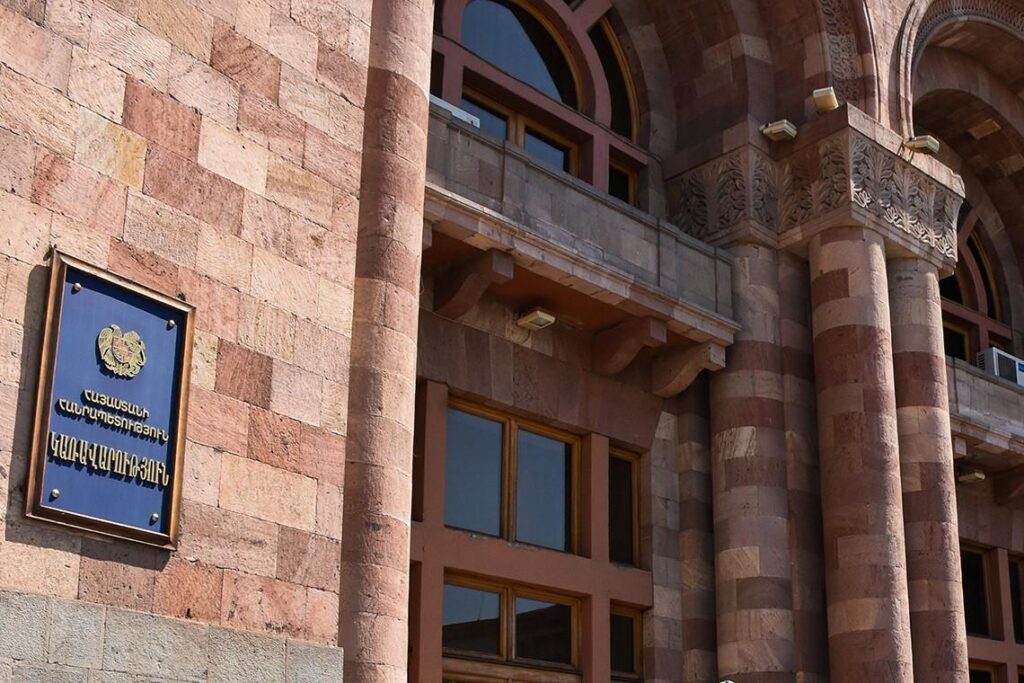
The 2026 state budget presented by the Armenian government appears to aim at balancing the concept of “opportunities and risks.” However, the document often prioritizes formal ambitions without sufficient justification for how these will translate into tangible economic outcomes.
Economic Growth Forecast and Its Justification
The government projects a 5.4% economic growth rate, but the lack of clear mechanisms casts doubt on the feasibility of achieving this target.
In the realm of fiscal policy, the government has adopted a consolidation agenda aimed at reducing the deficit and bringing public debt to around 50% of GDP by 2030. This is a necessary step, but the absence of counter-cyclical components increases Armenia’s vulnerability to external shocks.
Tax Policy: Beyond Administration
Raising the tax-to-GDP ratio to 25–26% is commendable, yet tax policy continues to be viewed primarily as an administrative tool. There are no mechanisms proposed for deep reforms in the investment environment or structural economic changes. The fight against the “shadow economy” remains a political slogan rather than a concrete toolkit.
Expenditure Policy: Prioritizing Results Over Volumes
The high share of capital expenditures (5–6% of GDP) is generally a positive direction, but the focus remains on volumes rather than quality. There is no assessment of the actual impact of infrastructure projects on economic circulation or the restoration of the production base. There is a risk of having large figures in the budget without corresponding economic outcomes.
Social Policy: From Expenditure to Productivity
The introduction of healthcare insurance, along with educational and social programs, is important, but these are dominated by a “spending” approach. Social support is barely linked to programs promoting employment or productivity growth. Without this linkage, even significant expenditures may only address short-term issues rather than provide long-term solutions.
Defense: Necessity Without Strategy
Defense spending is presented modestly and without strategic explanation, despite being a prerequisite for Armenia’s existence. The lack of transparency, inefficiencies in procurement, and the absence of alignment with economic policy remain concerning.
Budget Figures
The 2026 budget draft includes:
- Revenues: Approximately 3.09 trillion AMD
- Expenditures: 3.63 trillion AMD
- Deficit: 537.5 billion AMD (around 3.6% of GDP)
Revenues are generated by taxes and duties (96%), indicating Armenia’s continued reliance on tax burdens without creating new investment sources. Nearly half of the deficit is planned to be covered by external loans, raising concerns about deepening external dependence. Public debt is expected to remain at 54–55% of GDP in the medium term.
Content Gaps and Lack of Strategy
Behind the numbers, a lack of strategy is evident. There are no clear key performance indicators (KPIs) to assess the effectiveness of capital and social programs. The budget is presented as an accounting document rather than a development roadmap.
Proposed Directions
For public and parliamentary discussions, the following recommendations are suggested:
- Clarify Sectoral Drivers: Identify which sectors (e.g., IT, industry, agriculture) will drive economic growth and specify the tools to promote them.
- Incorporate Counter-Cyclical Components: Develop automatic mechanisms to respond to economic shocks, enhancing fiscal policy flexibility.
- Establish Results-Oriented KPIs: Capital and social programs should have clear metrics, such as job creation, export growth, or productivity increases, rather than mere expenditure reports.
- Link Social and Economic Policies: Social support should be paired with employment and income-generating programs to avoid perpetuating dependency on transfers.
- Focus on Quality: Infrastructure projects should be viewed not as spending items but as tools for economic activity and development.
- Promote Innovation: Transform initiatives like the “Academic City” and high-tech support into a knowledge-production-business chain to create competitive products.
- Enhance Defense Transparency and Localization: Increase procurement transparency, develop the local defense industry, link it to the IT sector, and focus on long-term defense infrastructure.
Conclusion
The 2026 state budget is numerically balanced but remains a “sustenance” budget in content. Without structural changes and a results-oriented policy, it will not serve as a strategic roadmap for economic development. Armenia continues to operate as a country ensuring fiscal accounting rather than implementing a program for economic breakthrough.
David Ananyan, Former Chairman of the State Revenue Committee