
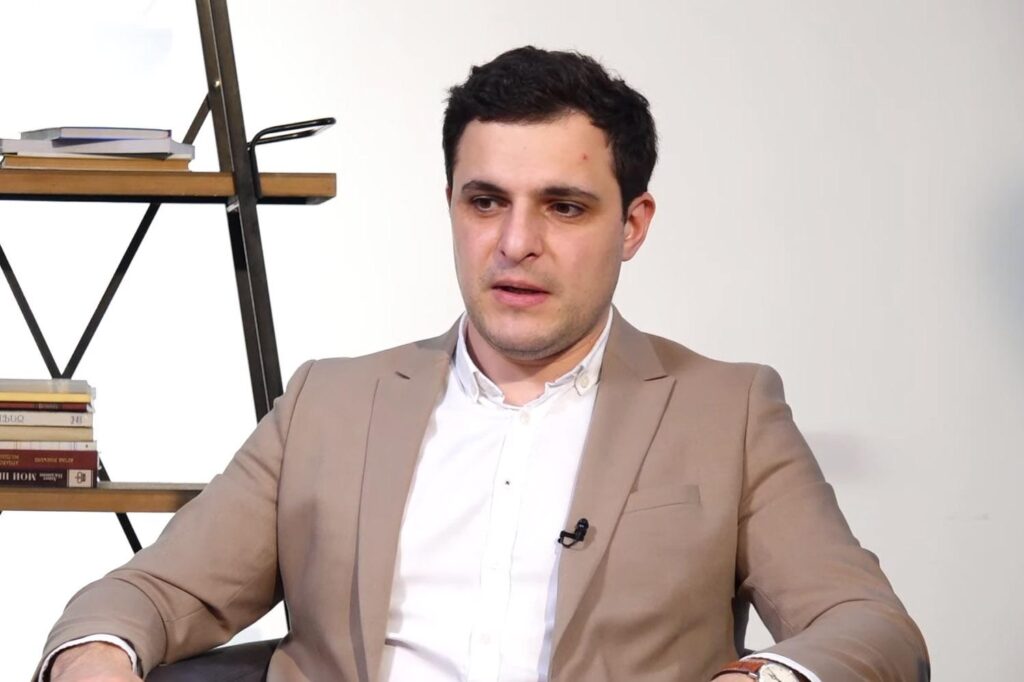
A new wave of tension between Israel and Iran could begin in the coming weeks. Numerous signs point to this, collectively painting an alarming picture of a possible military escalation. Political analyst and Middle East expert Sergey Melkonyan notes that the indicators of an impending conflict can be roughly divided into three main categories — military, informational, and political.
Military Signals: Preparing for Strikes
One of the most notable indicators, according to the expert, is the redeployment of U.S. aerial refueling tankers from the European theater to the Middle East. Melkonyan believes this suggests preparation for a large-scale air operation.
“If Israel plans to carry out heavy strikes not only with drones but also with combat aircraft, it will need a significant number of tankers. Their arrival in the region is a troubling signal,” the expert says.
Another key sign is the increase in Iranian UAV surveillance flights along the western border, which may indicate that Tehran is preparing to repel a potential attack and is strengthening its intelligence capabilities.
Information Space: Shaping Public Perception
The informational buildup on both sides is equally revealing. Iranian officials are increasingly declaring that their missile arsenal is in excellent condition and that the country is ready to respond in case of an attack.
“Such statements are part of a deterrence strategy. Since late 2024, Iranian media have been actively showcasing new weapon systems, signaling that the country does not intend to back down,” Melkonyan explains.
On the Israeli side, hints of possible action are also emerging. A senior military official has stated that Israel is preparing for various scenarios, including a new military operation on Iranian territory. Meanwhile, Israeli pilots and aircraft are no longer heavily engaged in strikes against Gaza or Syria, freeing up resources for a potential campaign.
Political Context: A “Window of Opportunity” Opens
On the political front, the situation is also evolving in a way that could push toward escalation. Sanctions against Iran have been reinstated through the snapback mechanism, providing Israel with additional legitimacy for possible action.
“Part of the international community is convinced that Tehran is violating the terms of the nuclear deal. This gives Israel the opportunity to justify a potential strike as a response to breaches of international agreements,” Melkonyan emphasizes.
Another important development is preliminary progress on a Gaza agreement. While full implementation remains uncertain, Israel gains the opportunity to secure the return of hostages and demilitarize Hamas — either through the deal or by force if it is violated. However, for Israeli leadership, this is unlikely to be seen as a major victory after two years of war.
“Within Netanyahu’s coalition, dissatisfaction may arise. This creates space for demonstrating tangible achievements — for example, through an operation against Iran, echoing the dynamics of June 2025,” the expert argues.
Escalation Likely, But Not Guaranteed
At the same time, Sergey Melkonyan cautions against drawing premature conclusions.
“It’s important to understand that none of these signals guarantees that escalation will happen immediately. They simply indicate that the likelihood of such a scenario is increasing,” he notes.
The expert also does not rule out the possibility that Iran itself may not be the direct target, and that allied forces — such as the Houthis in Yemen, who have already condemned the Gaza deal — could come under attack instead. Such a move would allow Israel to demonstrate its strength in a more “controlled” way without immediately plunging into a large-scale war.