
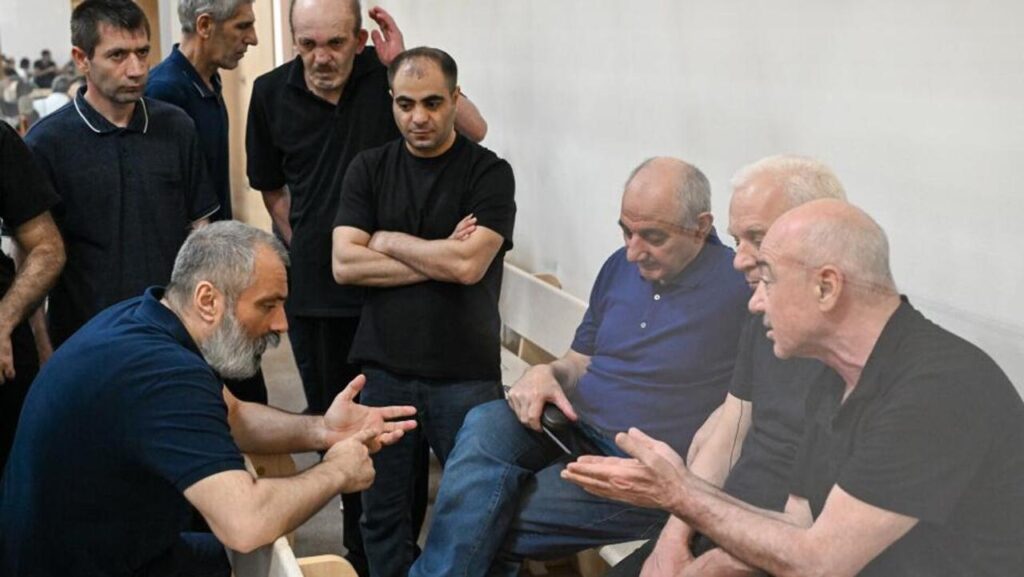
Currently, discussions about the peace process between Armenia and Azerbaijan focus primarily on restoring economic and communication ties, while key humanitarian issues are being pushed off the agenda. Notably, this approach is shared not only by Baku, but also by international actors and even the Armenian authorities. This view was expressed by human rights defender Anna Melikyan.
The state’s primary obligation is being neglected
This concerns, in particular, Armenian prisoners held in Baku, as well as the need to clarify the fate of missing persons. According to Melikyan, especially during electoral processes and campaign periods, these issues are not merely sidelined but are pushed almost entirely to the background, replaced by positive narratives about economic cooperation.
She emphasizes that such an approach is deeply troubling, as the foremost duty of any state is to protect the rights of its citizens.
“We must all be confident that our state consistently stands for the protection of our rights, regardless of external or international interests,” the human rights defender notes.
Azerbaijan’s ombudsman institution — a formal body
Referring to the recent incident in which Ruben Vardanyan’s phone call was interrupted while he attempted to contact Azerbaijan’s ombudsman, Melikyan stated that this institution has long been regarded as ineffective and dependent, incapable of genuinely protecting human rights.
According to her, the ombudsman does not function as an independent body and cannot take any meaningful action without approval from the executive branch or the presidential administration.
Melikyan stresses that this assessment applies not only to the protection of Armenians’ rights but to the overall human rights situation in Azerbaijan. The institution’s international “B” status, she adds, also reflects its limited independence and effectiveness.
She notes that even if communication were formally ensured, it would most likely not lead to real change. However, the issue runs deeper: even such formal mechanisms are not activated, once again demonstrating Baku’s tendency to avoid addressing human rights issues.
Access to verdicts — a fundamental element of a fair trial
Speaking about the cases of Armenian prisoners held in Baku, Melikyan highlights that, according to some reports, they have not received the texts of the verdicts issued against them.
In her view, this constitutes a serious violation of the right to a fair trial. Access to a verdict is a fundamental safeguard that allows an individual to understand the grounds for conviction, assess the evidence presented, and, if necessary, exercise the right to appeal.
“If a person has not received the verdict, they are effectively deprived of the opportunity to appeal, which is one of the key elements of a fair trial,” she states.
Even taking into account the well-known issues of independence and effectiveness within Azerbaijan’s judicial system, formal procedures are not being observed, she adds.
International silence and the strengthening of Baku’s позиции
According to Melikyan, Azerbaijan’s authorities — particularly at the presidential level — have recently significantly strengthened their positions on the international stage.
Against this backdrop, she notes, the number of countries and organizations speaking out about human rights violations in Azerbaijan is steadily decreasing. She recalls that in one of his recent speeches, the Azerbaijani president openly demonstrated disregard for international law, effectively justifying his actions.
According to Melikyan, such statements and political behavior also serve as a message to Armenians held in Baku — showing that they are in a state of complete legal vulnerability and lack effective means of protection within the country.
She emphasizes that the strengthening of Azerbaijan’s international standing allows it to more freely ignore its international obligations while simultaneously demonstrating “who actually makes the decisions” and how limited the influence of international legal mechanisms is in this context.