
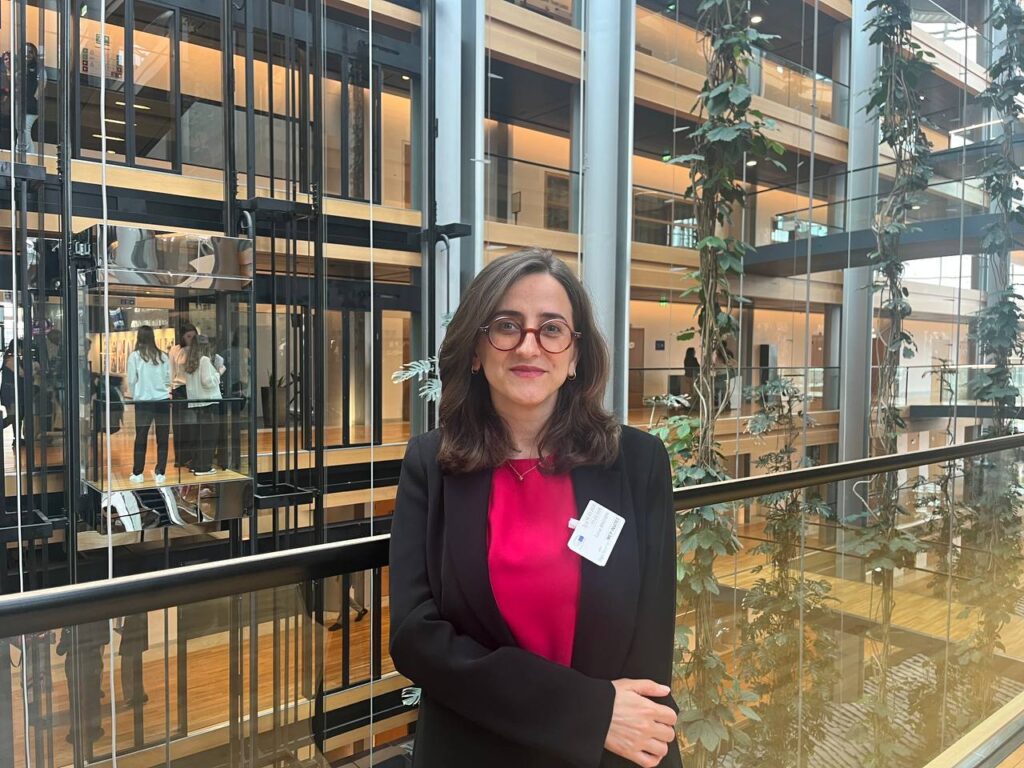
The ongoing military escalation in the Middle East is creating new challenges not only for regional states but also for the peoples living there. Iranian Kurds, in particular, have found themselves in a highly vulnerable position, as their areas of residence have become key targets of military operations. To understand how the situation is unfolding on the ground, what risks civilians are facing, and what role Kurdish political forces may play under these complex conditions, we spoke with Sahar Bagheri, a researcher at Sorbonne Paris Nord University.
What is the current situation of Iranian Kurds amid the war, and what risks does it pose to civilians?
The situation for Iranian Kurds is extremely tense at the moment. Iran is at war, and the Kurdish region has become one of the areas most affected by airstrikes and missile attacks, largely because many military and security bases are concentrated there. The strikes are mainly carried out by Israel and the United States, targeting military and security infrastructure across Iran. Several provinces have been particularly affected, including Ilam, Kermanshah, Kurdistan Province, and West Azerbaijan—especially around Urmia—where key military facilities are located. Since some of these bases are situated within or near residential areas, civilians are directly exposed to danger. At the same time, it is difficult to fully assess the situation on the ground due to limited communication and a lack of reliable information, but it is clear that the population is living under constant stress and uncertainty.
Do we have any confirmed numbers regarding civilian casualties?
No, unfortunately we don’t have reliable numbers at this stage. The main problem is the lack of access to trustworthy information. Most of the official reports coming from Kurdistan or Iran are based on the Iranian regime’s media, and we cannot fully rely on them. So, it is not easy right now to say how many people have been killed. However, we know that at the same time the Iranian regime, which has been heavily attacked by Israeli and United States strikes, has begun evacuating some military buildings. Military forces have reportedly been moved to places such as mosques, schools, and other public spaces.People are very angry about it. When military forces move into civilian areas, it increases the risk for ordinary people living there. Based on the limited information we have received, there have already been protests in some Kurdish cities, including Meriwan and Abdanan as residents fear that placing military forces in public areas exposes civilians to further attacks and, in practice, turns them into human shields.
This is what is happening inside Iranian Kurdistan, politically referred to as Rojhelat. Meanwhile, the Iranian regime has also carried out strikes on the camps of Kurdish political parties located in Iraq, including PAK, the Kurdistan Democratic Party of Iran, and Komala. For the Iranian regime, Kurdish political parties are considered one of its main internal enemies.
By carrying out these strikes, the regime is trying to show that it is present and capable of responding quickly. This is happening even though Kurdish political parties have not yet taken any action against the Iranian regime. They are aware that the current situation is not favorable for them to mobilize or return to Kurdistan, especially since the Iranian regime still retains significant military capacity to confront them.
Another concerning issue regarding the Kurdish forces is the debate over whether they will be engaged in the war. Based on recent experience in Rojava, we know the main problem has been the abandonment and betrayal of Kurdish forces. Currently, the coalition of Kurdish political parties—comprising six main parties—has stated that they will not participate. However, they have not yet made an official statement clarifying whether there has been any discussion or agreement with the United States; no formal information is available.
On the other hand, the Trump administration’s strategy toward the war has been inconsistent and ambiguous. Still, reports have surfaced that put real pressure on Kurdish political parties, which partly explains why the Iranian regime has begun striking them. Despite this, the Kurdish parties insist that they will not serve as soldiers for any other government. Their forces are above partisan politics and have always been used solely for self-defense.
So, what does it mean that the Kurds will not actually implement the plans of Israel or the United States?
The spokesman for the coalition of political parties clarified: they will not act as soldiers for any government. It is true that we are open to pursuing a strategy of tactical cooperation, but this would be based on political considerations, not military ones. At the same time, we are fully aware that the Iranian regime could easily strike civilians and our forces. Therefore, we will not sacrifice our people for the interests of powers such as Israel or the United States. In the event of cooperation, the situation and the balance of power inside Iran would have to shift in favor of their presence on the ground in Kurdistan, and since that hasn’t happened, they are not ready to act as soldiers of any government. Especially after the experience in Rojava, we have seen that any cooperation without a genuine change in internal power dynamics fails to produce meaningful results.
Historically, Turkey also used the Kurds against the Armenians around 100 years ago? Wasn’t that a similar situation?
Yes, so the issue in Rojava was that the cooperation was military, aimed against ISIS, but it was not accompanied by political alliance or collaboration. This lack of political support left Rojava vulnerable during the transitions from the Assad regime to new authorities. As the Kurds themselves have said, the pain of Rojava is still fresh for us, and we are not ready to repeat the same mistakes.
So, is this the general sentiment among both the political leaders and the people as well?
Yes, they said that as political forces with a long history of struggle, it is not exceptional to work with any government, but the questions are how to work, under what conditions, and in which political context inside Iran. They said that they know it is a unique historical opportunity, and since Kurdish political forces see that sometimes war can create new opportunities, the question is in which way they can…
In that regard, could the offer from Trump and Netanyahu still serve as a possible solution for you?
Maybe, but we don’t have any information about the details of the offer…
So, as I understand, you are still reflecting on it and leaving the door open, even though earlier you said it was only for political cooperation?
Yes, they said that… not all about the military, but above all politically, because the Kurds need political support and recognition from foreign governments. Historically, the states that have governed Kurds did not guarantee the rights of the Kurdish people.
But if, for example, Trump and Netanyahu were to offer you a fight alongside them — providing your soldiers and military support — and promised that in the end you would get a free Kurdistan, what would your answer be?
I cannot answer based on my personal opinion, but based on what I have seen and what can be found in the declarations of Kurdish political parties, they said they are open to cooperation — but not in a context where, if they intervene, they and their people would be massacred by the Iranian regime. The regime still maintains internal coherence and has enough military power to respond to the Kurds. Maybe it would not be enough to respond to the United States or Israel, but for the Kurds, it is a serious threat.
At the same time, the return to Kurdistan has not been just a matter of today; it has been a long-standing issue. Therefore, it depends on internal political dynamics in Iran. For example, if there were a mass uprising, conditions would be more favorable for Kurdish forces to return. Otherwise, it would depend on the support they receive from international actors — not only from these two governments, but from other international forces as well.
The main point is that we do not have enough clear and reliable information about what is happening between Kurdish forces and the United States in particular. At the same time, we may be witnessing pressure on Kurdish forces. Because of their history of struggle, organizational capacity, and strong social base, all Kurdish political parties have a solid presence inside society. The strategic position of Kurdistan makes it an attractive choice for the United States and Israel to engage them in military efforts. However, the Kurds have their own reasons and political interests. I think they will act based on their own interests, not solely on the interests of external powers.
Are you expecting support from the EU, and if so, under what conditions?
Yes, there should be pressure on the Iranian regime, even in the context of war. The Iranian regime still has ambassadors in European countries, so the EU should not simply observe what is happening — it must take a more active role. This includes supporting democratic forces in Iran, particularly the Kurds, who clearly have the political, ideological, and social capacity to play a key role in building a pluralistic and democratic future for Iran — a future where diversity is recognized and protected. The EU should give these voices more space, provide concrete support, and help foster political solutions that advance human rights and democracy.
Right now, is it clear what position the EU is taking on this issue?
Not really, not yet. I think European countries have not taken a clear position so far, partly because of the complexity of the war, its regional dimensions, and the responses of the Iranian state, which make it difficult for them to take a definitive stance. However, the consequences of the war on global energy chains, oil prices, and regional trade will inevitably force them to become more engaged. Economic interests are always crucial, and Europe has already felt the impact — for example, the rising price of gasoline. In today’s interconnected world, it’s impossible for any country to ignore a conflict, no matter where it happens.