
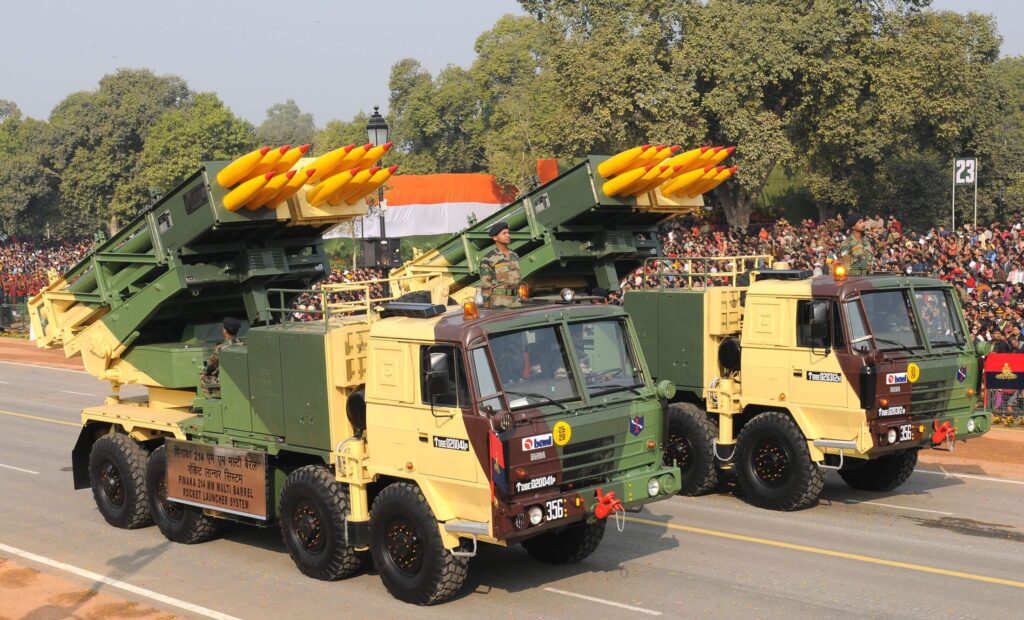
Armenia’s authorities have taken a flawed direction in arms procurement, purchasing weapons at higher prices than before. This was stated by military expert David Jamalyan, who emphasized that these decisions have not only caused financial damage but also created serious risks for the army’s combat effectiveness.
Unproven weapons
According to the expert, many people today see large and visually impressive equipment but do not understand its real value and limitations. In particular, weapons imported from India have never been tested in real combat conditions. For years, Armenia has not conducted full-scale military exercises that closely simulate battlefield scenarios, which are necessary for personnel to develop the skills required to operate such systems effectively.
“The weapons have not been used in exercises, therefore it is unclear how long it will take to fully integrate them into the army and properly train personnel,” Jamalyan noted.
Supply chain challenges
He also highlights ammunition supply as another major issue. In the case of air defense systems purchased from France, the French defense minister stated during a press conference in Yerevan that the issue of missile deliveries still requires negotiations. France’s defense industry has limited production capacity, orders are numerous, and Armenia is at the end of the queue. As a result, delivery timelines could extend to 15 years or more.
The expert stresses that even if the missiles are produced, the only delivery route runs through Georgia. However, during conflicts, Georgia has repeatedly closed its airspace to Armenia. This means that these systems may remain without missiles or receive them in very limited quantities.
Ammunition for Indian weapons, in turn, mainly arrives through Iran. According to Jamalyan, cooperation with Armenia is purely commercial for India, meaning uninterrupted supply in wartime is not guaranteed. If instability arises in Iran or if northern regions come under Turkish influence, the route could be completely blocked. Even in stable conditions, additional logistical risks remain.
In the expert’s view, the systems currently showcased to the public may either not be used at all or will operate at no more than 10% capacity during a conflict due to ammunition shortages. He considers this a classic example of inefficient use of state resources and a dangerous trend that could have serious consequences for Armenia’s defense capabilities.
Jamalyan’s assessments are based on analysis of regional politics, logistics constraints, and the real capacities of the defense industry. Such criticism once again raises the question of whether Armenia’s arms diversification strategy is being implemented in an effective and secure manner.