
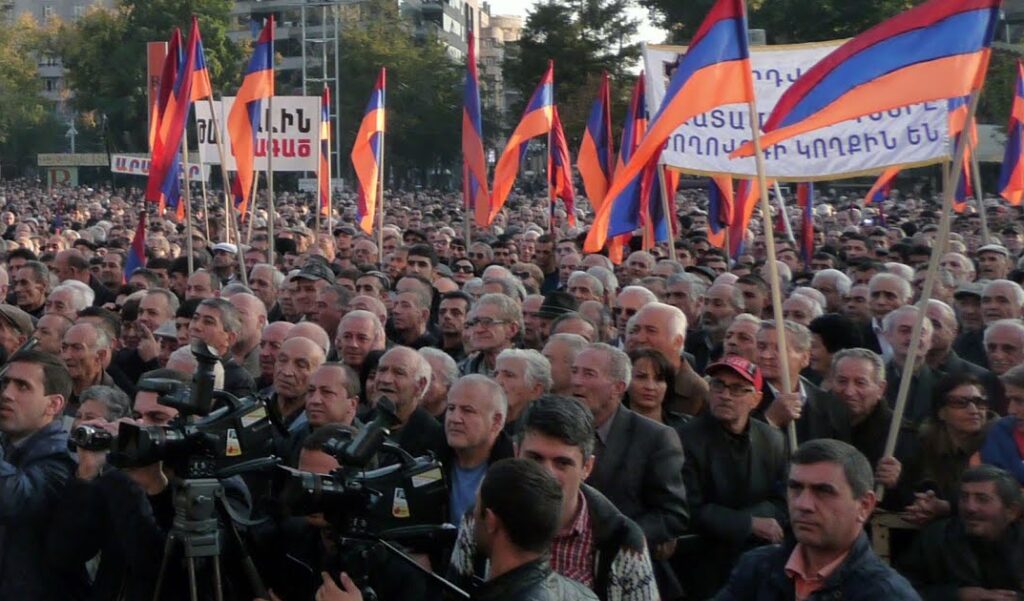
In the near future, authorities are likely to increase pressure on the opposition. The trends already visible may deepen and evolve into a more systematic and harsher approach. This view is expressed by lawyer and MP Eline Varadanyan.
Temporary restraint driven by external factors
According to her, until May 4–5 the authorities may demonstrate relatively balanced behavior. In her view, this is linked to expected visits by European leaders, during which the government will aim to present Armenia as a democratic state to the international community.
However, this “image” is likely to be short-lived. After this period, the situation may change sharply, with more intensive political pressure emerging, including the active use of the judicial system.
Revival of “dormant” cases and new proceedings
Varadanyan notes that not only new criminal cases may be initiated, but also previously suspended or frozen cases could be reopened. According to her, such cases are often “kept in the bottom drawer” and activated when a political signal is given.
She believes this could become a tool for exerting pressure on opposition forces and individual political actors.
Potential impact on elections
The MP also raises concerns about the pre-election phase. She does not rule out the possibility of obstacles being created for political parties during registration or participation in elections.
Although electoral legislation defines clear criteria, under which refusal to register a party may appear legally unjustified, Varadanyan suggests that alternative mechanisms could be used.
In particular, she points to a scenario where a party is initially registered, but later its registration is suspended through court decisions. According to her, such scenarios are already being discussed and occasionally hinted at by representatives of the authorities.
“Hybrid warfare” rhetoric and international dimension
Varadanyan also refers to the authorities’ use of narratives about “hybrid attacks” and “hybrid warfare.” In her view, this rhetoric may serve as justification for imposing various restrictions.
She notes that the authorities have already appealed to European institutions for support in countering such threats, which suggests that certain scenarios are already under consideration.
Opposition response and consolidation
Speaking about the opposition, Varadanyan notes that different forces have already included the issue of responding to possible developments in their agendas.
In her view, there are several key areas where a unified position could emerge. First, increasing voter participation and strengthening trust in the electoral process. Second, resisting political pressure and defending the rights of political prisoners. Third, coordinating responses in cases where opposition parties face refusal or suspension of registration.
She argues that consolidation around these issues is not only possible but necessary. It is also likely that opposition forces may develop a joint “roadmap” of actions in the near future to address potential risks.
Outlook: a tense political phase
According to Varadanyan, Armenia is entering a period of heightened political tension, where both government actions and the opposition’s ability to unite and respond will be crucial.
She concludes that future developments will largely depend on how effectively political actors adapt to the emerging challenges.