
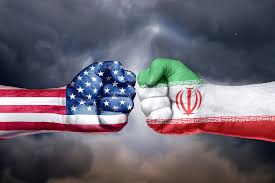
Tensions between Iran and the United States continue to rise. The first round of talks held in Islamabad failed to deliver the expected results, while the prospects for the next round remain uncertain. Whether the sides will reach a diplomatic solution or move toward another military confrontation is addressed by Iran expert Tigran Davudyan.
Reasons behind the failed talks
According to the expert, the first round of negotiations, mediated by Pakistan, initially showed positive momentum. The United States agreed to extend the ceasefire to Lebanon, which was one of Iran’s key preconditions. However, the talks became complicated due to differing demands: Washington presented around 15 points, while Tehran proposed about 10.
At the same time, Davudyan notes that Iran’s multi-layered decision-making system makes it difficult to form a unified position. The negotiating team cannot fully represent all influential groups within the country, especially given the presence of hardline factions.
Mediation and expectations for the second round
Pakistan continues to play an important mediating role. In this context, its military leadership has held contacts in both Tehran and Washington in an effort to prepare the next round of negotiations.
Despite the uncertainty, the expert does not rule out Iran’s participation in the second round. However, Tehran is putting forward additional conditions, particularly the easing or lifting of the naval blockade.
Demands and contradictions
Iran’s main demands are related to sanctions relief, the unfreezing of financial assets, and the removal of maritime restrictions. These involve tens of billions of dollars held in foreign banks and currently inaccessible to Tehran.
On the other hand, the United States’ primary demand is that Iran halt uranium enrichment. Various scenarios are being discussed, including timelines for restrictions, as well as the fate of highly enriched uranium — either transferring it to third countries or diluting it under international supervision.
The window for diplomacy remains open
Despite disagreements, the parties have not closed the door to negotiations. According to Davudyan, the process remains within the diplomatic sphere, although the situation is fragile.
He believes that future developments will largely depend on political will and the effectiveness of mediation efforts. Meanwhile, the region remains a high-risk zone, where any misstep could trigger a new escalation.