
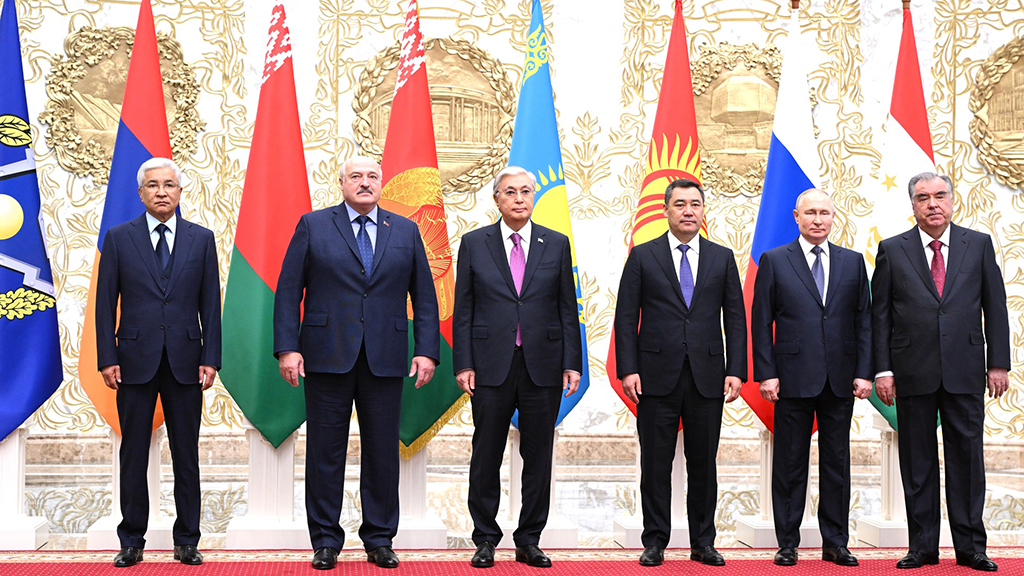
Armenia’s policy of “freezing” its membership in the CSTO is not only ineffective but also dangerous at both domestic and external levels. This view is held by political analyst Hayk Martirosyan. According to him, Yerevan is trying to use this format to mislead the domestic audience. However, this approach does not work internationally and leads to more serious consequences.
“Freezing” as a way to avoid responsibility
Martirosyan notes that the CSTO does not function as a system and has already “betrayed” Armenia. However, in his view, refusing to fully withdraw from the organization and merely “freezing” membership creates a contradictory situation.
In his words, “freezing” is a half-measure. Yet it was done deliberately. The political analyst believes this approach allows Armenia’s membership to be formally preserved. At the same time, it helps CSTO countries, including Russia, avoid clear responsibility for defending Armenia by referring to the frozen status of its participation.
In such a situation, the country is effectively left without real security guarantees. It has no other military alliances. Meanwhile, remaining in the CSTO limits the possibility of forming such alliances.
Martirosyan argues that this “freezing” is a morally criminal step. In this context, he concludes that it is not a solution. Instead, it deepens the security crisis and leaves Armenia in uncertainty.
Alternative alliances outside NATO
According to Martirosyan, Armenia should not preserve this uncertain situation. Instead, it should fully withdraw from the CSTO and begin forming new military cooperation formats. The political analyst considers NATO membership unrealistic because of Turkey’s veto. Therefore, he proposes considering other options.
In particular, he speaks about the possibility of deepening cooperation with the United States. In this context, Martirosyan highlights the prospect of obtaining the status of a “major non-NATO ally.” According to him, such models can become alternative ways to ensure security.
Martirosyan also considers it important to establish bilateral military alliances with different countries. In his assessment, Armenia could build such cooperation, for example, with India, the United Arab Emirates, or Saudi Arabia.
He notes that these opportunities are often ignored because of limited political thinking. Meanwhile, these countries are not Armenia’s enemies and do not have conflicting interests with it. Therefore, they may be ready for such a partnership.
Special emphasis is placed on possible strategic and military rapprochement with Israel. According to the political analyst, this direction could become one of the key elements of Armenia’s new security system.