
Israeli Foreign Minister Gideon Sa’ar has submitted an initiative to the government proposing the official recognition of the Armenian Genocide in the Ottoman Empire and the condemnation of denial policies. The proposal is expected to be debated in the Knesset next week.
According to political commentator Artyom Yerkanyan, the initiative should be viewed not only through a historical lens but also within the broader context of current regional politics.
What the Foreign Minister Is Proposing
Yerkanyan notes that the explanatory memorandum accompanying the initiative states that, despite extensive historical evidence confirming the Armenian Genocide, Turkey continues to pursue a state policy of denial.
For this reason, the proposal seeks not only to officially recognize the Armenian Genocide but also to condemn all attempts to deny historical reality.
However, government approval does not mark the end of the process. The initiative must still be debated and voted on in the Knesset.
Political Initiative or Instrument of Pressure?
According to Yerkanyan, although the proposal was formally introduced by the foreign minister, it is unlikely to be solely a Foreign Ministry initiative.
Given the nature of Israel’s political system, he argues that the proposal has almost certainly been coordinated with the prime minister and reflects the broader policy approach of the current government.
The key question, however, is whether this initiative will ultimately reach its intended conclusion.
The Context of Israeli-Turkish Tensions
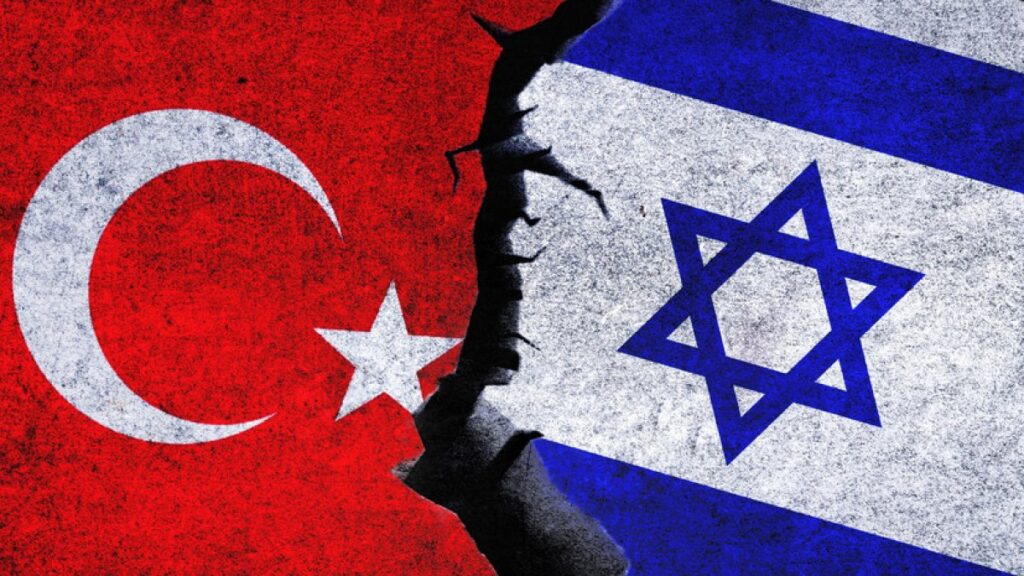
Yerkanyan recalls that the initiative has emerged amid another period of heightened tensions between Israel and Turkey.
In recent months, Turkish President Recep Tayyip Erdoğan and other senior Turkish officials have repeatedly accused Israel of committing genocide in Gaza.
Against this backdrop, renewed attention to the Armenian Genocide issue may serve broader political objectives.
According to the political commentator, the initiative could serve two purposes: depriving Turkey of the moral high ground on genocide-related issues and demonstrating that Israel is prepared to use one of Turkey’s most sensitive historical questions as an instrument of political pressure.
Israeli Media Have Openly Discussed the Motives
Yerkanyan points out that similar assessments have also appeared in Israeli media outlets.
He cites reports by The Times of Israel suggesting that after years of avoiding official recognition of the Armenian Genocide, Israeli authorities have reconsidered their position in response to Erdoğan’s harsh accusations regarding Gaza.
In his view, this indicates that the current initiative is directly linked to political disagreements between the two countries.
Previous Attempts Failed
The political commentator notes that efforts to secure Israeli recognition of the Armenian Genocide are not new.
In June 2011, Knesset member Aryeh Eldad introduced a bill recognizing the Armenian Genocide. Although the issue was debated and received support from several lawmakers, it never reached a final parliamentary vote.
In February 2018, the issue returned to parliament but again failed to receive sufficient support, with 28 lawmakers voting in favor and 41 against.
Later, then-Knesset Speaker Yuli Edelstein promoted a similar initiative but eventually removed it from the agenda due to insufficient support within the governing coalition.
Netanyahu’s Statement Remained Symbolic
Another notable episode occurred last August, when Israeli Prime Minister Benjamin Netanyahu stated during an interview with podcaster Patrick Bet-David: “I recognize the Armenian Genocide right now.”
However, as Yerkanyan notes, that statement remained purely political and did not lead to any legal or policy changes.
Armenia’s Position
The political commentator also recalls that over the past three years, Armenian authorities have repeatedly stated that international recognition of the Armenian Genocide is not currently among Armenia’s top foreign policy priorities.
Within the framework of Armenian-Turkish normalization efforts, Yerevan has sought to avoid actions that could be used to obstruct the process.
Yerkanyan also references Prime Minister Nikol Pashinyan’s reaction to Netanyahu’s statement, when he argued that recognition of the Armenian Genocide should not become a bargaining chip in geopolitical negotiations.
Will This Time Be Different?
According to Yerkanyan, regardless of differing assessments of Armenia’s policies, it is clear that the current initiative emerged during another crisis in Israeli-Turkish relations.
This raises an important question: is this a genuine attempt to achieve historical justice, or is the Armenian Genocide issue once again being used as an instrument of political and diplomatic pressure?
“In my opinion, it is obvious that, in this particular case, Israeli authorities are indeed using the Armenian Genocide issue as a political bargaining tool. If their intentions had been sincere, they could have recognized it five, ten, fifteen, or twenty years ago,” he concluded.