
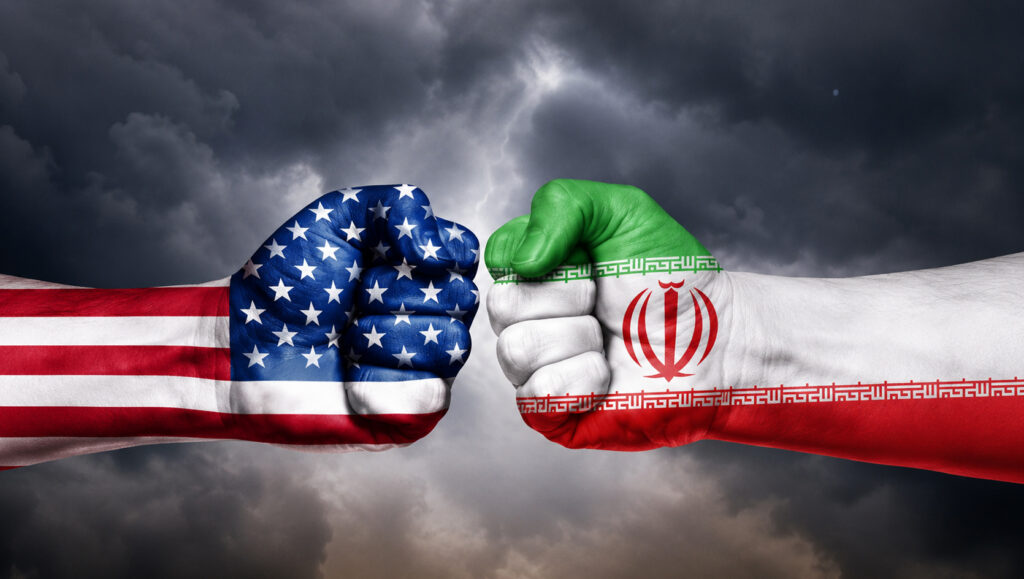
The United States has failed to achieve the principal objectives Washington has pursued toward the Islamic Republic of Iran for many years, according to Iran expert Tigran Davudyan.
He argues that attempts to completely halt Tehran’s nuclear program and eliminate its missile capabilities have both failed. Recent developments have further complicated the situation because of growing tensions around the Strait of Hormuz.
Trump Failed to Deliver on His Promises
Davudyan recalled that during his first presidential term, Donald Trump repeatedly criticized former US presidents Barack Obama and later Joe Biden, arguing that they had reached “bad agreements” with Iran.
According to the Iran expert, Trump repeatedly promised to cancel previous arrangements and secure a more favorable agreement, but failed to achieve that objective.
“The US president was unable to accomplish the goals he had set regarding Iran, either during his first term or in recent months. He promised a better agreement, but every attempt failed,” Davudyan said.
The Negotiations Also Produced No Results
Davudyan also addressed negotiations held in Europe several weeks ago, noting that they ended without any tangible outcome.
According to him, the Iranian authorities were merely seeking to gain time during the talks because the country was organizing the funeral of its assassinated Supreme Leader, which lasted for more than a week.
Davudyan said that anti-American slogans and calls directed personally against Donald Trump were also heard in Iran during that period.
“During the funeral, there were calls to take revenge on Trump. Reports even circulated that during the NATO summit, when Trump was in Turkey, certain extremist circles discussed the possibility of attempting to assassinate him. There were also claims that his aircraft had been changed for security reasons,” he said.
In Davudyan’s assessment, it is now possible to conclude that Washington has failed to implement its main strategic objectives toward Iran.
The goals of completely stopping Tehran’s nuclear program and dismantling its missile production capabilities remain unfulfilled.
“The United States has been unable to achieve these goals, and now another major problem has been added to them: the Strait of Hormuz,” he emphasized.
The Strait of Hormuz Has Become a New Center of Tensions
According to Davudyan, the parties have also negotiated in recent months over regulating navigation through the Strait of Hormuz.
He said Pakistan played a mediating role with support from Qatar, after which the relevant document was discussed in Switzerland.
Under the reported arrangement, Iran agreed not to obstruct the passage of vessels but demanded that they travel exclusively along a maritime route designated by Tehran.
“The Strait of Hormuz lies between Iran and Oman. However, several ships began traveling through Omani territorial waters, after which missile attacks occurred in that area. The West accused Iran, while Tehran denied the accusations but continued insisting that vessels must use the route it had designated,” Davudyan said.
According to the expert, Iran also proposed charging every ship passing through the Strait of Hormuz a fee of $2 million.
However, the initiative was accepted neither by the international community nor by the United Nations.
Davudyan also drew attention to Donald Trump’s recent statements indicating that the United States also wants to generate revenue from international maritime transport.
“Iran’s proposal was rejected, but today Trump says vessels passing through the strait should pay 20% to the United States. This is, at the very least, a strange approach,” Davudyan said.
Influential Groups in Iran Do Not Want an Agreement
The Iran expert believes there are also influential groups inside Iran that are not interested in normalizing relations with the West.
He said these are primarily the networks often described in the Iranian press as the “oil mafia.”
“These groups receive enormous economic benefits from the wartime situation. They sell oil through indirect channels and earn vast revenues, so they are not interested in Iran reaching a final agreement with the West,” he said.
Davudyan noted that although all state financial flows should logically be controlled by the government, substantial resources are in reality managed by other institutions.
“Iran has militarized structures, primarily the Islamic Revolutionary Guard Corps, which operate their own ports, independently sell oil and maintain financial flows that are not controlled by the government. A ‘state within a state’ system has effectively emerged,” he said.
According to Davudyan, former Iranian presidents Hassan Rouhani and Mahmoud Ahmadinejad also repeatedly raised this issue, arguing that they were held responsible for the country’s socioeconomic situation while lacking control over its primary financial resources.
“Presidents have repeatedly asked: if they are responsible for the economy, bread, wheat and social problems, where do the vast revenues from oil sales go? This is one of the most important issues in Iran’s domestic political life,” the expert concluded.