
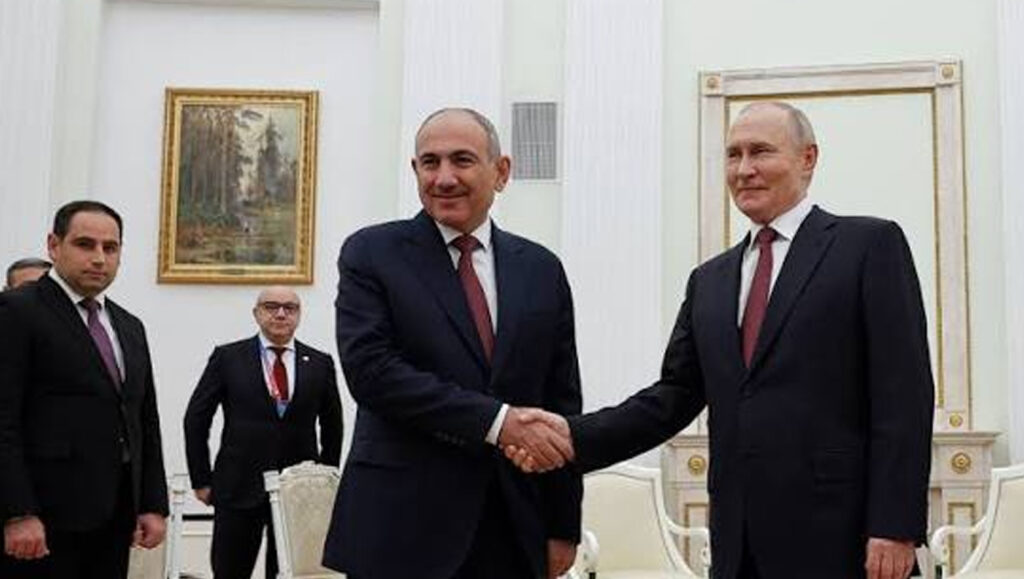
Following Armenia’s recent domestic political developments, Russia is gradually adapting to the new situation and will shape its policy around the post-election status quo. Regional affairs expert Armen Petrosyan expressed this view while discussing Moscow’s possible next steps toward Armenia.
According to him, Russia’s calculations in recent months were largely influenced by expectations about developments following Armenia’s parliamentary elections. Moscow may have anticipated more active protests or a different strategy by opposition forces in their struggle against the government.
“I believe Russia’s calculations were mainly tied to post-election developments. They may have expected protests in Armenia or a different opposition strategy. That is why Moscow tried through its actions to shape an agenda for the Armenian opposition,” Petrosyan said.
The Situation Changed After the Constitutional Court’s Decision
According to the expert, the situation changed after the Constitutional Court issued its ruling and domestic political processes entered a more predictable phase.
At this point, he said, the opposition no longer appears prepared to continue actions that could lead to another political crisis.
“Once the situation seemed to be resolved following the Constitutional Court’s decision, and we no longer saw the opposition preparing to continue its actions at another level, Russia also began reconsidering its policy,” he stated.
Moscow Will Not Abandon Attempts to Maintain Influence
At the same time, Petrosyan does not believe that Russia will abandon its policy of influencing Armenia’s internal developments.
In his view, Moscow is simply changing its tactics while taking into account both Armenia’s domestic political situation and Russia’s own foreign policy priorities.
Petrosyan argues that Russia currently faces more urgent challenges, pushing the South Caucasus temporarily into the background.
Moscow’s main attention is now focused on the war in Ukraine, while the situation in Armenia is no longer favorable enough for Russia to continue acting through its previous methods.
Russia May Seek to Reset Relations With Yerevan
The expert does not rule out the possibility that Russia will gradually begin normalizing relations with Armenia.
He believes the more restrained and less emotional statements heard recently may be early signs of this emerging policy.
“I think Russia will gradually accept the new reality and attempt step by step to normalize relations with Armenia. Recent statements can already be viewed as a prelude to that political course,” Petrosyan said.
According to him, as long as there is no agenda for renewed domestic escalation in Armenia, Russia is also unlikely to seek additional tensions in the region.
He recalled that Moscow has already begun normalizing relations with Azerbaijan and may next attempt to reset its relationship with Armenia under the same logic.
“If no such agenda exists, Russia will not create unnecessary tensions for itself by shifting additional resources from the Ukrainian front to the South Caucasus. Moscow moved fairly quickly toward normalizing relations with Azerbaijan, and I believe it will gradually reset relations with Armenia as well—at least to the level that existed before Armenia’s parliamentary elections,” Petrosyan said.
No Major Domestic Upheaval Is Expected Soon
Addressing possible post-election developments, Armen Petrosyan said he sees no conditions for serious domestic political upheaval in Armenia for at least the next year to eighteen months.
According to him, an examination of opposition plans suggests that the political and public energy required for street protests or mass rallies is currently absent.
“At least for now, considering the opposition’s programs, no such agenda exists. External actors are also monitoring these developments and planning their next steps based on those assessments,” he concluded.