
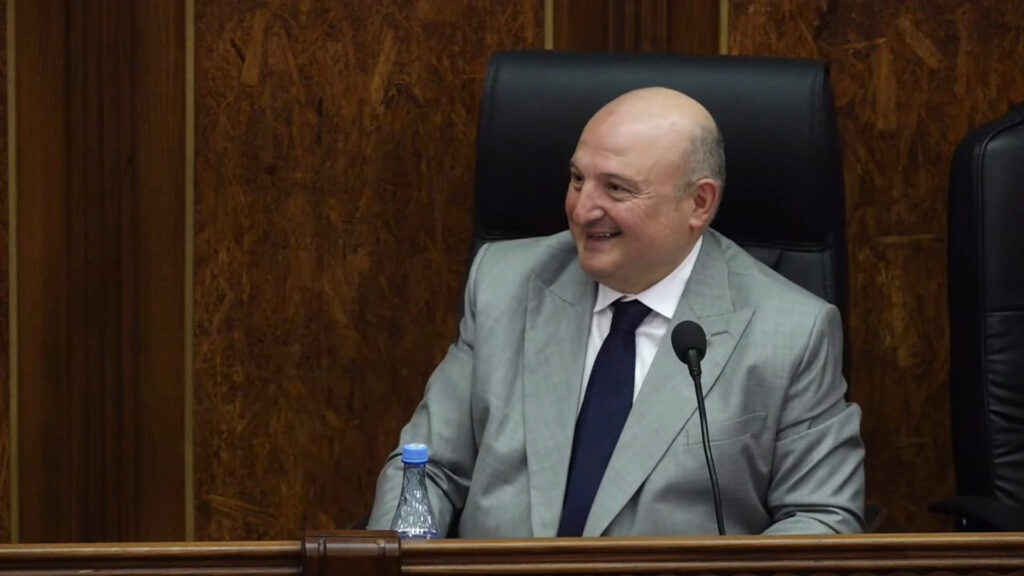
During the elections in Gyumri, voters clearly expressed their stance: Gyumri should not be governed by the current ruling team. Therefore, the opposition must, based on this responsibility, select one of its representatives in the Gyumri Council of Elders and prevent the authorities from seizing control of the city through such illegal interventions. This was stated by constitutional law expert and human rights advocate Goar Meloyan.
On the morning of October 20, the National Security Service (NSS) stormed Gyumri City Hall. According to reports, Gyumri Mayor Vardan Ghukasyan, council member Ruben Mkhitaryan, and seven other individuals were detained. Commenting on these events, human rights advocate Goar Meloyan noted that such actions were expected.
“This is one of our usual ‘unusually ordinary’ mornings. For years, we have been living in an abnormal situation where you wake up to, for example, law enforcement abducting 12 clergymen, and we can’t locate them for hours,” she said.
Meloyan, who conducted an observation mission during the Gyumri elections as head of the International Center for Parliamentary Development, emphasized that the defeat of the Civil Contract party in these elections was painfully perceived by the ruling team. According to her, the authorities mobilized all national resources, exerting pressure on opposition representatives and their families. Nevertheless, thanks to the persistence of Gyumri residents and society, the authorities failed to achieve their desired victory.
In Meloyan’s opinion, the detention and initiation of proceedings to deprive Vardan Ghukasyan of his freedom are aimed at isolating the elected leader of Gyumri. “This is not about an individual; it’s an institutional issue. If you are a democratic state, the people have voted for this person, and the authorities must accept that choice. That’s how it works in normal countries,” she said.
The human rights advocate stressed that this is not the first instance of an elected opposition community leader facing persecution. Similar cases have occurred in Vanadzor with Mamikon Aslanyan, in Masis with David Hambardzumyan, and in Goris.
Meloyan sharply criticized the NSS actions, noting that they intimidate city hall employees. “Since morning, I’ve been receiving calls from city hall staff. Women are crying, distressed, and terrified, as if they came to apprehend an international terrorist,” said Meloyan.
She urged the public and the international community to pay attention to this situation, as the authorities, who have proclaimed themselves defenders of democracy, openly violate its principles.
The human rights advocate noted that statements made from the National Assembly podium by a Civil Contract party deputy against Vardan Ghukasyan, coupled with Prime Minister Nikol Pashinyan’s response—“the NSS will handle it”—indicate a political crackdown. “This is not the first time that communication from the ruling party in parliament leads to illegal persecutions and detentions,” said Meloyan.
She called on the opposition members of the Gyumri community council to take responsibility for protecting the people’s will. She emphasized that the opposition must select one of its members to fulfill the duties of the community leader to prevent the authorities from illegally seizing control of the city. “The people must rise and declare that our patience has run out,” she stated.