
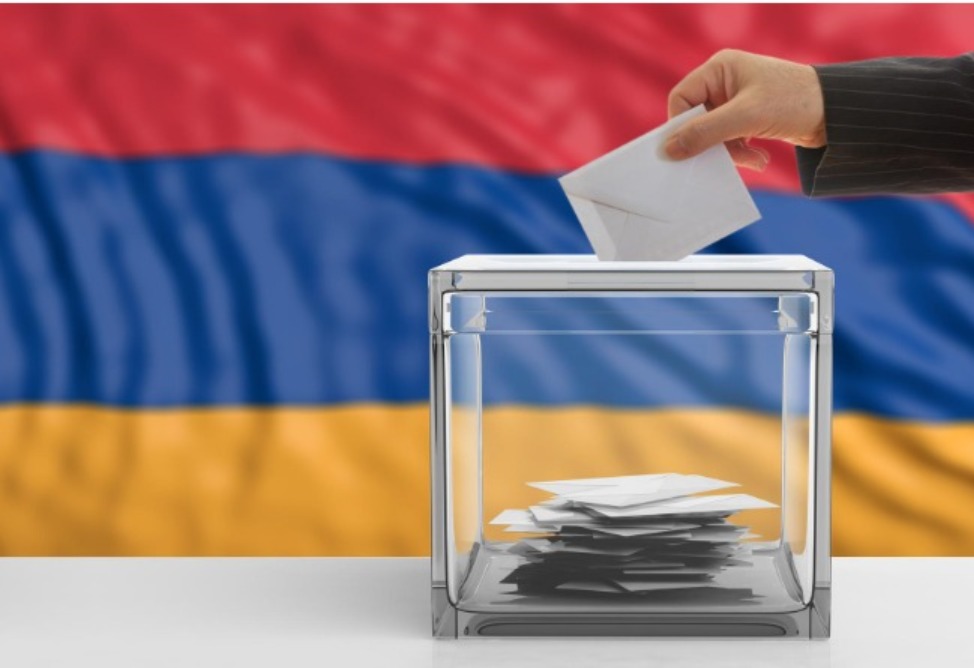
Refusing to participate in elections effectively benefits the political forces that already enjoy the highest level of support. In most cases, this means the ruling party. This view was expressed by sociologist Armen Khachikyan, who argues that election boycotts are a flawed strategy.
According to him, a boycott does not weaken the authorities. On the contrary, it increases the relative weight of the ruling force and allows it to gain a larger share of representation.
Khachikyan explained that if a governing party enjoys support from 30 percent of voters, turnout can significantly affect the final outcome. With full participation, that party receives its actual 30 percent. However, if turnout falls to 60 percent, the same support base produces a proportionally stronger electoral result.
As a result, citizens who choose not to vote effectively contribute to the success of the political force that already has the strongest support.
Political Interest Does Not Guarantee Participation
The sociologist draws a distinction between political engagement and electoral participation.
According to him, a society may consume large amounts of political information without necessarily translating that interest into voter turnout.
“People may actively follow political developments, discuss them, and contribute to public discourse, but that does not automatically mean they will participate in elections,” he noted.
Khachikyan observed that older citizens in Armenia tend to be both the most politically engaged and the most likely to vote.
Younger voters and residents of Yerevan often follow politics closely as well, but generally participate in elections less frequently.
Why Voters Stay Home
The sociologist also discussed the main reasons behind electoral passivity.
Research suggests that the most important factor is distrust in the electoral process. Many citizens do not believe that their vote can meaningfully influence the outcome.
Others are convinced that none of the existing political forces truly represents their views and interests.
Khachikyan points out that Armenia has more than one hundred registered political parties, while eighteen political forces are participating in the current election campaign. Even under these conditions, a significant portion of society still believes that no political force represents them.
The Problem of Political Perfectionism
In Khachikyan’s view, the issue is often not the absence of political alternatives but excessively high expectations among voters.
He describes this phenomenon as political perfectionism.
“Many people imagine that there must be an ideal political force that perfectly reflects all of their beliefs. In reality, such a choice almost never exists. Voters generally select not a perfect option, but the one they consider most acceptable at a given moment,” he explained.
Turnout Continues to Decline
Khachikyan considers the declining level of voter participation a worrying trend.
According to his data, turnout in the nationwide elections of 2018 and 2021 was approximately 48–49 percent. This is significantly lower than in previous years, when participation often reached 55–60 percent or even higher.
He emphasized that both elections followed major political changes, including a period when citizens had successfully brought about a change of government through public mobilization.
Yet this did not lead to greater trust in elections.
“It seemed that after the revolution and the change of power, citizens would be more willing to vote because they had already experienced their ability to influence political developments. However, reality shows that people continue to doubt the effectiveness of elections and participate less and less,” he said.
Participation Is More Effective Than Boycott
Khachikyan believes that participation remains a far more effective democratic tool than a boycott.
In his assessment, refusing to vote often becomes a form of self-deception because election results will still be determined, while the citizen simply chooses not to influence them.
“In my view, voting is always a more effective democratic mechanism than a boycott. Refusing to participate is often self-deception because the outcome will be determined anyway, and the citizen merely removes themselves from the process,” the sociologist concluded.