
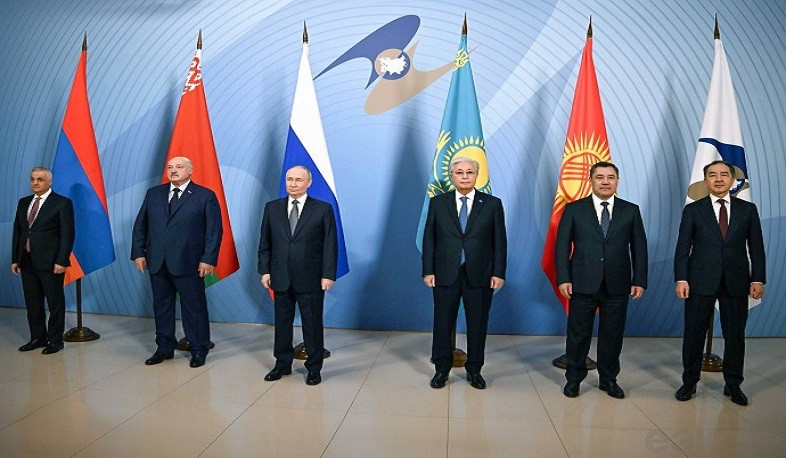
At this stage, Armenia is unlikely to be expelled from the Eurasian Economic Union (EAEU), but the country is facing growing pressure from its partners to clarify its future economic and foreign policy direction. This assessment was offered by international affairs expert Grigor Balasanyan while commenting on the recent tensions between Armenia and the EAEU.
According to him, the current situation could have been avoided if the Armenian authorities had pursued a more balanced policy and had not adopted the law launching the process of European Union accession.
“The Eurasian Economic Union is an economic organization. Armenia could have calmly explained to its partners that it had no economic disputes with the EAEU and simply wanted to apply certain European practices to make the country more modern and competitive,” Balasanyan stated.
The EU Accession Law Became a Turning Point
In Balasanyan’s view, tensions escalated after the adoption of the law concerning Armenia’s EU integration process.
Additional concerns emerged when Armenian officials stated that the country would remain in the EAEU until the European Union became ready to accept Armenia as a member.
The expert argues that such an approach has virtually no precedent in international relations.
As an example, he pointed to Brazil, which remains a member of BRICS while maintaining normal economic relations with the United States and other countries across the Americas without presenting those affiliations as mutually exclusive.
According to Balasanyan, Armenia should not have created the impression that it was facing an “either-or” geopolitical choice.
Expulsion From the EAEU Remains Unlikely
Addressing the possibility of Armenia being removed from the EAEU, Balasanyan noted that such a decision could only be taken by the union’s highest governing bodies.
However, he believes that member states currently prefer to avoid further escalation and have limited themselves to political warnings.
“Armenia has been given time, but it has also been made clear that this time is not unlimited and that a clear decision will eventually be required,” he said.
Citizens’ Interests Should Be the Main Priority
The international affairs expert stressed that any political strategy should ultimately be evaluated through its impact on citizens.
According to him, if a policy causes harm to Armenian citizens, agricultural producers, and exporters, its effectiveness and purpose should be reconsidered.
Balasanyan noted that the current situation has become especially sensitive because it coincides with both the election campaign period and the peak season for Armenian fruit and vegetable exports.
Thousands of Farmers and Exporters Are Affected
According to the expert, public reaction would likely have been less intense if similar developments had occurred during another period of the year.
Today, however, the issue directly affects thousands of farming households and export-oriented businesses.
For this reason, any deterioration in relations with key economic partners carries not only political consequences but also significant social and economic risks.