
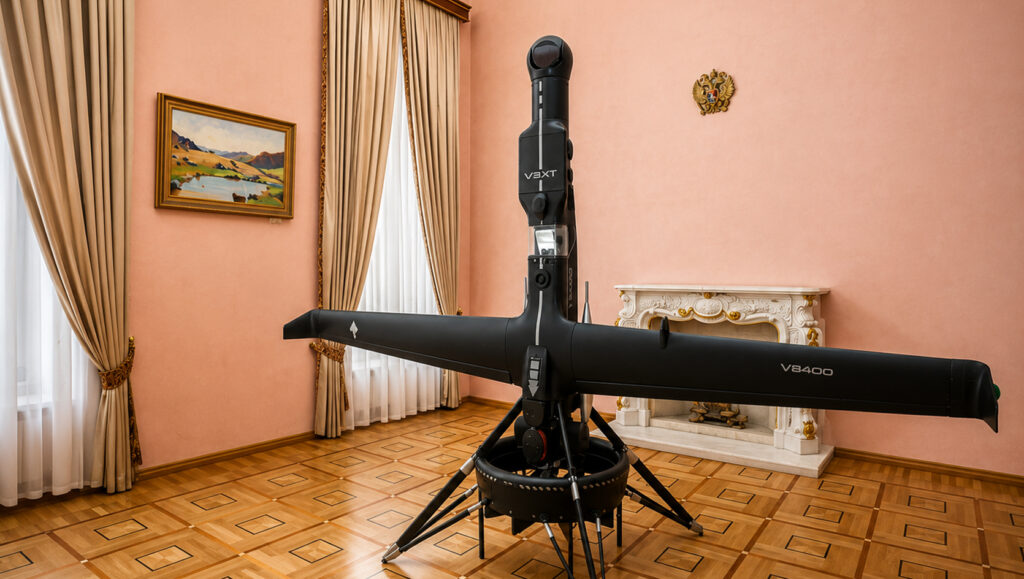
Deepening Armenia’s strategic partnership with the United States could create new opportunities not only for modernizing the armed forces but also for developing the country’s defense industry. According to military and political affairs expert Leonid Nersisyan, the legislative initiative currently under discussion in the United States is significant because Armenia is being mentioned for the first time within a broader framework of military cooperation.
The expert noted that relations between Armenia and the United States have changed in recent years, reaching the level of a strategic partnership.
“Recent documents already contain a substantial section on military cooperation and the defense industry. This is an area in which we previously had almost no meaningful interaction,” Nersisyan said.
The Bill Could Open New Areas of Cooperation
According to the expert, if the US Senate approves the bill, it will not mean that Armenia will receive massive amounts of military assistance free of charge.
However, the initiative could open new opportunities ranging from educational programs and military exercises to technology transfers and the development of specific defense production capabilities.
Nersisyan stresses that the logic of military cooperation is often misunderstood in Armenia.
“When people say that someone came and gave us four drones, that is not the correct formulation. No one simply gives anything away. Armenia acquires and purchases equipment. But the first deals are important because they make the next steps easier, faster and more effective,” he said.
According to him, the importance of initial agreements lies not only in the size of a particular delivery but also in the creation of institutional mechanisms, trust and practical experience between the sides.
Cooperation Could Support Armenia’s Defense Industry
Nersisyan believes cooperation with the United States could also be highly important for the development of Armenia’s defense industry.
It could provide access to technologies and components needed for domestic production.
The expert noted that Armenia will not be able to manufacture every required high-tech component independently in the near future, but it can purchase critical parts and integrate them into locally produced systems.
“For example, it is not possible to establish full domestic production of drone optics very quickly. But acquiring the right components and integrating them locally is realistic,” he said.
In Nersisyan’s view, this model would allow Armenia to gradually develop its own expertise without imposing the unrealistic objective of immediately creating a complete production cycle.
Cooperation With Washington Could Encourage NATO Countries
The expert also argues that expanded cooperation with the United States could send an important signal to other countries.
“Many NATO states closely observe the level of a country’s relations with the United States. Once that cooperation reaches a certain point, it becomes a green light for many of them to begin working with Armenia,” Nersisyan said.
Stronger Armenian-American military ties could therefore facilitate negotiations with other Western partners, defense manufacturers and technology companies.
Relations with Washington may consequently have significance beyond the bilateral level by expanding the number of Armenia’s potential defense partners.
Diverse Weapons Require a New Command System
Armenia’s armed forces currently operate weapons and technologies produced in Russia, France, India and China, while American systems may also be introduced in the future.
According to Nersisyan, this diversity can be managed, but doing so requires changes to the military command system.
“The problem is not simply that different weapons are being used. The challenge is making them work within one unified system. This requires a command structure capable of integrating different standards,” he said.
The expert believes the decentralization of command is particularly important.
The highly centralized system inherited from the Soviet period demonstrated its limitations, including during the 44-day war.
Units Must Be Able to Make Decisions Faster
“The idea behind the new system is that strategic directions are determined at the top, while units operating on the ground must be able to make decisions quickly,” Nersisyan said.
In his assessment, such a model would allow military units to operate more flexibly and respond to changing conditions without waiting for every tactical decision to be approved at the highest level.
Decentralization would not mean the absence of centralized command. Instead, it would involve distributing authority so that strategic control remains at the top while tactical decisions are made closer to the battlefield.
Different Systems Must Be Able to “Talk” to Each Other
According to Nersisyan, this type of command structure could also solve the problem of jointly operating weapons produced by different countries.
“If you have a drone or another digital system, it must be able to transmit data to the common command network. In other words, products from different countries must be able to ‘talk’ to each other,” the expert explained.
That requires compatible communications channels, unified digital protocols, intelligence-sharing systems and integrated fire-control mechanisms.
Without such an architecture, even advanced weapons may operate in isolation and fail to provide the necessary battlefield advantage.
Modernization Must Affect the Entire Defense System
Nersisyan argues that potential cooperation with the United States should not be viewed solely as an opportunity to purchase new weapons.
It could become a catalyst for a broader transformation of Armenia’s defense system, including changes in command principles, military education, communications standards and domestic production.
In this context, the decisive factor will not be individual deliveries but Armenia’s ability to integrate new technologies into a unified system and operate them together with its existing equipment.
Deeper cooperation with the United States could therefore change not only the Armenian military’s technical capabilities but also the country’s overall model of defense management, training and industrial development.