
The Donald Trump administration’s decision to approve a 30-year agreement with Saudi Arabia on cooperation in the field of peaceful nuclear energy could become one of the most significant shifts in US nuclear policy in recent years. The agreement opens the way for Riyadh to develop its own nuclear program and allows for the possible construction of uranium enrichment facilities inside the kingdom—technology that has traditionally been regarded as one of the most sensitive elements of the global non-proliferation regime.
According to political analyst Vahe Davtyan, the agreement falls under Section 123 of the US Atomic Energy Act, commonly known as a “123 Agreement.” This legal framework allows Washington to transfer American nuclear technologies, equipment and materials to foreign states.
Congressional Approval Still Lies Ahead
Following approval by the administration, the agreement must still undergo review in the US Congress.
Lawmakers have a legally defined period during which they may block the agreement from entering into force.
As a result, while the White House has already made its political decision, the agreement’s final implementation still depends on the legislative process in Congress.
Nuclear Cooperation Extends Far Beyond Energy
Davtyan argues that agreements of this kind carry significance well beyond the energy sector.
In his view, they represent long-term instruments of US foreign policy that allow Washington to build technological alliances, establish its own regulatory standards and create lasting dependence on American technologies, equipment and maintenance services.
“In nuclear energy, influence is measured not in years but in decades,” the analyst noted.
For that reason, such agreements become part of a much broader geopolitical architecture.
Washington Is Moving Away From Its Previous Standard
For many years, the United States maintained a strict position on transferring uranium enrichment technologies to partner countries.
Washington regarded such capabilities as potential components of a military nuclear fuel cycle and sought to limit their spread.
The best-known example was the agreement signed with the United Arab Emirates in 2009.
Under that arrangement, Abu Dhabi voluntarily renounced the right to enrich uranium, and the deal came to be known as the “gold standard” of the US approach to nuclear non-proliferation.
According to Davtyan, the Saudi case represents a clear departure from that long-standing policy.
He believes Washington is now guided not only by security considerations but also by its desire to preserve influence in the strategically important Gulf nuclear energy market.
Countering Russia and China Is Also a Goal
“The objective is to create Riyadh’s long-term technological dependence on the American nuclear industry while simultaneously preventing Russia and China from strengthening their positions in the region,” Davtyan said.
In his assessment, competition in the nuclear sector is increasingly becoming one of the principal arenas of global strategic rivalry.
Uranium Enrichment Remains the Most Controversial Issue
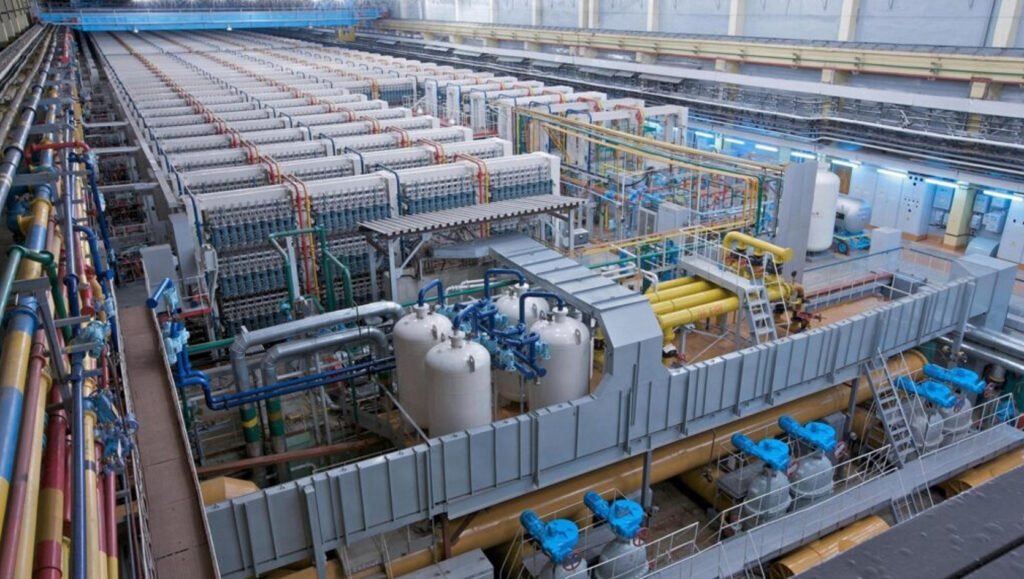
The most disputed element of the agreement remains the possibility of constructing uranium enrichment facilities in Saudi Arabia with the participation of American companies.
This provision has generated the greatest concern among nuclear security specialists because uranium enrichment is one of the core components of a complete nuclear fuel cycle.
The agreement also creates an evident political contradiction.
The United States continues to demand strict limitations on Iran’s uranium enrichment activities while simultaneously permitting the development of similar technologies in Saudi Arabia, one of Tehran’s principal regional rivals.
Nuclear Energy Is Becoming a Tool of Strategic Influence
According to Davtyan, this reflects a new reality in Middle Eastern politics, where nuclear energy is evolving from a matter of energy security into an instrument of long-term geopolitical influence.
“We are witnessing the beginning of a new phase of geo-economic competition. The struggle is no longer simply about exporting reactors but about controlling the entire nuclear fuel cycle—from production technologies to long-term servicing. That control becomes an instrument of political influence for decades to come,” the analyst concluded.