
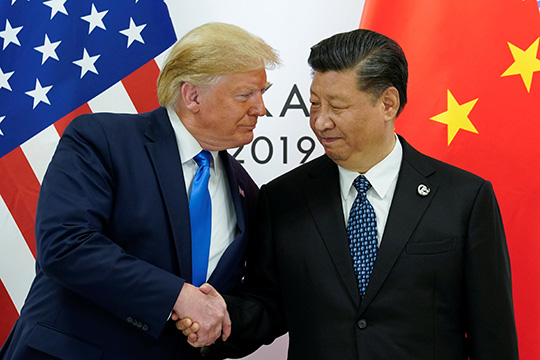
The trade and economic rivalry between China and the United States has entered a new, more intense phase. China has imposed restrictions on the export of rare earth metals, prompting the Donald Trump administration to raise tariffs on Chinese goods to as high as 100%.
These opposing measures have triggered significant disruptions in global markets. According to experts, the cryptocurrency market has nearly collapsed, with millions of people worldwide incurring losses amounting to billions of dollars. While these developments may seem distant from Armenia, the country, as part of the global economy, cannot remain entirely insulated. Vache Gabrielyan, former Deputy Prime Minister of Armenia, outlined the potential implications for the country.
In his view, the direct economic impact on Armenia will be limited. Gabrielyan noted that Armenia is not a major consumer of rare earth metals in its trade relations with the US and China. “We have virtually no high-tech industry where these metals are widely used, so we are unlikely to face significant challenges in this area,” he explained. However, the impact may be felt in other domains.
The US is already demanding that countries comply with its sanctions, such as those against Russia, and prevent re-exports. “China may adopt a similar approach,” Gabrielyan emphasized, pointing to the possibility of stricter oversight to prevent countries from purchasing raw materials from China and reselling them to the US or other nations. As a result, global trade regimes may become more restrictive.
At the same time, Gabrielyan believes that for a small market like Armenia, the volumes in these sectors are not significant enough to pose systemic risks. Some effects are possible, but they will not be critical. He also addressed the currency issue, noting that in the context of an economic war, the dollar was expected to weaken theoretically, but this is not happening at the anticipated pace, highlighting the unpredictability of global economic dynamics.
Gabrielyan identified two key challenges for Armenia in the near future: ensuring competitiveness and developing communication capabilities. “We must be able to produce and export affordable, efficient, and competitive goods and services,” he stressed. Armenia, he noted, is not only a traditional manufacturer but also an exporter of services, where competitiveness is crucial. The second priority is communication infrastructure. This includes not only building railways but also developing intellectual and digital infrastructure. Gabrielyan raised the question of whether Armenia could establish digital corridors with Georgia, Iran, and potentially Turkey and Azerbaijan in the future, ensuring cargo transportation, digitized operations, and alignment with a shared framework. This requires not only technology but also clear political and administrative coordination.
Using a sports analogy, Gabrielyan likened economic development to training muscles: just as exercise strengthens the body, the state must build its economic “muscles” through internal capabilities, infrastructure, and governance quality. Only then can Armenia become more resilient, withstand global changes, and seize new opportunities.