
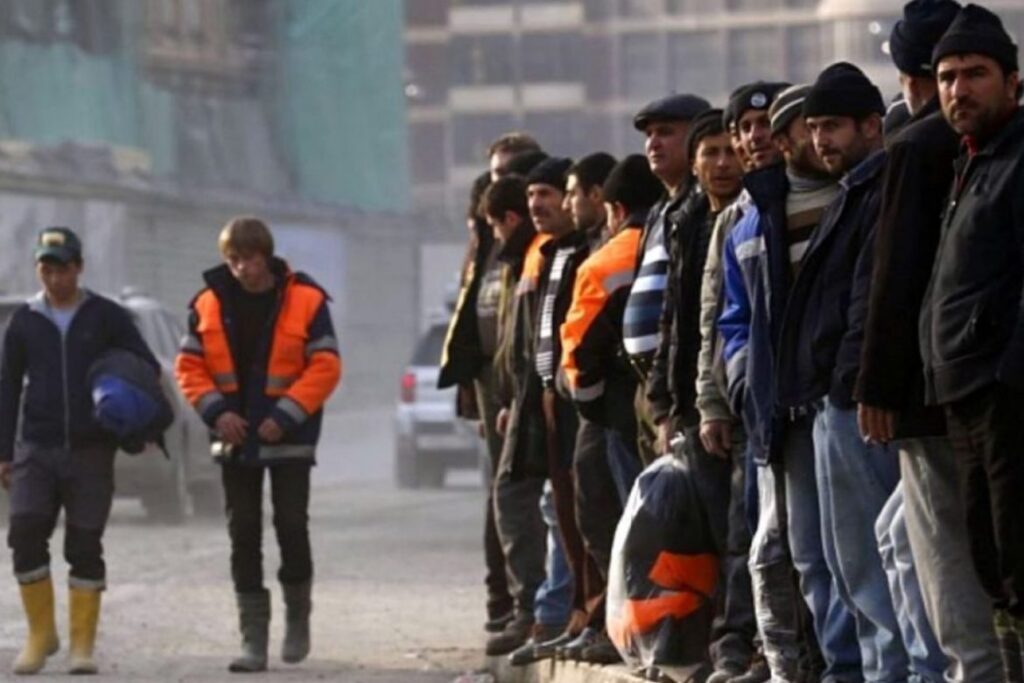
Tightening of migration legislation in the Russian Federation is ongoing. From 2021 until January 2026, 73 changes have been made, and the process is not yet complete. Most of these changes focus on increasing control, limiting the number of foreign workers, and revising social guarantees. This was noted by migration expert Tatevik Bezhanyan.
Quota system – now also for EAEU citizens
According to her, starting in March 2026, a mechanism for quota allocation for foreign workers will be introduced. This also applies to citizens of the Eurasian Economic Union, although until now, labor market regulations within the EAEU were relatively free.
Under the new rules, Bezhanyan explained, employers will have a clearly defined quota – the number of foreign workers they can hire. If this limit is exceeded, the employer must reduce the number of foreign workers and hire Russian citizens instead.
The impact of these changes will vary across sectors. For example, in agriculture, the permissible share of foreigners will drop from 75% to 25%. This means that migrant labor, previously widely employed, will be significantly restricted.
Quotas will be applied by region and type of work, so in some regions or sectors, restrictions may be stricter.
Revision of social policy: maternity capital
Tightening is also expected in the social sphere. A change is being considered according to which, starting in 2027, maternity capital will not be provided to women who have held Russian citizenship for less than five years at the time of the child’s birth.
This initiative also applies to those who have obtained citizenship or residence permits but have not yet reached the five-year threshold. In practice, this means that families with newly acquired citizenship will be temporarily deprived of this social support.
Tightening of financial control
Financial control mechanisms in Russia have also been strengthened. If a foreign worker makes a bank transfer exceeding the salary specified in their employment contract, or transfers their entire income, this may be considered a risky transaction.
In such cases, bank accounts may be frozen, the person included in the registry of controlled individuals, and additional checks conducted. Workers may be asked to clarify the sources of their income to determine how they are surviving if they transfer the entire amount or use funds exceeding the declared income.
Previously common practices – stating one amount in a contract but actually receiving a higher salary (to reduce tax burden) – can now lead to serious problems.