
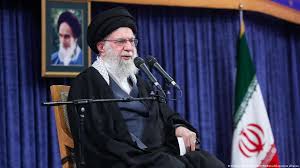
According to confirmed reports, Iran’s Supreme Spiritual Leader has been assassinated. In the current situation, the key question is what model of governance and political realignments await Iran in the coming period. Could the present tension and unfolding developments lead to systemic changes? And will external actors — particularly the United States and Israel — gain an opportunity to shape a more predictable or more desirable leadership in Iran?
Ali Larijani at the Center of the New Power Formation
According to Iran expert Zhanna Vardanyan, Iran’s Temporary Leadership Council has already begun operating. It includes President Masoud Pezeshkian, Head of the Judiciary Gholamhossein Mohseni Ejei, and Guardian Council member Alireza Arafi. The body will function until a new Supreme Leader is elected, which is reportedly expected within one to two days.
“At the informal level, it is evident that Ali Larijani plays a significant role in the formation of Iran’s new leadership. He is currently the Secretary of the Supreme National Security Council and previously served as Speaker of Parliament and as a presidential candidate. Larijani is considered a ‘moderate’ figure — in Western terminology, a centrist. This increases his ability to work simultaneously with both conservative and reformist factions,” Vardanyan notes.
According to the expert, the balance of power also heavily depends on the military — particularly the leadership of the Islamic Revolutionary Guard Corps (IRGC). “The IRGC is not only a military force but also a major economic actor. One of the key challenges for the future Supreme Leader will be bringing this powerful institution (and others) under effective control,” she stated.
Vardanyan also points to the continued political activity of Reza Pahlavi, the son of Iran’s last Shah. “He has stated that the time for regime change has come and that he is leading this process. According to Pahlavi, it may last up to two years, with the first 100 days being crucial. At the same time, Trump said he has his own vision of who Iran’s new leadership will be, though he did not disclose any names. I assume they are now waiting for signals from inside Iran to determine whether they will work with the current administration or not,” the Iran expert noted.
Iran May Be Led by a More Radical Leader
Political analyst Armen Ayvazyan argues that if the United States and Israel calculated that the assassination of Iran’s Supreme Leader would bring to power a more conciliatory and compromise-oriented figure, they may be gravely mistaken. Developments could move in the opposite direction. In his view, it is far more likely that the new leader will adopt tougher and more radical positions rather than represent the reformist camp.
Ayvazyan questions the assumption that the removal of the leader will expand diplomatic opportunities. In his assessment, under such circumstances trust in negotiations declines, while public and political attitudes tend to harden.
He recalls that the former Supreme Leader had issued a religious decree prohibiting the production of nuclear weapons, declaring them immoral and contrary to religious principles. However, given the current situation, Ayvazyan does not rule out a reassessment of that stance. He cites North Korea’s example, noting that after developing nuclear weapons and delivery systems, discussions of military action against that country largely ceased.
In this context, the political analyst does not exclude the possibility that a stronger position may emerge in Iran asserting that the only effective guarantee of security lies in developing powerful deterrence capabilities — potentially including a nuclear component.