
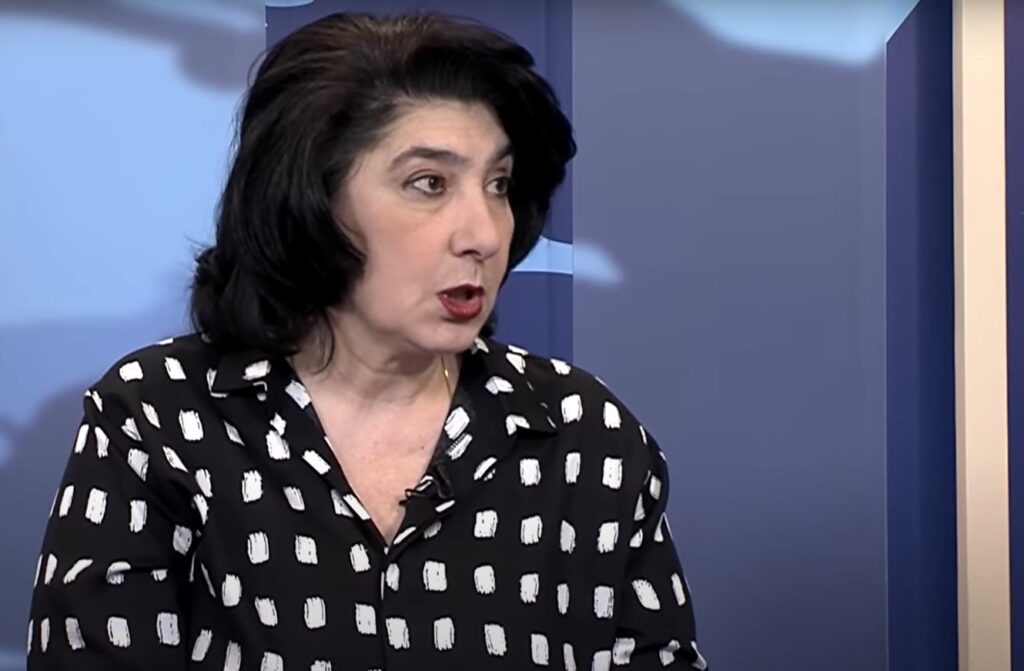
At the Washington summit, all the promises made by Armenia’s current leadership were laid bare, stated Armenia’s Ambassador Extraordinary and Plenipotentiary, Dzunik Aghajanyan.
Section 907 Still in Effect
According to Aghajanyan, during the summit, Azerbaijan secured American investments in its energy sector, achieved the dissolution of the Minsk Group, obtained an unobstructed route to Nakhchivan, and formalized, through the initialing of a peace treaty, all the commitments made by the country’s current leadership. Baku, the diplomat continued, gained even more—beyond these advantages, it received a promise to repeal Section 907.
“This was a promise [not a repeal], as the resolution can only be repealed by a decision of Congress. Therefore, our lobbying organizations must work diligently to prevent its repeal,” she stated.
Nevertheless, the promise to repeal the resolution serves as a signal of readiness to provide military assistance. However, Aghajanyan noted that Azerbaijan’s real goal in seeking the repeal of this resolution was not its direct purpose: despite the resolution’s existence, nearly all U.S. administrations in recent times have provided such assistance by suspending its enforcement. The true aim was to eliminate a document that references Nagorno-Karabakh, as such a reference exists in this resolution.
“Baku’s policy is now aimed at neutralizing any documents that even remotely touch upon the issue of Artsakh,” she stated.
In a single meeting, Azerbaijan achieved three objectives in this direction: the dissolution of the OSCE Minsk Group, a promise from the U.S. administration to repeal the resolution, and, through the initiation of the peace treaty, Armenia’s commitment to withdraw all lawsuits from international courts.
Turkey’s Reaction: When and Why the Armenia-Turkey Border Will Be Opened
In this context, Aghajanyan finds Turkey’s restrained reaction particularly noteworthy. According to her, this reaction was not accidental. Turkey expected, alongside Azerbaijan, to “sell” its participation in the upcoming geopolitical game. While Azerbaijan’s price was the repeal of the resolution, Turkey demanded certain “bonuses” in the Syrian direction, the cessation of U.S. support for Kurdish movements not only in Syria but also in Iraq, and the implementation of all military agreements previously suspended by Washington.
“In essence, Turkey does not yet see the realization of the issues it raised, so it will continue to negotiate. And Ankara has a bargaining chip—the issue of opening the Armenian-Turkish border,” she stated.
According to the diplomat’s assessment, U.S. interest in opening this border is directly linked to actions against Iran. When all necessary preparatory work is completed, she believes, Washington will pressure Turkey to open the border.
“It must be clearly understood: preparations are underway for a second phase of actions against Iran, including ground operations. Iran understands this. It is no coincidence that Azerbaijan has depopulated five villages near the Iranian border, where various intelligence structures are now stationed. It is in this context that securing this unobstructed passage via the shortest route was critically important. The route through Georgia is longer, and Russian influence there is growing. The most advantageous route is through Meghri, and this route is an extremely important link in the plan to attack Iran,” Aghajanyan stated.