
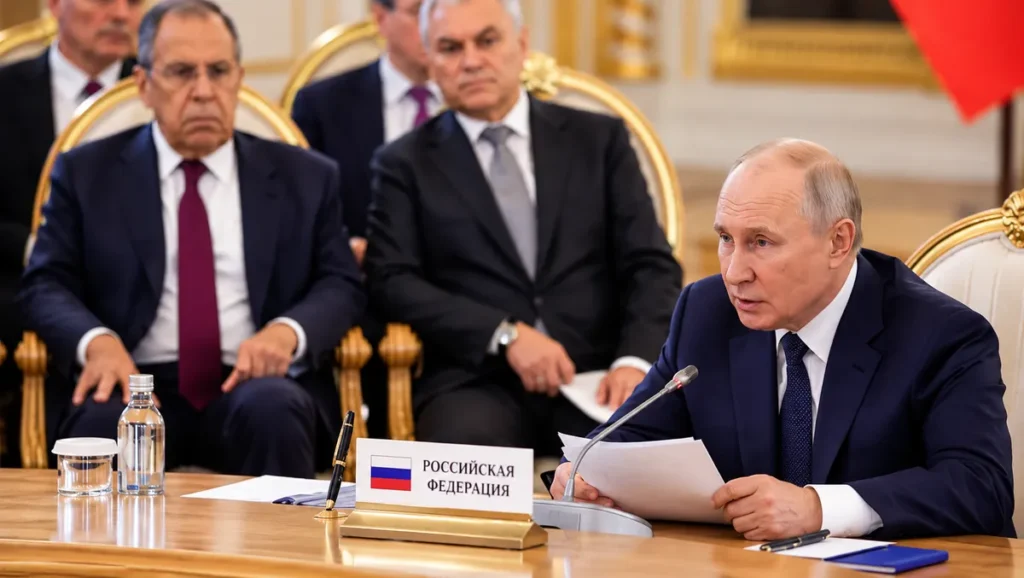
A meeting between Armenian Prime Minister Nikol Pashinyan and Russian President Vladimir Putin scheduled for December 3 could shape the future of Armenia–Russia relations. The best outcome for Armenia would be to reach an understanding with Moscow on a new framework for relations. The worst would be for Russia to make unilateral decisions, mainly in the economic sphere. Analyst Melkonyan made the remarks in an interview.
The Pashinyan–Putin meeting could be decisive
Melkonyan expects the main decisions on Armenia–Russia relations to be made at the bilateral meeting planned for December 3. At the Eurasian Economic Union (EAEU) summit on December 22, he said, the sides could formalize the parts of any agreements already reached that concern Eurasian integration. He expects the bilateral talks to cover a broader agenda, including the railway, the nuclear power plant and other areas of cooperation.
The analyst does not expect major changes in Armenia’s membership in the Collective Security Treaty Organization (CSTO). In his view, Moscow understands that Yerevan will not revise its approach to the organization. “I think the Russian side knows and understands that Armenia will not change its approach to the CSTO. That chapter is already closed,” he said, adding that the upcoming talks would likely focus on more pragmatic issues.
Moscow sees Armenia’s foreign policy as a change of course
Melkonyan believes Russia currently has no clear strategy for the South Caucasus. He said his assessment has not changed since 2024.
Russia’s main foreign and security policy priorities concern Ukraine and the West, he said. As a result, the South Caucasus and Central Asia have become secondary concerns for Moscow.
The analyst also drew attention to the shortage of professional research on Russia in Armenia. He said discussions among Armenian experts are often driven by emotion or based on assumptions because the country still lacks a well-established institution that trains Russia specialists.
Discussing how bilateral relations might develop, Melkonyan said the most favorable outcome for Armenia would be an agreement on a new framework for relations.
That would mean clarifying the future direction of bilateral and multilateral cooperation and reaching a common understanding of Armenia’s foreign policy options and their limits.
The main obstacle, he said, is a lack of trust between the two sides. Yerevan describes its foreign policy as diversification, while Moscow sees it as a change of course.
In a favorable scenario, Melkonyan said, Russia would accept Armenia’s reasons for diversifying its foreign policy, and both sides would reach an understanding about the opportunities and limits of that process.
Without such an understanding, he said, Russia could begin taking unilateral decisions, primarily on economic matters.
A gas price increase is one of Russia’s last remaining levers
Melkonyan described the state of Armenia–Russia relations as paradoxical. Russia still maintains a military base and a military presence in Armenia and controls gas and railway infrastructure. Yet in his assessment, this gives Moscow little sway over how Armenia makes political decisions or what direction it takes.
According to Melkonyan, international relations theory would suggest that such levers should enable one state to influence another’s policies. But experience in the 21st century shows that they do not always work.
In that context, he also discussed a possible increase in the price Armenia pays for Russian gas.
He said at least some Russian experts see a gas price increase as one of Moscow’s last remaining sources of leverage. Using it, however, would offer no guarantee that Armenia would change its foreign policy.
Moscow could exhaust that option without achieving the political result it wants, Melkonyan said. In his view, Russian officials also understand the need to try other ways of exerting influence before raising the price of gas.
Russia could try to delay TRIPP
Melkonyan does not think the announcement that TRIPP was moving into implementation was directly linked to the upcoming Armenia–Russia talks. He noted that recent statements about the project drew a stronger response in Iran than in Russia.
At the same time, he believes Moscow has some scope to delay the project or even change its course.
One possibility would be to slow the withdrawal of Russian border guards from the Meghri area. Russia could, for example, propose drawing up a long-term roadmap for their withdrawal.
Melkonyan considers that scenario plausible, although whether it happens would depend on the agreements reached in Armenia–Russia talks.
A delay could itself be strategically valuable for Moscow, he said. Over time, political conditions could change enough for the project to be reworked or even canceled.
Melkonyan also did not rule out that Russia might try to bring the reopening of regional transport links back under the framework set out in point nine of the November 9, 2020, trilateral statement.