
On November 19, the International Court of Justice (ICJ) delivered a landmark judgment in The Gambia v. Myanmar. For the first time in its history, the Court found a state responsible for committing genocide. By nine votes to six, it found that Myanmar had violated the 1948 Convention on the Prevention and Punishment of the Crime of Genocide during its 2017 military operations against the Rohingya ethnic and religious minority in Rakhine State.
The Gambia brought the case even though it had not been directly harmed by Myanmar’s actions. The Court ordered Myanmar to end its continuing violations, conduct effective investigations and hold those responsible to account. Myanmar must facilitate the safe return of displaced Rohingya and report within two years on the restitution measures it has taken and its proposals for compensation where restitution cannot fully repair the harm. The Court will determine the amount and arrangements for compensation at a later stage. refworld.org
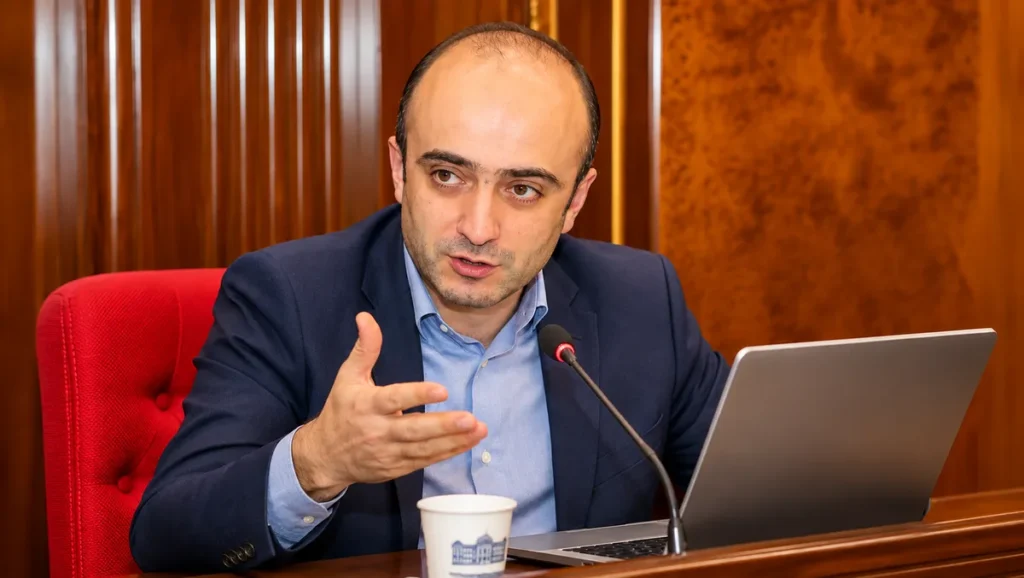
Commenting on the judgment’s significance for the rights of the Armenians of Nagorno-Karabakh, lawyer and former lawmaker Taron Simonyan said it does not deal directly with Artsakh. In his view, however, it sets out important legal criteria for assessing Azerbaijan’s actions toward the Armenian population of Nagorno-Karabakh.
The label does not change the nature of the act
Simonyan pointed out that Myanmar, like Azerbaijan, presented its military operations as a campaign against armed groups. He said the Court rejected that justification because the operations did not distinguish between combatants and civilians, and the scale of the casualties and destruction went far beyond what military necessity could justify.
Simonyan recalled that Azerbaijan described its September 19, 2023, offensive against Nagorno-Karabakh as a “counterterrorism measure” and called Artsakh’s state institutions “terrorist” structures. “The label does not change the nature of the act,” he said.
According to Simonyan, a key point in the judgment is that genocide can occur during an armed conflict, even if the requirements of international humanitarian law are observed. The decisive question is whether there was a specific intent to destroy the group as such.
Hate speech and forced displacement as evidence of intent
Simonyan also highlighted the Court’s treatment of hate speech. He said the Court considered who made the statements, giving weight to remarks by senior officials, propaganda organized at state level, and whether the propaganda coincided with acts of violence.
In the case of Nagorno-Karabakh, Simonyan pointed to anti-Armenian statements by Azerbaijan’s president, including the phrase “we will drive them out like dogs.” He also cited a drone named İti qovan (“dog chaser”) and what he described as the promotion of hatred toward Armenians in Azerbaijani school textbooks.
He said UN committees and Council of Europe bodies had documented these patterns for years. He recalled that in 2021 the ICJ ordered Azerbaijan to prevent incitement to racial hatred and discrimination against Armenians.
Simonyan said forced displacement and obstacles to return also matter. Forced displacement does not in itself constitute genocide. But destroying homes, making return impossible and settling a different population in the emptied areas may, in his view, point to an intention to “cleanse” the territory of a particular group.
Simonyan recalled that Nagorno-Karabakh lost its entire Armenian population. In November 2023, as a provisional measure, the ICJ ordered Azerbaijan to ensure that people who had left Nagorno-Karabakh after September 19 and wished to return could do so safely. api.icj-cij.org
Genocidal intent must be assessed on the evidence as a whole
Simonyan said one of the judgment’s most important legal points is that proof of a direct order is not required to establish genocidal intent. Such intent can be inferred by examining the facts as a whole. It can also coexist with other objectives.
He said circumstantial evidence becomes especially important when a state restricts access to the territory concerned and does not cooperate with UN missions.
In the case of Nagorno-Karabakh, Simonyan said the nine-month blockade, shortages of food and medicine, the military offensive, the displacement of the entire Armenian population, the arrests of Artsakh’s leaders and the destruction of Armenian historical and cultural monuments should be considered together.
“Taken separately, these are fragments. Taken together, they are a policy,” he said.
Another state could also bring a case against Azerbaijan
Simonyan said an important feature of The Gambia v. Myanmar was that the case was brought by a state that had not been directly harmed by Myanmar’s actions. The Gambia applied to the Court as a party to the Genocide Convention, and 11 other states later intervened in the proceedings.
In his view, this is significant for Nagorno-Karabakh as well. Armenia or another state party to the Convention could bring a similar case against Azerbaijan, provided the requirements for the Court’s jurisdiction are met.
Simonyan also stressed the importance of the Court’s orders to remedy the consequences of genocide and restore victims’ rights.
The judgment requires Myanmar to facilitate the safe, voluntary and dignified return of the Rohingya, return or replace lost property, assist in the search for missing people, provide rehabilitation for victims and protect the Rohingya from discrimination. Myanmar must compensate both individuals and the group insofar as restitution does not make good the harm. It must also investigate the crimes and punish those responsible. refworld.org
Simonyan believes that justice for the Armenians of Nagorno-Karabakh should likewise include putting the right of return into practice, restoring property rights, establishing what happened to missing people and securing the release of captives.
“Recognition without return is only half of justice. Genocide that goes unpunished is repeated. This decision shows once again that justice may come late, but it is possible. For the Armenians of Artsakh, justice is not only possible; it is imperative,” Simonyan concluded.
👉Law