
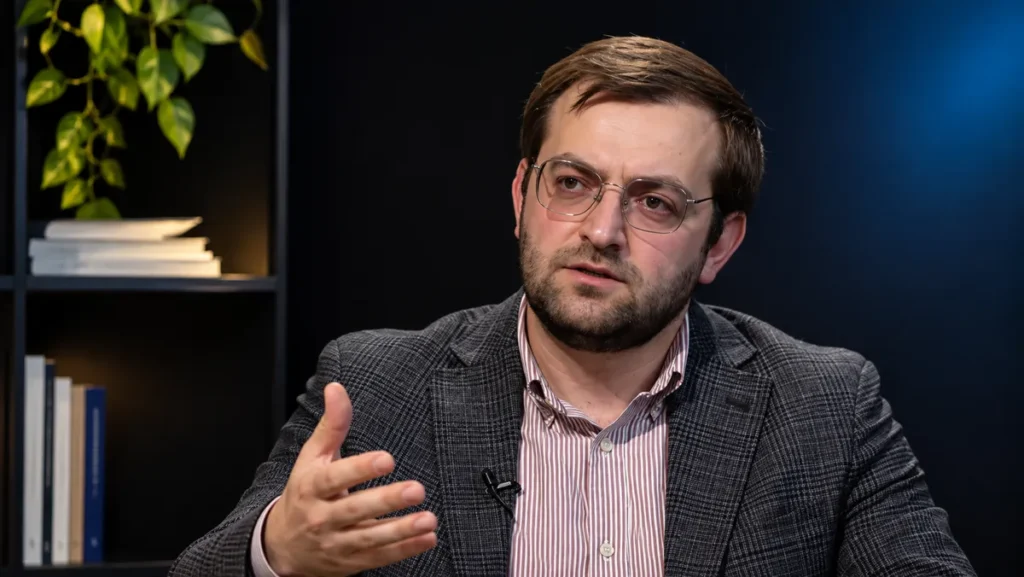
There are currently no major risks to the implementation of TRIPP, and Russia has limited scope to influence the project through foreign policy, said Davit Petrosyan, an analyst and co-founder of the Yerevan Center for Foreign and Security Policy.
A change of administration would not alter Washington’s approach to TRIPP
Petrosyan said Republicans and Democrats differ in how they conduct foreign policy. Both parties, however, have consistently sought to expand US influence around the world.
He identified four main schools of US foreign policy: primacy, liberal hegemony, isolationism and offshore balancing. In his assessment, Republicans tend to favor primacy, while Democrats lean toward liberal hegemony. Both approaches seek to expand US influence.
Petrosyan said that since World War II, US presidents of both parties have sought to extend the country’s influence when opportunities arose. He sees the “open door” policy as part of that approach. It rests on opening borders, developing economic and trade ties and promoting free markets. Washington sees such an international order as the best fit for US economic and security interests, he said.
One of the main differences between the two parties, according to Petrosyan, is the importance they place on allies. Democrats emphasize stronger alliances and closer bilateral cooperation, while Republicans rely more on the United States’ own strength and capabilities.
Another difference concerns strengthening democratic institutions and promoting democracy. Democrats see this as an important part of foreign policy, he said, while Republicans are more often guided by realpolitik.
Armenia could receive more support under Democrats
Petrosyan believes the security dimension of TRIPP would remain important if Democrats gained ground in US politics. Armenia could also receive more support for developing its democratic institutions.
He recalled that the Biden administration earmarked funding to strengthen democratic institutions in Armenia. Current US policy, he said, focuses mainly on the economy and security.
Petrosyan stressed the importance of Armenian diplomats engaging with different political groups in the United States. In his view, Yerevan should strengthen its contacts with Democrats now, given that the party could gain ground in future elections.
He recalled that Armenia had engaged with Republican circles before Donald Trump was elected president. In his assessment, that work helped advance relations between Armenia and the United States.
Russia has limited foreign policy leverage over TRIPP
Discussing Russia’s position, Petrosyan said Moscow would have preferred the approach to reopening regional transport links set out in the November 9 trilateral statement. In his view, that arrangement would have given Russia more scope to act than TRIPP does.
Petrosyan believes Moscow was aware of the discussions surrounding TRIPP. He noted that US presidential envoy Steve Witkoff had visited Russia before traveling to Armenia.
In Petrosyan’s assessment, Moscow may continue to criticize TRIPP and raise concerns about potential problems. The project is moving forward, however, and Russia could also benefit from its implementation.
In that context, he pointed to Russia’s involvement in efforts to establish trade ties between Armenia and Azerbaijan.
Petrosyan said the more important question is what means Russia has to influence the project’s implementation. In his view, Moscow has few options through foreign policy. Armenia, Azerbaijan and Türkiye agree on implementing the project, the United States and European partners are interested in it, and efforts to address Iran’s concerns are continuing.
“In my view, the only way Russia can influence TRIPP at the moment is through changes in Armenia’s domestic politics. I don’t really see any other means at this point,” Petrosyan said.