
In the early 2000s, Armenia and Azerbaijan acceded to key international and regional human rights instruments, undertaking obligations to respect the right to life and ensure effective judicial protection without discrimination. However, just a few years later, Azerbaijan grossly violated these commitments. This was stated by international law expert and lawyer Siranush Sahakyan.
She recalled that in 2003, an Armenian officer was beheaded by an Azerbaijani soldier, Ramir Safarov, while the young man was asleep. Both were participants in a NATO-sponsored program, which could have served as an example of peaceful coexistence. Hungarian courts sentenced Safarov to life imprisonment, but following significant Azerbaijani investments in Hungary’s economy, he was transferred to Azerbaijan, where he was immediately pardoned, promoted in rank, and rewarded. Azerbaijani President Ilham Aliyev even launched a webpage for citizens to celebrate the “hero.” This case sent a clear message: the killing of an Armenian would be glorified, not condemned.
Since then, the number of such incidents has sharply increased. In April 2016, during a four-day war with Azerbaijan, at least three Armenian soldiers were beheaded, two of them while still alive, in violation of the Geneva Conventions. In 2020, during the 44-day war, the scale of atrocities expanded, with dozens of documented beheadings, including those of civilians. “Our organization recorded at least 30 such incidents, some of which were filmed by the perpetrators themselves and widely circulated, showcasing cruelty as a form of social reward,” Sahakyan stated.
The international community’s response has been inadequate, turning atrocities into an incentive for further crimes. “In 2020, Azerbaijan committed aggression against Armenia, and parts of Armenian territory remain occupied. In September 2023, the entire population of Artsakh was forcibly deported, and for the first time in history, Armenian land was left without Armenians. This was the result of Baku’s impunity,” Sahakyan noted.
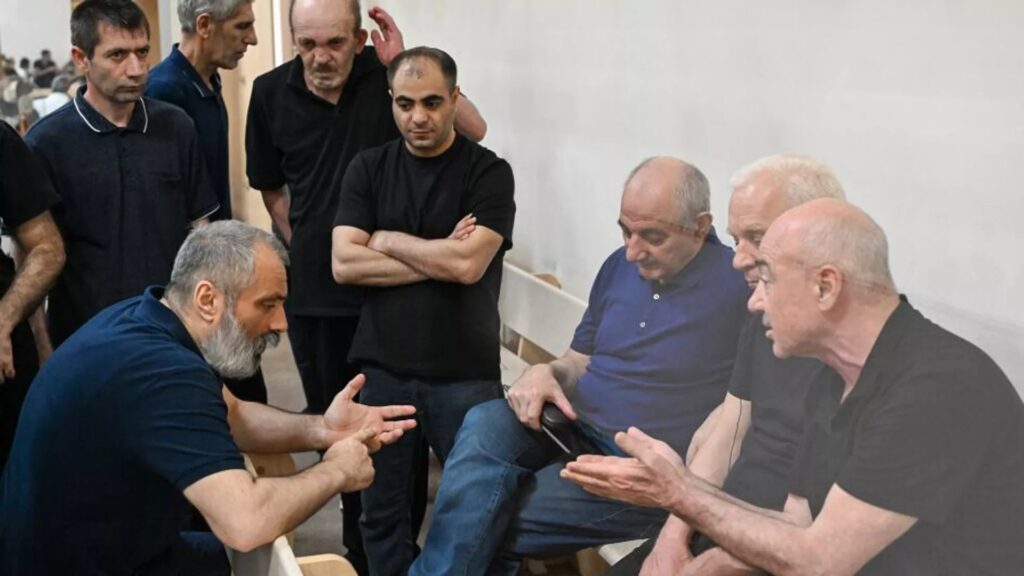
In 2025, Azerbaijan continues to ignore rulings of the European Court of Human Rights, failing to fulfill its international obligations. “Right now, 23 Armenians are illegally detained in Azerbaijan, five of them since 2020. They face sham trials where actions protected by international law are classified as crimes. Eight former Artsakh leaders are charged for lawfully exercising the right to self-determination, which the UN Security Council has confirmed as compliant with international law,” she emphasized.
The Security Council, she reminded, did not prohibit the international community from engaging in diplomatic relations with Artsakh, unlike cases such as Cyprus or Southern Rhodesia, where non-recognition resolutions were adopted. This, the lawyer stressed, confirms the legality of the actions of Armenian leaders who represented their people.
“Organizations like Human Rights Watch have reported torture and ill-treatment of Armenian prisoners in Baku. Approximately 200 repatriated prisoners have provided detailed accounts of physical and psychological torture, corroborated by medical examinations. No torture prevention body has been granted access to the detention sites of Armenian prisoners. The Council of Europe’s Committee for the Prevention of Torture condemned Azerbaijan for obstructing their work.
The only organization providing humanitarian assistance was the International Committee of the Red Cross (ICRC). However, in early 2023, Azerbaijan suspended their operations, and since June, there has been no independent information on the condition of the prisoners,” Sahakyan noted.
Impunity for committed war crimes and human rights violations has fueled Azerbaijan’s new acts of aggression. “The international community’s structural mistake lies in substituting immediate political measures, such as sanctions, with slow judicial processes. To break the cycle of violence, robust measures are needed. The fate of Armenian prisoners and the deported Artsakh population underscores the urgent need for action to protect human rights and ensure justice,” Sahakyan concluded.