
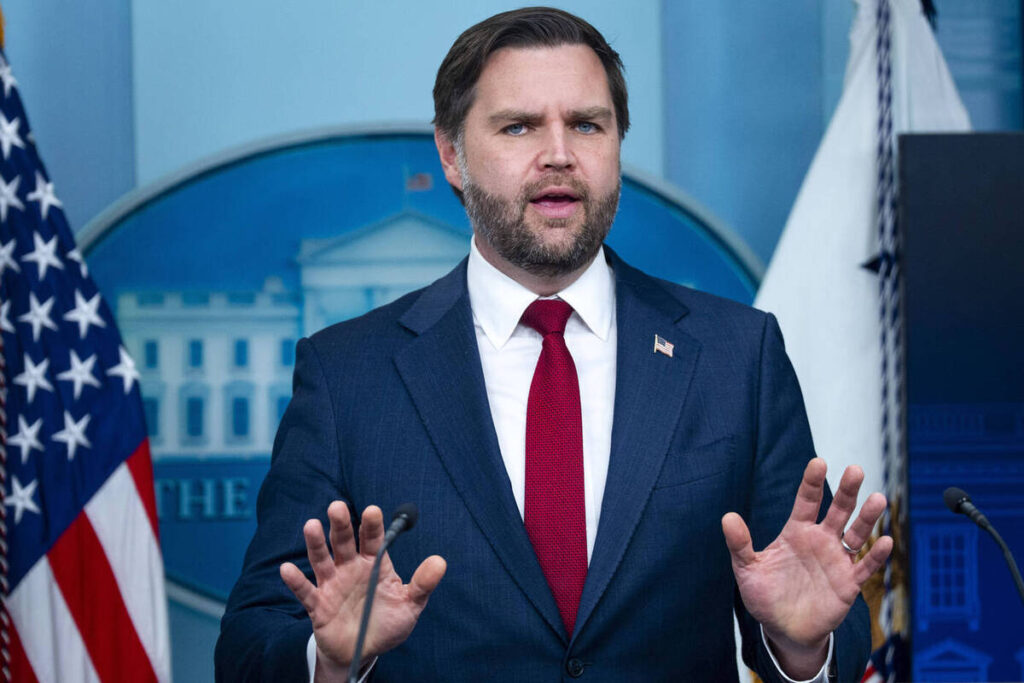
Armenia and Azerbaijan are preparing to host US Vice President J. D. Vance, who will arrive in the region on an official visit, first traveling to Yerevan and then to Baku. Ahead of the visit, US President Donald Trump once again referred to the “peace agreements” he claims to have brokered, including Armenian–Azerbaijani peace, stating that Nikol Pashinyan and Ilham Aliyev “knew only how to fight” until he came along and reconciled them.
According to political commentator Hakob Badalyan, Trump’s remarks are primarily aimed at the American electorate. On the eve of the 2026 midterm congressional elections, Trump is seeking to retain a majority in both the House of Representatives and the Senate by projecting an image of foreign policy success. Moreover, most American voters are unlikely to have a clear idea of where Armenia and Azerbaijan are located.
Why This Story Matters for Armenia
Although Trump’s rhetoric is largely intended for a domestic audience, it carries serious implications for Armenia’s internal political landscape as well. The “peace process” presented under Trump’s name is becoming a key theme in Armenia’s parliamentary election campaign and in the government’s political strategy.
For this reason, Badalyan argues, it is essential to understand what has actually happened—and what continues to happen around Armenia under the label of “Trump’s peace.”
Peace Did Not Begin with Trump
The reality is that the Armenian–Azerbaijani process did not start with any “magical move” by Trump. It evolved over a fairly long period, beginning back during the previous US administration.
The process entered a more dynamic phase toward the end of 2023, especially after Artsakh was subjected to ethnic cleansing and complete depopulation in September 2023. From that moment on, Badalyan notes, “the Artsakh issue left the table,” while the issue of Armenia itself remained on it.
Chronology: Step by Step
In December 2023, the offices of the Prime Minister of Armenia and the President of Azerbaijan adopted a joint statement developed with the active involvement of the US Democratic administration. Through that statement, Armenia supported Azerbaijan’s hosting of the COP29 summit in 2024, a prisoner exchange took place, and several other understandings were recorded.
In February 2024, on the sidelines of the Munich Security Conference, US Secretary of State Antony Blinken held separate meetings with Nikol Pashinyan and Ilham Aliyev, after which, at the initiative of German Chancellor Olaf Scholz, a trilateral meeting took place in the Scholz–Pashinyan–Aliyev format. As a result of that meeting, it was decided to organize talks between the foreign ministers in Berlin.
The Mirzoyan–Bayramov negotiations in Berlin lasted nearly two days. After that, Kazakhstan assumed an active mediation role, leading to another two-day meeting of the foreign ministers in Astana in May 2024.
This process was also followed by the agreements reached around Kirants, statements on delimitation and demarcation of the border, and the active visits of senior US officials to Yerevan during the summer.
The Roads Issue and the Topic of Delegated Administration
Throughout 2024, the issue of unblocking transport routes occupied a special place, particularly the route connecting Azerbaijan to Nakhchivan. Against the backdrop of increased US engagement, certain Armenian expert circles began promoting a model of delegated administration for the roads.
Ilham Aliyev publicly stated that Azerbaijan had no intention of delegating control of any road to a third party, while Armenia, in his words, “would act as it sees fit.” As a result, Armenia moved toward such delegated administration.
On August 30, 2024, the statute of the border delimitation and demarcation commissions was signed, which was fully ratified in Armenia in October.
Biden’s Letters and Bilateral Meetings
In October 2024, US President Joe Biden sent letters to Nikol Pashinyan and Ilham Aliyev, dispatching his special envoy to the region with concrete proposals, including on the issue of transport routes. Shortly thereafter, on October 24, Pashinyan and Aliyev held their first bilateral meeting in Kazan on the sidelines of the BRICS summit.
In 2025, the process continued with meetings in Turkey and Abu Dhabi. In the spring, it was announced that the parties had agreed on the text of a peace treaty, and on July 10 another meeting took place in Abu Dhabi, which was followed by the well-known act signed in Washington on August 8.
Trump: Not the Author, but the Seal
This entire chronology, according to Badalyan, shows that the process culminating on August 8, 2025, had been “in the making for a long time.” Trump simply became the seal of that process and, at the same time, its stakeholder.
From this perspective, the Trump administration is expected to engage with the process in a substantive way during Vice President Vance’s regional visit. In essence, Vance is coming to conduct a review—to understand the state of the process “on the ground” and the legacy inherited by the Trump administration.
The Broader Context of Vance’s Visit
Ahead of Vance’s visit, the latest meeting between Nikol Pashinyan and Ilham Aliyev in Abu Dhabi, including full delegations, indicates that substantive, concrete issues were discussed.
At the same time, the process should not be viewed in isolation. The launch of US–Iran nuclear talks in Oman, as well as the Putin–Xi Jinping video conference and the Trump–Xi Jinping phone call, suggest that a broader geopolitical context is taking shape.
Although the Armenian–Azerbaijani process is not directly linked to the negotiations surrounding Iran, Badalyan is convinced that these developments will have a significant impact on the fate of “Trump’s peace” and on his share in the broader global geopolitical game.