
The likelihood of military action in the region significantly exceeds the chances of a diplomatic solution. This was stated by political analyst Armen Petrosyan, commenting on the current phase of tensions between the United States and Iran.
According to him, an interim or even final military scenario appears more realistic than progress in negotiations. Petrosyan notes that the process is accompanied by unprecedented information and propaganda noise, which not only complicates diplomatic agreements but also distorts the overall picture of the situation even for experts.
Propaganda noise as preparation for military action
“In recent days, various American, European and Israeli media outlets have been building their reports on information provided by anonymous sources. Each presents its own scenario, claiming it is accurate,” he said.
According to these publications, the Iranian side has allegedly been presented with a list of demands or an ultimatum, and despite ongoing discussions, a military option is already on the president’s desk and even signed. In the analyst’s assessment, such materials serve not a negotiation strategy but a broader goal — creating an informational basis for potential military action.
“If a concrete step against Iran is being planned, a propaganda base must first be formed to explain why the decision is being made now. That base is created through such publications,” Petrosyan emphasized.
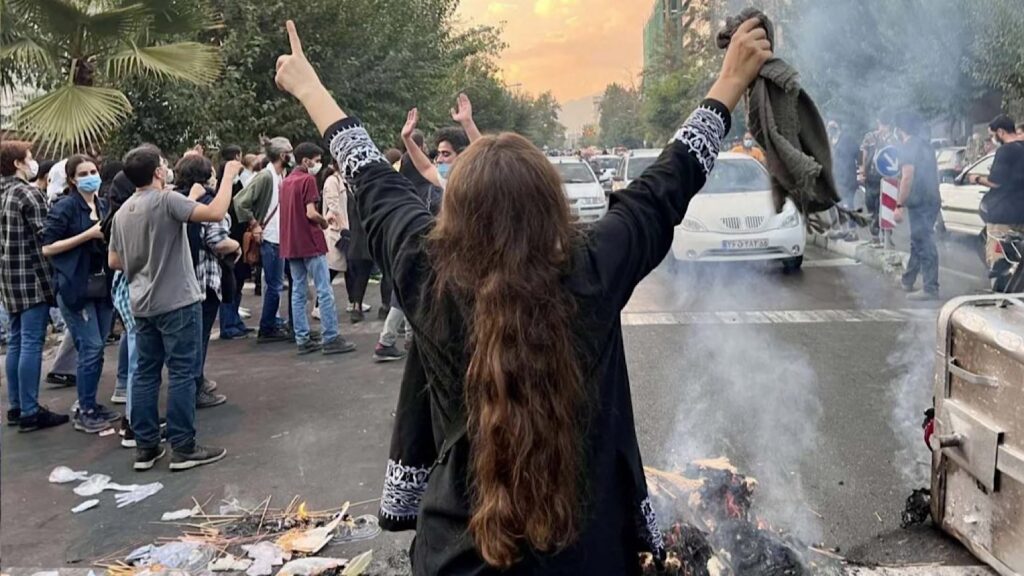
He notes that the activation of the issue is not accidental. The wave of protests in late December and early January, he says, created a favorable internal environment in which external intervention could “detonate” the situation from within.
Internal protests and external pressure: a dual mechanism of regime change
According to Petrosyan, neither the United States nor Israel has sufficient resources to conduct large-scale direct military operations inside Iran. Their strategic goal is regime change, but this requires a combination of two factors — internal uprising and external strike.
“The internal resource alone is not enough. The recent protests clearly demonstrated this: the authorities were able to suppress the situation within days through mass use of force,” he said.
Against this backdrop, renewed student protests in Iran are also a signal to the outside world: if external support is provided, there are groups inside the country ready to move toward regime change.
Thus, Petrosyan concludes, the current information activity is not merely media noise. It is part of a broader process aimed at preparing international and public perception for a possible military scenario.