
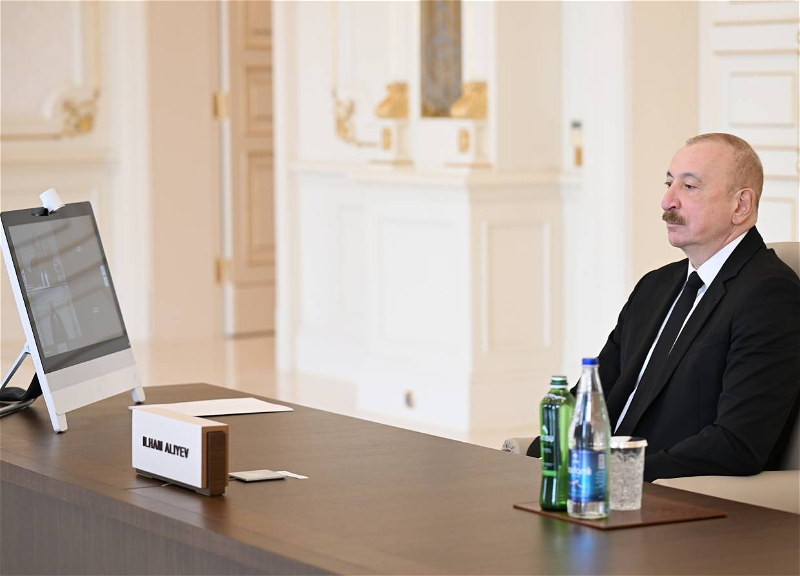
The European Parliament continues to insist that Azerbaijan must hold accountable those responsible for the destruction and desecration of Armenian cultural, historical, and spiritual heritage in Artsakh. It also calls for the safe return of displaced residents and the immediate release of all prisoners. In response, Baku suspended cooperation with the European Parliament, initiated its withdrawal from Euronest, and President Ilham Aliyev issued accusations against both PACE and the European Parliament.
Political analyst Hakob Badalyan considers it positive that the issue of Artsakh remains on the agenda, but warns against overestimating the significance of such resolutions.
Limited impact of resolutions
According to him, these steps often represent elements of a political game within EU–Azerbaijan relations, where the Artsakh issue is used as a tool.
He stresses that Armenia should engage with European institutions and take advantage of available opportunities, but without illusions that European political elites are more concerned about Artsakh than Armenia itself.
In practice, such resolutions have minimal influence on the overall policy of the European Union.
Decision-making beyond public rhetoric
The analyst highlights that EU executive bodies, including the European Council and the European Commission, operate based on a different logic in their relations with Azerbaijan.
He notes that European Council President António Costa visited Baku in March to discuss new agreements, emphasizing a “partner-to-partner” approach in bilateral relations.
This reflects a pragmatic and mutually beneficial policy toward Azerbaijan, regardless of public statements.
Behind the scenes dynamics
Badalyan describes the situation as a form of “political theater,” where each side plays its role, while key decisions are often made behind closed doors.
These behind-the-scenes negotiations may contradict official rhetoric, reinforcing the need for a realistic assessment of the situation.
He concludes that Armenia should remain engaged with European processes but avoid excessive expectations regarding their outcomes.