
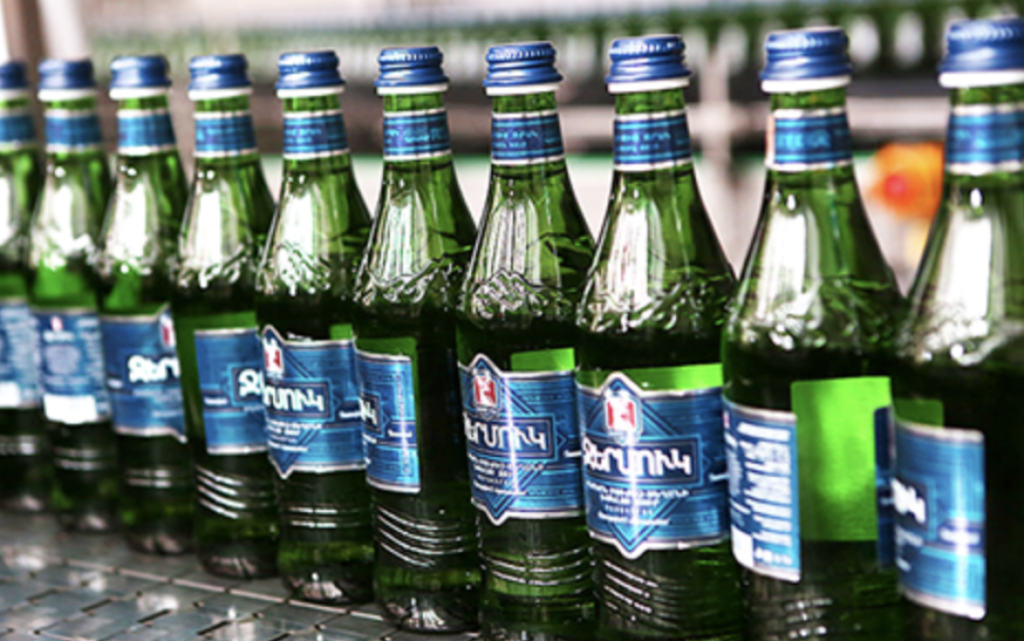
Russia’s “Chestny Znak” labeling system has suspended the sale of 338,000 bottles of Armenian mineral water Jermuk. The measure was introduced at the request of Rospotrebnadzor to prevent potential health risks. Products dated February 17 and March 5, 2026, were affected.
In 2024, over 2.5 million bottles were also suspended following a poisoning incident in North Ossetia, where acetic acid was reportedly found in one bottle. Armenia’s food safety authority has not yet received official information from the Russian side and is working to clarify the situation.
Impact on a national brand
Economist Sos Khachikyan describes the situation as a significant blow to an established Armenian brand.
“Jermuk is more than just mineral water — it represents a broader national image tied to the resort town and Armenia’s reputation,” he explains.
Lack of coordination
He cautions against drawing immediate conclusions, noting that the causes may be both objective and subjective.
A key issue, he argues, is the lack of an effective coordination mechanism between the parties. While statements have been made on both sides, there is no unified platform to resolve the issue quickly.
Without such coordination, the problem risks extending beyond the economic domain.
Risks and systemic weaknesses
Khachikyan does not rule out that the situation may stem from lower-level administrative decisions or regulatory gaps rather than deliberate state policy.
In the context of broader political tensions, individual agencies or actors may act independently, potentially distorting processes and increasing risks.
Such dynamics could even lead to corruption-related issues or escalate into a wider dispute.
The need for transparency
The economist stresses the importance of stronger inter-agency cooperation and public discussion.
Transparent analysis and expert input, he argues, are essential to prevent the situation from being perceived as political pressure, especially ahead of elections and within a sensitive geopolitical environment.