
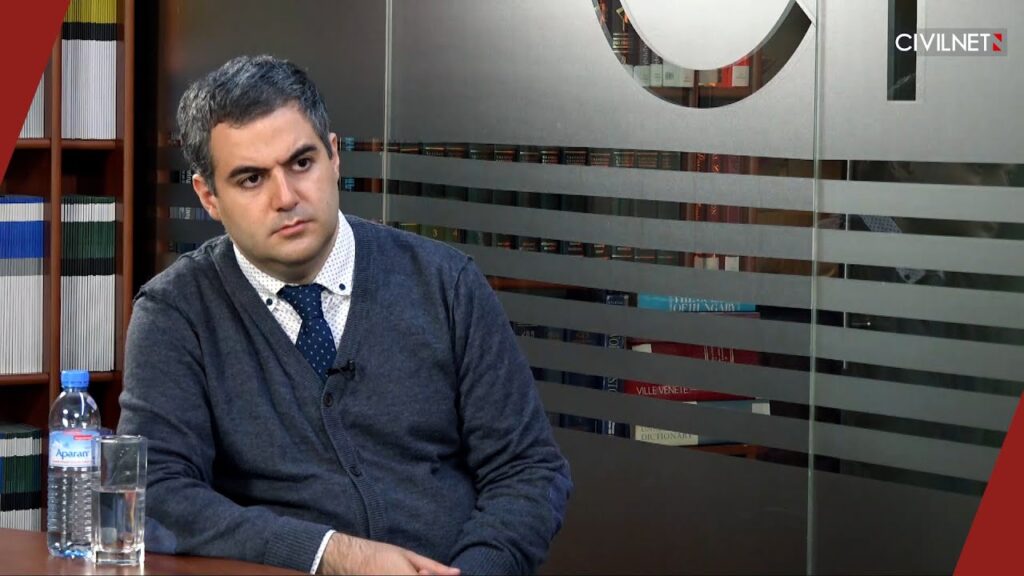
The narratives promoted by Prime Minister Nikol Pashinyan, despite containing numerous falsehoods and significantly contradicting the interests of Armenia and the Armenian people, receive broad public attention because they are distributed systematically through television, social media, and YouTube channels. This was stated by political analyst Hrant Mikaelyan.
According to him, an entire system exists to spread pro-government narratives, which, in his opinion, was created by external forces even before the current political team came to power.
As a result, people have been consuming information from these sources for more than a decade and have remained under the influence of these narratives for years.
How the “echo chamber” works
According to the political analyst, this system relies on two main mechanisms.
The first is quantitative influence.
“They focus on quantity because, in many cases, quantity creates quality. Quantity often becomes decisive because a person hears one individual say something, then another person repeats it, and eventually it seems that everyone is saying the same thing, therefore the information must be true. In reality, this is how Pashinyan’s ‘echo chamber’ works — to create the impression that ‘everyone is saying it,’ while in fact the source of all of it is the authorities themselves,” Mikaelyan stated.
The second issue, according to him, is related to society’s level of media literacy.
“For example, when I enter my news feed and notice that all the news starts becoming identical, I understand that I’m falling into an echo chamber and need to get out of it. But people adapt to it very easily. In reality, it is necessary to break out of it because once you fall inside, you can no longer receive real information. You begin to be manipulated — either by algorithms, the authorities, or other forces,” he stressed.
The opposition’s weakness
Against this background, Mikaelyan stated that opposition responses to pro-government narratives remain mostly fragmented, which he considers the main problem.
“The opposition must work on ideological, strategic, and long-term levels. If these three components exist, reacting to every individual statement will become far less important. The authorities will stop being the main agenda-setting player because the opposition will already have its own system through which it communicates with society,” the political analyst said.
He also emphasized that the opposition must work actively on social media platforms — especially Facebook and YouTube — in order to “detach people from the field of pro-government narratives and bring them to its side.”