
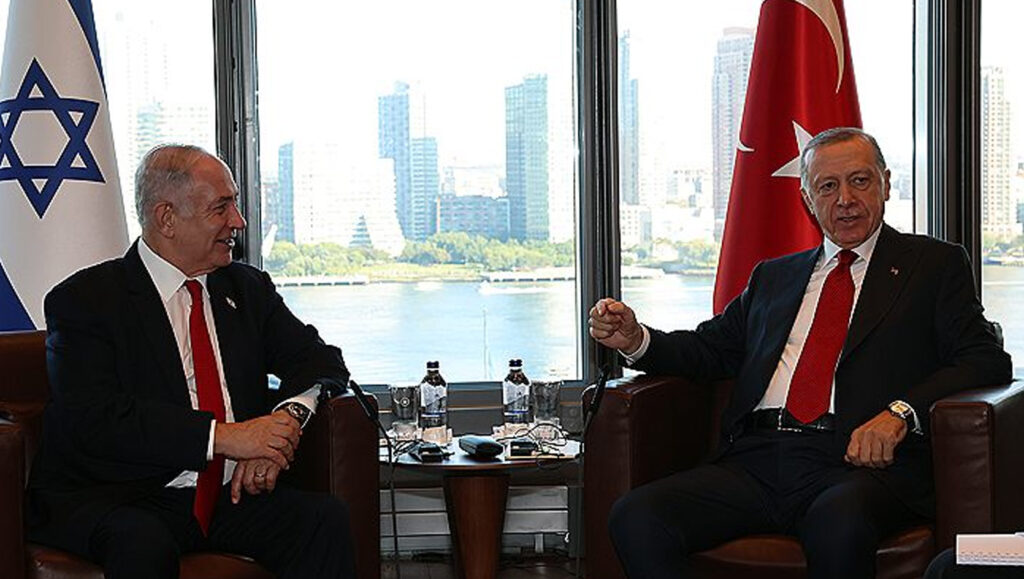
Israel’s decision to revisit the recognition of the Armenian Genocide is primarily a political move linked to the current state of Israeli-Turkish relations. Political scientist Alexander Iskandaryan argues that it is a mistake to view such decisions solely through a historical or moral lens.
A Response to Erdoğan’s Policies
According to Iskandaryan, decisions of this kind are inevitably political because they are made by political institutions.
“Israel’s government is not a historical institute. It is made up of politicians, not historians who suddenly discovered the truth after years of research. This is a political decision,” he said.
At the same time, he believes it is too early to speak about final recognition.
According to the expert, the process could still stall if the Knesset does not approve the proposal. Parliamentary recess, upcoming elections, and a new parliamentary composition could all affect the outcome, as could Israel’s relations with Turkey and Azerbaijan.
Every Country Has Its Own Motives
Iskandaryan argues that recognition of the Armenian Genocide has always been driven by political interests.
According to him, Israel’s decision is linked to its relations with Turkey, while other countries have acted for different political reasons, including domestic electoral considerations or their own foreign policy priorities.
He also points to Azerbaijan’s reaction as another example of political rather than historical motivations.
According to Iskandaryan, Baku’s objections are unrelated to the events of 1915 and instead reflect its current political interests.
Even Turkey’s Official Narrative Describes Genocide
The political scientist believes very few people, even in Turkey, genuinely deny that the events occurred.
He argues that Turkey’s official narrative itself describes the deportation of an entire population under conditions that resulted in mass deaths.
According to Iskandaryan, even accepting that version without discussing other historical evidence still corresponds to the defining characteristics of genocide.
He adds that Turkey mainly disputes the legal term “genocide” rather than the historical events themselves.
The Debate in Israel Focused on Political Consequences
According to Iskandaryan, serious public debate in Israel has generally focused not on whether the Armenian Genocide occurred but on the political consequences of recognition.
He says opponents have traditionally argued that recognition could damage Israel’s relations with Turkey and Azerbaijan rather than disputing the historical facts.
Yerevan Is Following the Opposite Strategy
Commenting on Armenia’s response, Iskandaryan says the current government is pursuing a strategy aimed at avoiding additional tensions with Turkey and Azerbaijan.
According to him, the authorities believe that reducing confrontation after the 2020 war could contribute to greater security.
Although he questions whether that approach is realistic, he argues that it explains why official Yerevan seeks to distance itself even from decisions made by other countries.
“Israel’s decision has nothing to do with Armenia. It concerns Turkey. Yet Armenia still distances itself from it because the current leadership does not want such issues to be used for political purposes,” he concluded.