
Moscow has not yet made a final decision regarding its future policy toward Armenia. Political analyst Lilit Dallakyan believes this uncertainty also explains much of the Armenian opposition’s current behavior.
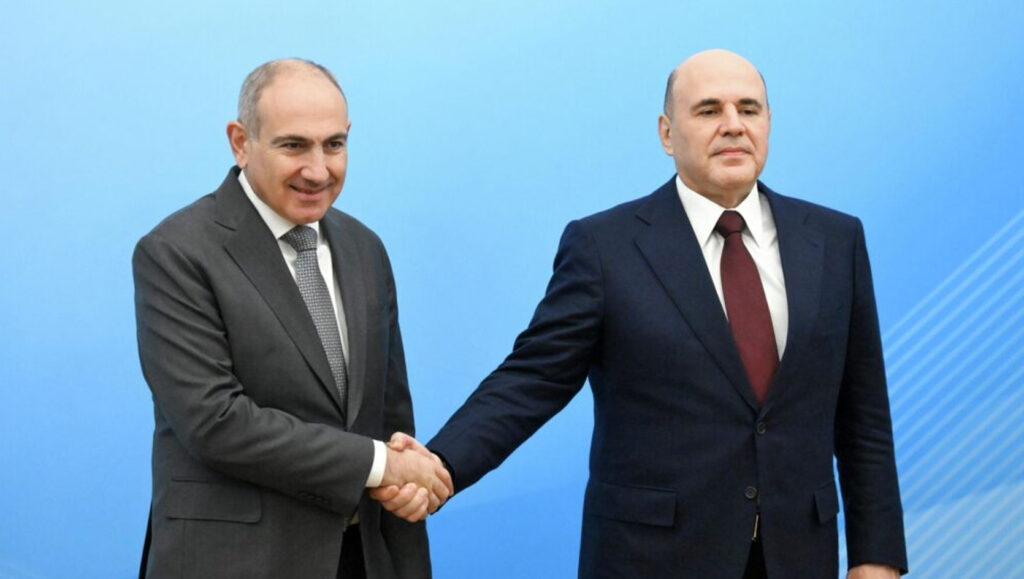
As evidence of Moscow’s unclear position, she recalls that many expected Vladimir Putin to congratulate Nikol Pashinyan after the parliamentary elections, but no such message followed. The meeting between Russian Prime Minister Mikhail Mishustin and Pashinyan also produced no clear public political signals.
Moscow Has No Realistic Candidate for a Change of Power
Although Nikol Pashinyan remains an undesirable figure for Moscow and Russian President Vladimir Putin does not view him as a politically close partner, Russia currently has no realistic candidate capable of replacing him.
According to Dallakyan, neither Armenia’s second president Robert Kocharyan, businessman Samvel Karapetyan, nor third president Serzh Sargsyan is viewed in Russia as a viable candidate for power.
She places particular emphasis on Kocharyan’s high negative rating, arguing that his continued presence in Armenian politics ultimately benefits the current government.
“Kocharyan’s negative rating is so high that as long as he remains in politics, Nikol Pashinyan’s position only becomes stronger. Many voters say that if the choice is once again between Kocharyan and Pashinyan, they will choose Pashinyan,” she said.
Russian Ties Have Become a Political Liability
Addressing discussions surrounding Samvel Karapetyan, Dallakyan notes that his main political liability is now his association with Russia.
Such ties are natural for the businessman because he built his business and became a billionaire in Russia. Yet in today’s political climate, those connections have become a burden.
The issue is not limited to individual candidates. Moscow’s ability to influence developments in Armenia is also constrained by growing anti-Russian sentiment within Armenian society.
Russian Pressure Is Producing the Opposite Effect
According to Dallakyan, Russia has lost significant public trust in Armenia, particularly since 2020.
Anti-Russian attitudes are found not only among supporters of the current government but also among many citizens who oppose Nikol Pashinyan and did not participate in the elections.
Under these conditions, open Russian support for any candidate could produce the opposite effect and weaken that person politically.
Dallakyan argues that Russia’s trade restrictions against Armenia are only deepening anti-Russian sentiment.
“If Russia believes these measures will weaken Pashinyan, it is achieving the opposite result. The Armenian people bear the damage, and that further strengthens anti-Russian attitudes,” she said.
According to the political analyst, Armenian society reacts negatively to threats and pressure because such actions are perceived as targeting the entire country rather than only its government.
A Clearer Picture May Emerge in the Autumn
Against this background, Dallakyan does not rule out the possibility that potential Russian economic restrictions were discussed during Nikol Pashinyan’s latest visit to Moscow.
However, she says the available public information is insufficient for firm conclusions.
She believes a clearer picture may emerge in the autumn, when another meeting between Pashinyan and Putin could take place.
The Opposition Is Waiting for Moscow’s Decision
Dallakyan concludes that the Armenian opposition’s future strategy will depend heavily on Moscow’s final position.
According to her, if Russia adopts a clear political decision, it will immediately affect the actions of opposition forces.
For now, both Moscow and Armenia’s political actors remain in a waiting phase.