
Iranian Foreign Ministry spokesperson Esmail Baghaei’s latest statement on the Trump Route project raises questions about communication between Armenia and Iran and about how different political circles within Iran view the project. Political commentator Hakob Badalyan made this assessment.
Badalyan recalled that, according to Baghaei, Yerevan had assured Tehran that the Trump Route would not change the region’s borders or geopolitics, that Armenian companies would carry out the construction, and that no US military personnel would be present.
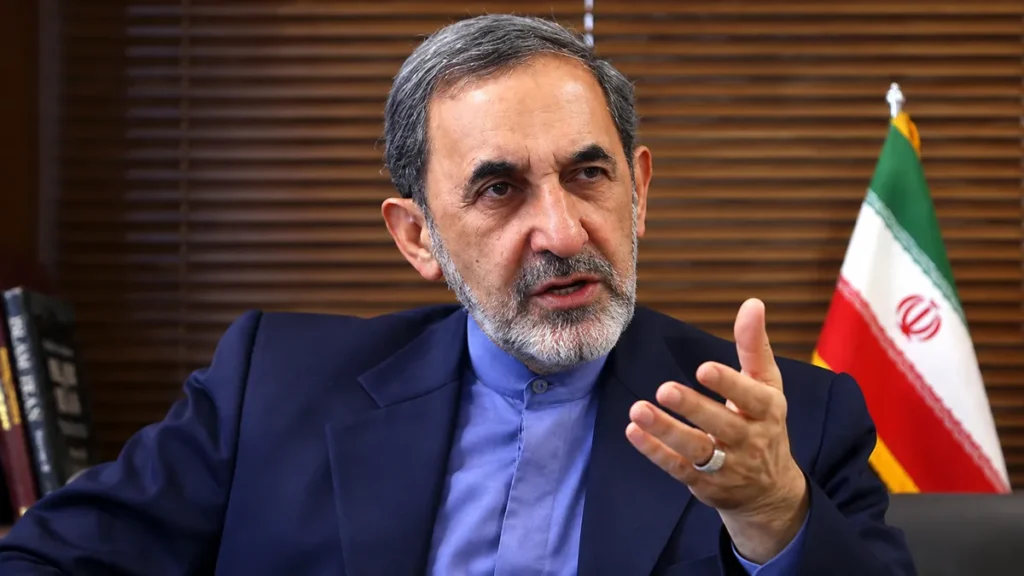
The statement deserves particular attention in light of the article published on November 6 by Ali Akbar Velayati, the Iranian supreme leader’s adviser on international affairs and a former foreign minister.
What assurances did Tehran receive, and when?
Badalyan recalled that Velayati’s article reiterated Iran’s concerns about TRIPP and said they had been clearly conveyed to Yerevan months earlier through Armenia’s deputy foreign minister and its ambassador to Iran. Velayati also set out Tehran’s strategic view of the region in greater detail and explained the reasons for Iran’s concerns about the project.
Velayati expressed puzzlement that Armenia’s parliament had ratified the TRIPP project after he had issued his warnings and voiced Iran’s strategic concerns. The article’s headline addressed Armenia’s prime minister directly, and Velayati asked what the ratification meant.
For Badalyan, the key question is when Yerevan gave Tehran the assurances cited by Iran’s Foreign Ministry spokesperson: before Velayati’s article or after it.
If the assurances preceded the article, why did a senior Iranian figure then make such a significant and, in some respects, unusual public intervention? Did Velayati receive Yerevan’s assurances? If not, who in the Iranian leadership received them?
Badalyan does not rule out differing views among Iran’s political factions. The executive branch, which he describes as representing the reformist camp, may see TRIPP one way. Conservatives such as Velayati, who are associated with the supreme leader’s inner circle, may see it quite differently. They may also interpret Yerevan’s assurances differently.
“An interesting picture is emerging. There is no question that Yerevan should listen to the concerns being voiced in Iran, especially at such a high level. But it also needs to understand whether there is a common view in Iran or whether it is dealing with different political factions. That could make it harder for Yerevan to decide where it stands,” the commentator says.
How Iran’s system of government shapes its response
Badalyan says the situation in Iran should also be viewed in the context of possible changes in how the country is governed.
He recalls that after the United States and Israel launched their war against Iran, some experts began to describe the Iranian system as less centralized, with authority pulling in several directions.
The commentator says this gives Tehran room to maneuver in a difficult situation. In a war fought on asymmetric terms, it has even allowed Iran, broadly speaking, to set the agenda for the United States.
Measured purely by scale or statistics, the balance of power is clearly not in Iran’s favor. Even so, Badalyan says, Iran has been able to fight a war imposed on it by asymmetric means and shape developments and perceptions worldwide.
The central question remains: are there different views of TRIPP within Iran, and if so, which one should carry the most weight for Armenia?
Badalyan believes that even with authority dispersed, the center of decision making in Iran today lies within the conservative camp. If the executive is satisfied with Yerevan’s assurances but conservatives are not, Armenia cannot afford to overlook that difference.
“Even when authority is dispersed, Iran acts as one system. If a key part of that system is dissatisfied and has concerns, that is what Armenia should pay attention to. It is not enough to rely on the executive branch’s response and cite it as an argument,” he emphasizes.
In other words, assurances that satisfy Iran’s executive branch may still fall short for those who make the country’s strategic decisions.
Yerevan’s response to Velayati’s article and the US diplomat’s presence
Badalyan also draws attention to the Armenian government’s response.
After Velayati’s widely discussed article, Armenia’s first and so far only public response, according to Badalyan, came from the secretary-general of its Foreign Ministry. The official said no country, including Armenia’s neighbors, took a negative view of TRIPP. The statement was made two days after the article appeared, at an event also attended by the US chargé d’affaires.
This raises the question of whether Yerevan relies primarily on the Iranian executive branch when assessing Tehran’s position. If it does, Badalyan says, that could be a serious misjudgment. It would mean overlooking concerns voiced by conservative circles or trying to dismiss them by pointing to the executive’s response.
If Armenia gave its assurances after Velayati’s article appeared, it is necessary to establish who conveyed them and through which channel. Badalyan does not rule out the possibility that Yerevan gave Iran certain assurances through unofficial channels.
That raises another question: could Armenia have stated one position publicly in the presence of a US diplomat while giving Iran different assurances in private?
That possibility is also problematic because it could give the impression that Armenia is trying to send different messages to the two countries.
A double game between Iran and the US would put Armenia at risk
In Badalyan’s assessment, if Yerevan tries to address Iran’s concerns while taking a different position with the United States, it could end up playing a double game that multiplies the risks for Armenia.
He recalls Nikol Pashinyan’s statement that Armenia had increased its independence by broadening the range of countries and partners it depends on. Badalyan argues that applying the same logic to relations with Iran and the United States could increase risks and threats instead of strengthening Armenia’s independence.
“The Republic of Armenia’s ‘yes’ must be its own ‘yes,’ and its ‘no’ must be its own ‘no.’ Countries are not expected to agree all the time. They are expected to make and justify their own decisions about when to agree and when to refuse. Ambiguity in such matters does not demonstrate a state’s ability to act for itself,” he says.
The commentator also considers it important to understand what drives the Armenian authorities to act this way. They may be concerned with staying in power. But doing so at the expense of Armenia’s ability to act independently is risky even for the authorities themselves.
If that logic persists, he warns, Armenia could eventually lose its ability to act independently altogether. Under those circumstances, the authorities would not be able to stay in power either.
The need for strategic dialogue
In Badalyan’s view, Velayati’s decision to publish an article shows that Iran’s decision makers no longer want to rely solely on indirect channels of communication about TRIPP.
When the supreme leader’s senior international affairs adviser, a central figure in Iranian politics for many years, addresses Armenia’s prime minister directly, Badalyan says it should be taken as a serious political signal.
He believes Yerevan should clarify when it communicated with Iran about TRIPP, at what level and through which channel. It should also establish where the people who make the key decisions in Tehran stand.
Badalyan stresses that this should concern not only government officials but also their supporters and the broader groups they rely on for support, if their primary concern is truly the Republic of Armenia rather than staying in power.
👉 Politics