
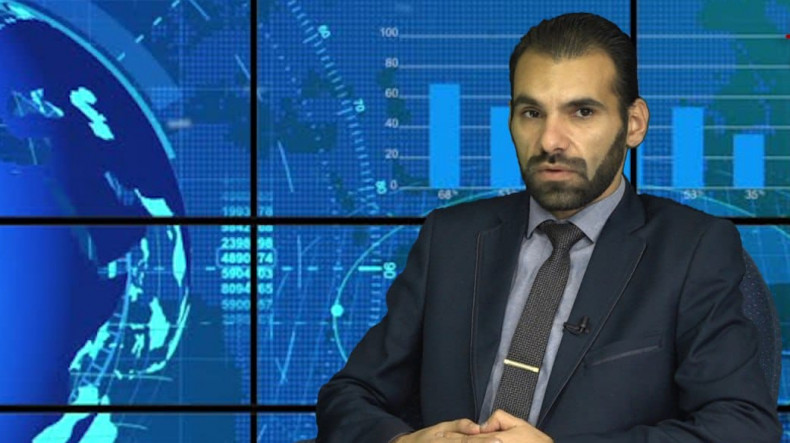
The anti-church campaign launched by the authorities has a pre-election character. According to political analyst Ara Poghosyan, the goal of this campaign is to secure the support of a certain segment of society that holds negative attitudes toward the Church and the clergy, and to neutralize the Armenian Apostolic Church as an independent social institution.
“This is the path toward the consolidation of absolute power — a dictatorship,” Poghosyan noted. “It is often said that if Armenia truly had a dictatorship, people would not be able to express their opinions. But the issue is much more subtle: what, for instance, distinguishes an authoritarian regime from a totalitarian one? Under authoritarianism, freedom of speech formally exists, but the moment you pose a real threat to the regime’s survival, its repressive mechanism immediately comes into play.”
As an example, Poghosyan cited the case of Ruben Mkhitaryan, a member of the “By Our Way” movement, who, he said, was arrested under absurd circumstances merely for criticizing the authorities, after which criminal charges were brought against him.
“This is an unprecedented case — a person is prosecuted simply for calling for calm. This is precisely how the tools of an authoritarian regime function,” he emphasized.
According to Poghosyan, the authoritarian system now taking shape in Armenia already displays features typical of totalitarian regimes. He pointed out that individuals close to the government, through insults and other forms of pressure, attempt to suppress any dissenting voice.
“What happened in Hovhanavank is a vivid example of that: a man merely stated that a certain (defrocked) priest had no right to perform a ritual in a church belonging to the Armenian Apostolic Church — and he was literally forced out of the church, the House of God, with his mouth covered,” the political analyst said.
Poghosyan also linked the pressure on the Church to the broader trend of authoritarian consolidation of power.
“The aim of the authorities is to bring the Church under their control. Any criticism voiced from within the Church toward the government is perceived as a threat to the regime’s governance and legitimacy. Therefore, the authorities seek to silence the Church through smear campaigns and various manipulative tools, and ideally, to create an environment in which the Church leadership is loyal and predictable,” he explained.
The political analyst noted that the Church is not the first institution whose role and significance the authorities have tried to undermine.
“President Armen Sargsyan was replaced by a president whose name was virtually unknown to the public. Before that appointment, we could still observe certain, albeit limited, elements of checks and balances between the offices of the president and the prime minister. Now this counterbalance has disappeared, and the presidency has turned into a purely formal structure that signs documents and carries out directives. In fact, even that function has become redundant,” he stressed.
According to him, in Armenia’s state system the office of president has been stripped of real substance.
“In parliamentary countries, even a symbolic presidency is meant to play the role of mediator between society and the government, serving as a symbol of unity. In Armenia, however, the presidency has lost public trust — especially among citizens with opposition views, who see it not as an independent institution but as an extension of the government,” Poghosyan noted.
Thus, when speaking of an authoritarian regime infused with elements of totalitarianism, the political analyst emphasizes that this refers to a situation where all power is concentrated in the hands of a single individual.
“There are nominal institutions that are supposed to ensure social stability, but they function only formally — without substance, independence, or real mechanisms of oversight,” he concluded.