
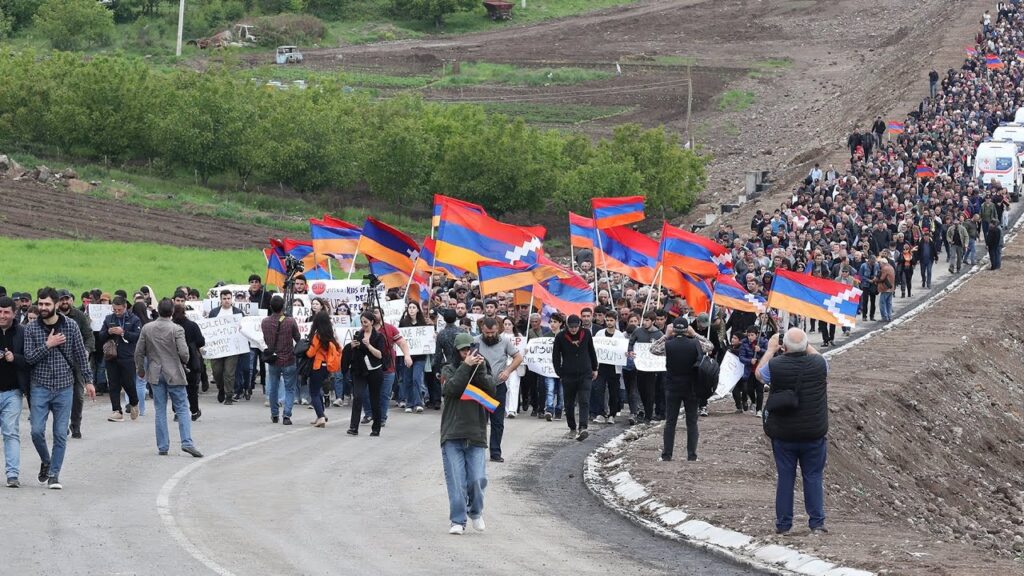
According to political analyst Hrant Melik-Shahnazaryan, Armenia’s 2026 parliamentary elections are already rigged — not “will be rigged,” but already rigged. He argues that the government is systematically “cleansing the political field” of nearly all opponents, making the elections easier to manipulate.
He explains that leading opposition figures have been removed from the political process.
“The leader of the ‘Mer Dzovov’ movement is in prison and cannot operate. The leader of the ‘Sacred Struggle’, Archbishop Bagrat Galstanyan, is also imprisoned. The teams of former presidents Robert Kocharyan and Serzh Sargsyan are overwhelmed with court cases: supporters are arrested, media outlets are shut down, businesses are seized. Clergy who could unite society are arrested, persecuted or blackmailed,” he says.
For Melik-Shahnazaryan, this is what real election rigging looks like: opponents are prevented from participating physically.
Administrative pressure and controlled campaigning
The analyst points out that the government anticipated losses in key cities and arrested their mayors in advance — in Masis, Gyumri and Vanadzor.
Meanwhile, the government uses state funding as campaign material: subvention programs, new roads, lighting, infrastructure improvements, reduced military service.
“These are simply modern forms of political bribery,” he argues.
Technically not held — politically already rigged
He stresses that authorities even choose when the elections will be held — early or on schedule — because they control all instruments: administrative leverage, public finances, media and law enforcement.
Can the opposition win?
Given current conditions, Melik-Shahnazaryan believes the opposition’s maximum realistic achievement is parliamentary representation.
A genuine change of government through elections requires a powerful protest wave capable of overcoming arrests, pressure and fraud.
Impeachment as the only viable mechanism
He argues that impeachment is the only constitutional tool that can create the necessary political momentum.
Even if not completed before 2026, the process itself could generate a mass protest wave that changes the dynamics.
“Only on that wave can one hope to overcome election fraud. Without it, 2026 will look the same,” he concludes.