
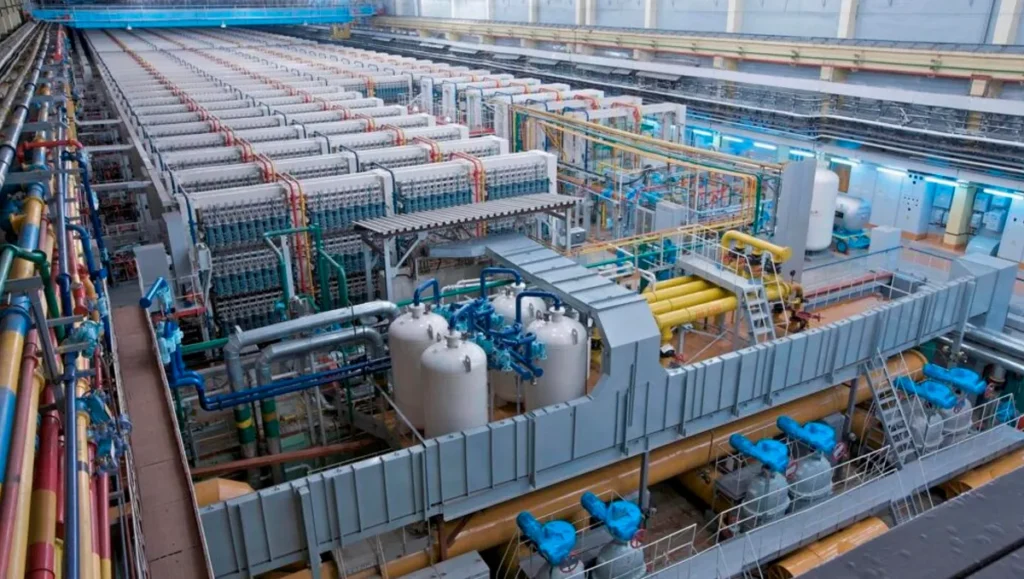
Russian technologies compatible with Armenia’s existing nuclear system are a more appropriate option for the country, according to expert Armen Manvelyan.
He says the decisive factor is not the technology’s country of origin. What matters for Armenia is its established professional and educational infrastructure.
“Armenia has specialists. This is a very important system that enables you to maintain technology as complex as nuclear energy. Secondly, we have a higher education system that trains the relevant specialists. This, too, is rare across the entire region,” the expert says.
At the same time, he stresses that existing specialists cannot simply be transferred to servicing modular reactors. According to him, these technologies differ substantially.
A modular plant is not an economically efficient option for Armenia
Manvelyan believes the advantages of modular reactors should be assessed in the context of each country’s circumstances. He notes that Russia, China and the United States are developing small modular plants. Other countries are also interested in such projects.
According to the expert, plants with capacities of 50, 100 or 200 megawatts are particularly suitable for countries with large territories and settlements far from major centres. A small plant could supply electricity to such an area without requiring extensive transmission lines.
Manvelyan does not consider this approach effective for Armenia.
“This is entirely disadvantageous for Armenia simply because these are small plants with capacities ranging from 50 to 300 megawatts,” he says.
In his assessment, a high-capacity plant is more important for Armenia. Manvelyan cites an option with a capacity of around 1,200 megawatts. Such a plant could provide the country with a long-term electricity supply and enable electricity exports.
No final decision on the new nuclear plant
Manvelyan also questions the claim that Armenia has made a final decision on a plant using VVER-type reactor technology.
He says such decisions may change as the political situation evolves. The expert also disagrees with the authorities’ assertions that the choice is based solely on economic calculations.
“I do not believe this is a purely economic decision, because economic decisions of this kind are not made this way. Moreover, energy is one of the sectors that directly depends on political decisions,” Manvelyan says.
He believes that virtually every major decision in the energy sector has a political component. In this particular case, changes in both foreign and domestic politics must also be considered.
The expert also recalls a previously announced arrangement worth around 9 billion concerning a modular plant. According to him, the amount was presented as an investment at the time. In his understanding, however, it referred to a payment Armenia would have to make for the plant.
👉 Politics