
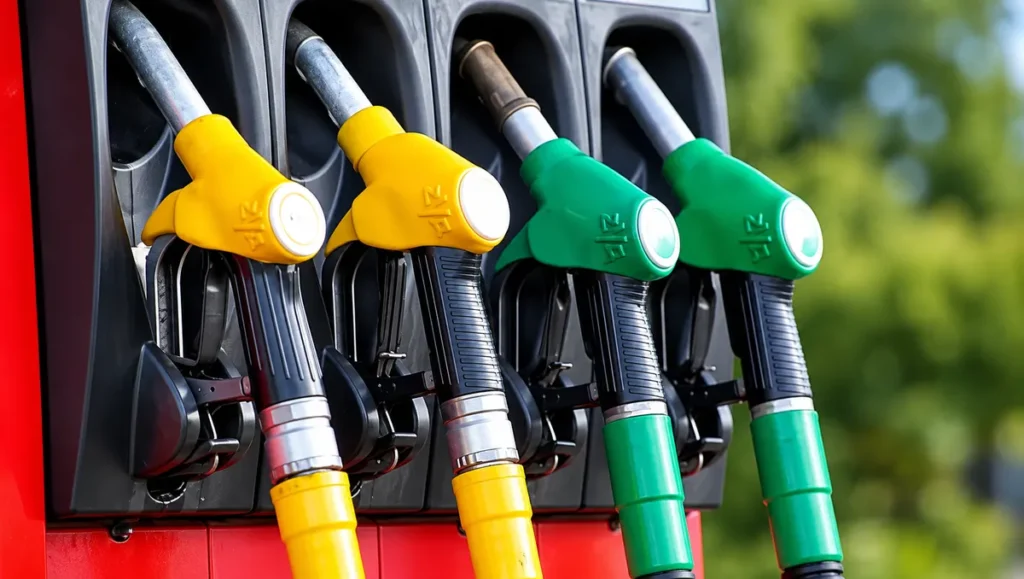
Fuel prices in Armenia have reached one of their highest levels in recent years. A litre of petrol costs 580 drams, while diesel is selling for around 680 drams. Economist Aghasi Tavadyan says the rise in diesel prices poses a particularly serious problem for the economy because it directly affects agriculture, freight transport, construction and several other sectors.
Two shocks to one market
According to Tavadyan, Armenia’s current situation reflects two external factors acting at the same time. The first is pressure on the global oil market resulting from the closure of the Strait of Hormuz. The second is the reduction in refining capacity caused by attacks on oil refineries in Russia.
In his assessment, the previous major example was in 2022, when sanctions against Russia and the expectations surrounding them caused petroleum product prices to rise sharply on international markets. In 2023, the peak price of diesel in Armenia reached 670 drams, while petrol reached 550 drams. At that time, however, the increase was driven mainly by one major factor. Several crisis developments are affecting the market simultaneously now.
Tavadyan also notes that the Armenian market responds to changes in international prices with a delay. According to the data he presents, movements in global oil and petroleum product prices are generally reflected in Armenia about three to six months later. This means that even a rapid change in the international market will not produce an immediate response in Armenia. The reason lies in the time required for import contracts, supplies and refining.
For this reason, Tavadyan does not expect fuel prices to fall substantially over the next month or two. Even if conditions in the international market improve, the effects will become visible in Armenia only months later.
Armenia is reducing its reliance on Russia at a higher cost
One important change in the fuel market concerns the geography of imports. Armenia’s petrol market used to depend heavily on Russia, but that dependence has now diminished.
According to Tavadyan’s figures, before 2023 about 90 percent of Armenia’s petrol imports came from Russia. Among the other main sources, Bulgaria accounted for about 8 percent and Romania for around 1 percent.
The picture changed considerably in the first half of 2026. Bulgaria moved into first place as a source of petrol imports, with a 28 percent share, while Russia accounted for around 20 percent. The economist predicts that Russia’s share could decline further during the year, reaching 15–17 percent.
This change does not, by itself, mean that Armenia is receiving cheaper fuel. On the contrary, one of the former advantages of fuel imported from Russia was its lower supply cost within the EAEU common market. Faced with Russian export restrictions and supply problems, Armenia has had to turn increasingly to other markets, where fuel is bought at international prices and incurs additional logistics costs.
Restrictions on the operation of Russian oil refineries have had a particular effect on diesel supplies. Tavadyan says Russia has applied similar restrictions before to protect its domestic market during the harvest season. Under the EAEU framework, however, Armenia should have benefited from the logic of a common energy market. That mechanism is now facing practical difficulties.
Higher diesel prices can raise costs across the economy
According to Tavadyan, public attention to petrol prices somewhat obscures diesel’s wider effect on the economy.
Diesel is used in freight transport, agricultural machinery, construction and several other fields. Its rising price therefore means more than a larger bill at the filling station. Higher fuel costs enter the cost of producing goods and providing services, potentially setting off a chain of price increases.
For that reason, Tavadyan says, the rise in diesel prices is a more sensitive issue for Armenia’s economy than the increase in petrol prices. He also draws attention to the Central Bank’s response. Amid developments in the fuel market and broader inflationary pressure, the bank raised its policy rate by 0.25 percentage points.
Prices may remain high for at least six months
Tavadyan believes the current increase will not be short-lived. During the previous crisis in 2022, high prices persisted for about 11 months. The situation is more complicated now because several factors are affecting the international oil market at once.
In his view, Armenia is probably already close to the price peak for petrol and diesel. A further increase of 10–20 drams is possible, but the main concern is that prices could remain at their current high level for at least six months and, depending on geopolitical developments, longer.
Even the possible reopening of the Strait of Hormuz would not immediately make fuel cheaper in Armenia. According to Tavadyan, changes in the international market would again be reflected in Armenia only after a delay of three to six months.
This means that even if the market stabilises, consumers will not see the result the next day or the following week.
Azerbaijan’s role is gradually increasing
As import chains change, Azerbaijan is also gaining a larger role in Armenia’s fuel market. According to figures presented by Tavadyan, Azerbaijan currently accounts for about 3 percent of petrol imports. Its share is growing, particularly in the diesel market.
This forms part of a broader shift in the geography of fuel supply. Armenia’s market no longer relies on one principal source to the extent it once did, but the country must instead work with more complex and expensive logistics chains.
If the share of Russian supplies continues to fall while imports from other sources rise, Armenia will increasingly buy fuel at international market prices rather than benefit from the advantages previously available through the EAEU common market.
👉 Economy