
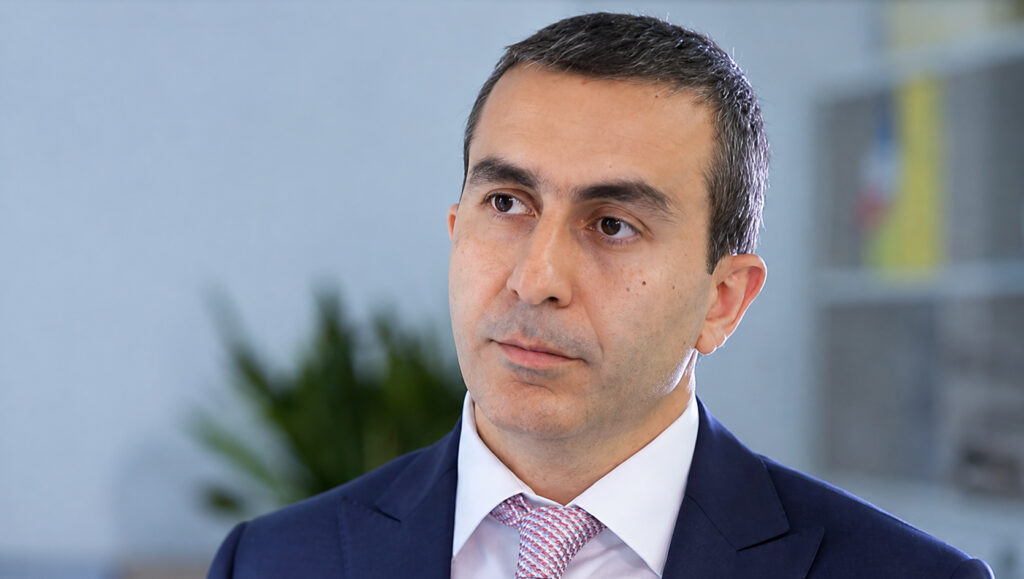
Over 12 years, Armenia’s funded pension system has gone through a period that has demonstrated its viability, while the volume of assets accumulated in the system has already exceeded AMD 1.5 trillion. Hrayr Aslanyan, Chief Investment Officer and Deputy Director for Development at Amundi-Acba Asset Management, made this statement.
According to him, well-formulated laws and objectives are not enough for any reform. A system becomes viable when all participants involved have clearly defined roles and responsibilities.
In this respect, Aslanyan said, the high standards initially established by the Central Bank for pension fund managers have played an important role in the system’s development.
Today, the total volume of assets accumulated in the pension system exceeds AMD 1.5 trillion.
These funds are formed from the 5% contributions made by citizens, an additional 5% contributed by the state, as well as investment income.
According to Aslanyan, the returns generated over the entire lifetime of the system already account for more than one quarter of the total accumulated amount.
Amundi-Acba’s Assets Under Management Have Reached AMD 877 Billion
Presenting the performance of Amundi-Acba Asset Management, Aslanyan said that the company currently manages AMD 877 billion in assets.
Of this amount, around AMD 240 billion, or approximately 27%, has been generated through investment management income.
According to him, the company’s average annual return over the past 12 years has exceeded 8%, and the volume of both assets under management and income is expected to continue growing.
However, Aslanyan stressed that the effectiveness of investment management should not be assessed solely on the basis of returns.
For him, the primary objective is to build resilient long-term portfolios.
“Returns are often viewed as the most important factor. It is certainly important, but for us the most important thing is building resilient portfolios,” he said.
The New World Order Is Changing the Rules of the Investment Game
According to Aslanyan, this approach has become even more important amid the current geopolitical and economic uncertainties.
Changes in the world order, trends toward the formation of a multipolar system and the transformation of value chains are changing the rules that previously applied and forcing investment strategies to be reconsidered.
Under these conditions, genuine diversification becomes crucial — distributing investments in a way that minimizes risks as much as possible and enables portfolios to withstand different types of shocks.
According to Aslanyan, this requires access to a sufficient range of instruments, particularly for foreign investments, where the range of opportunities is quite broad.
At the same time, investments in the Armenian market face regulatory and market constraints.
At least 60% of accumulated pension assets must be invested in dram-denominated instruments, while the domestic market still faces several challenges: a limited number of corporate issuers, insufficient market depth and a shortage of investment instruments.
Nevertheless, Aslanyan believes work in this area has intensified and Armenia’s capital market is gradually developing.
“I see extensive work being done in this area, and I hope that, even if slowly, we are moving in the right direction,” he said.